Last updated November 22, 2026
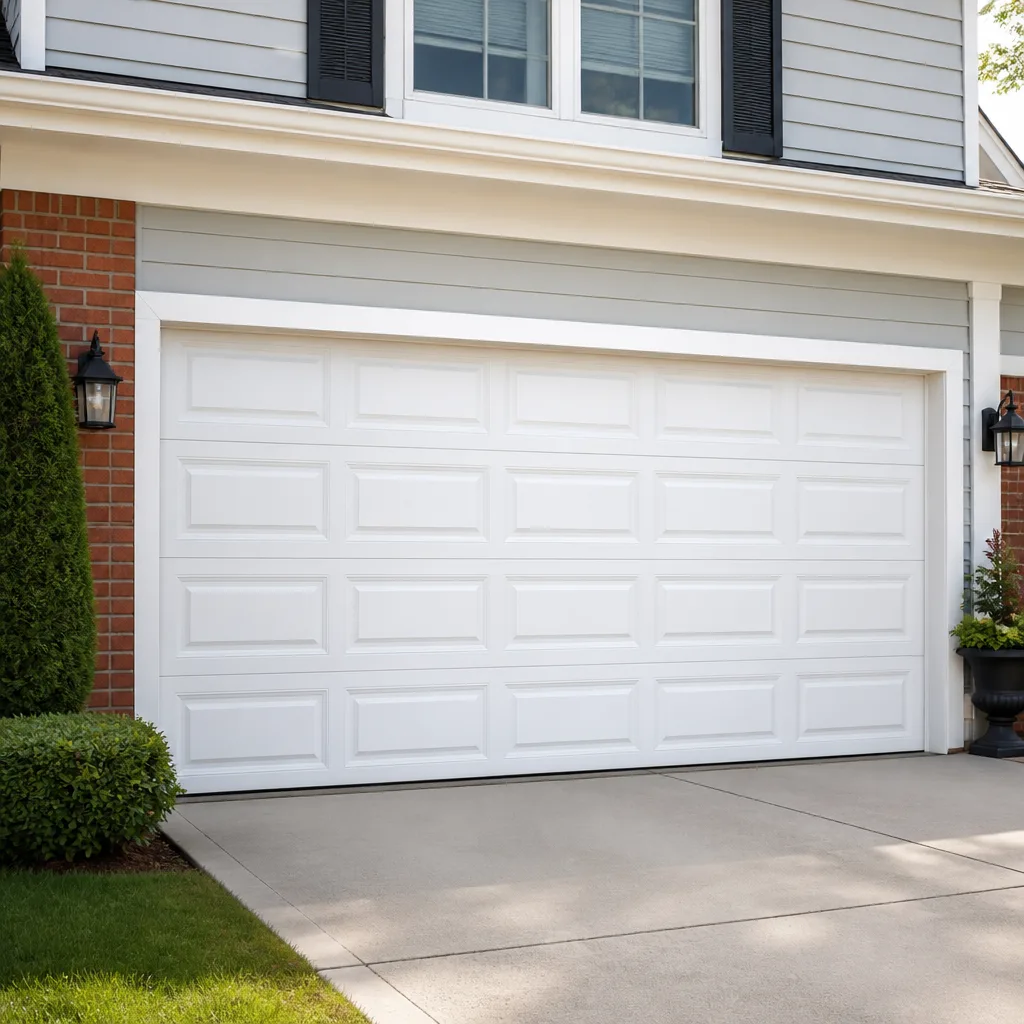 Raised-panel steel
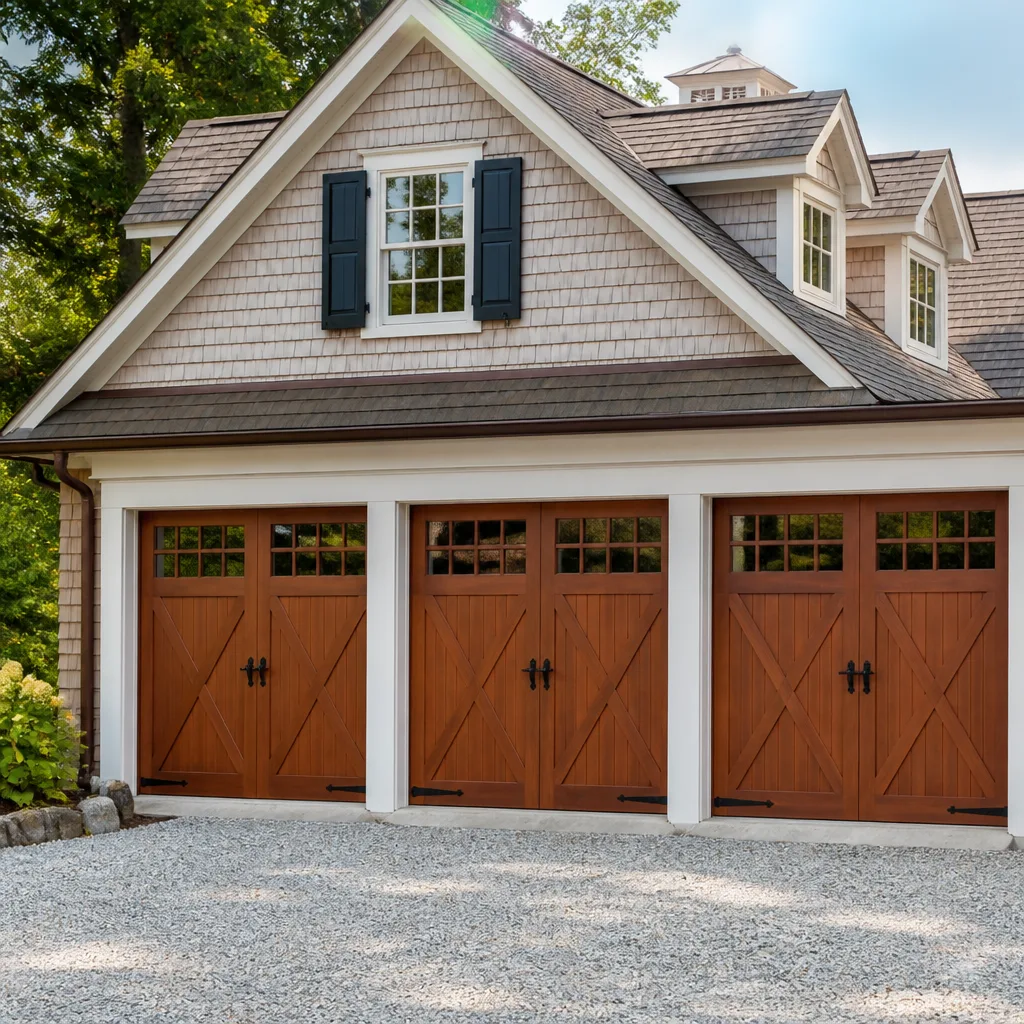 Carriage house
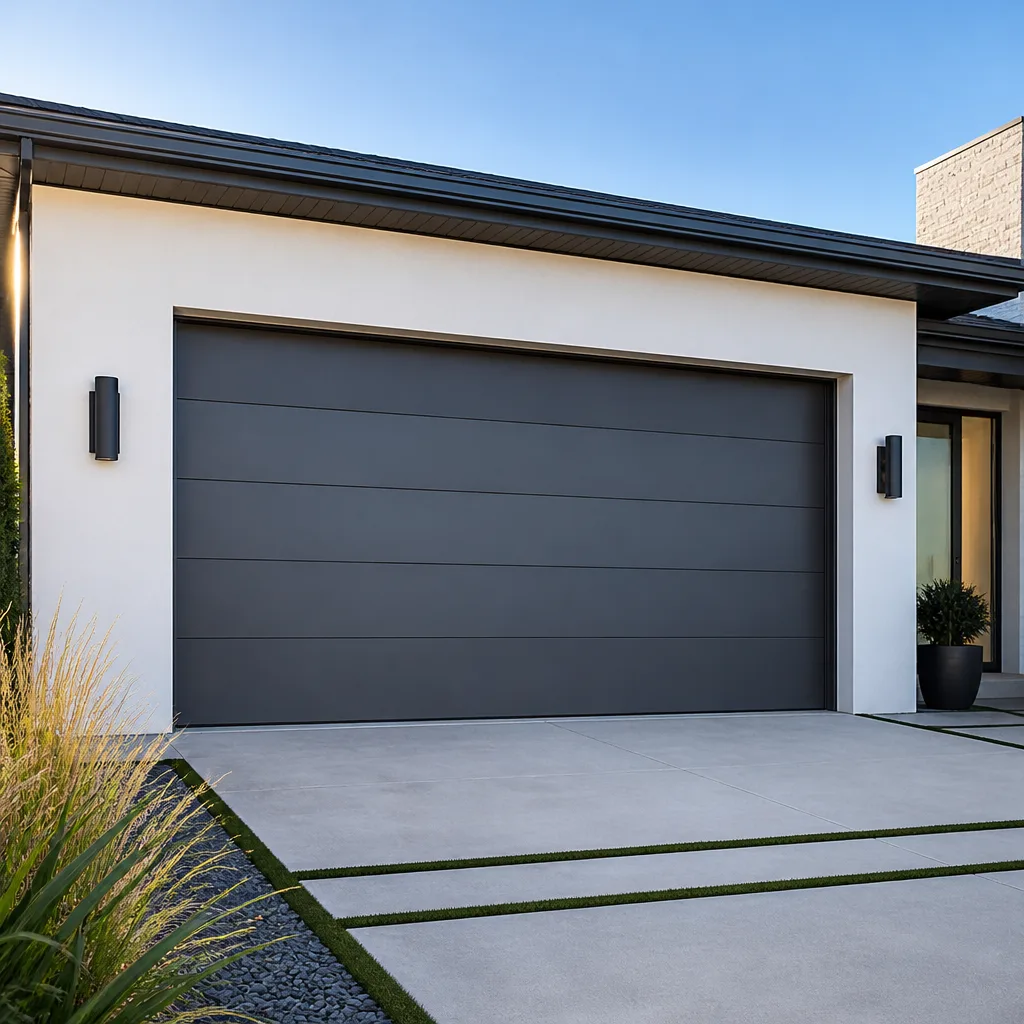 Modern flush
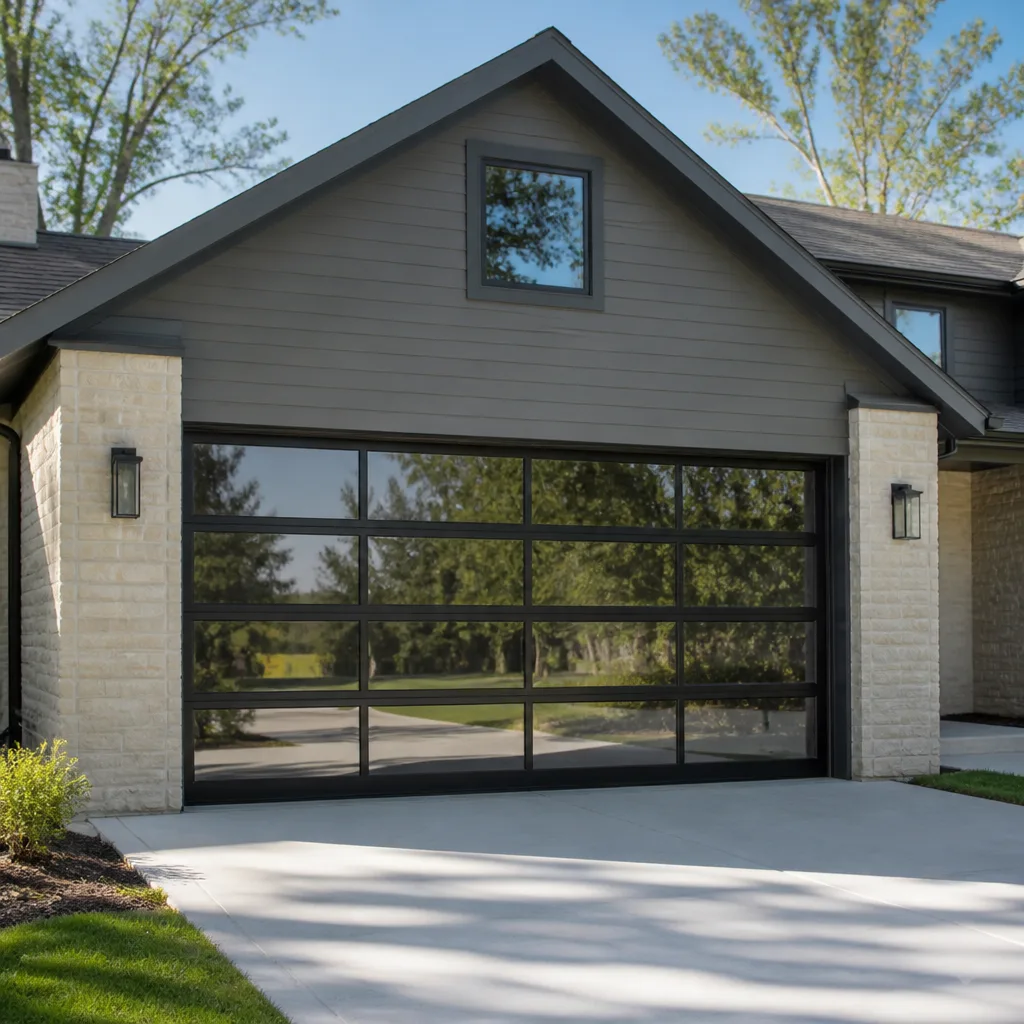 Full-view glass
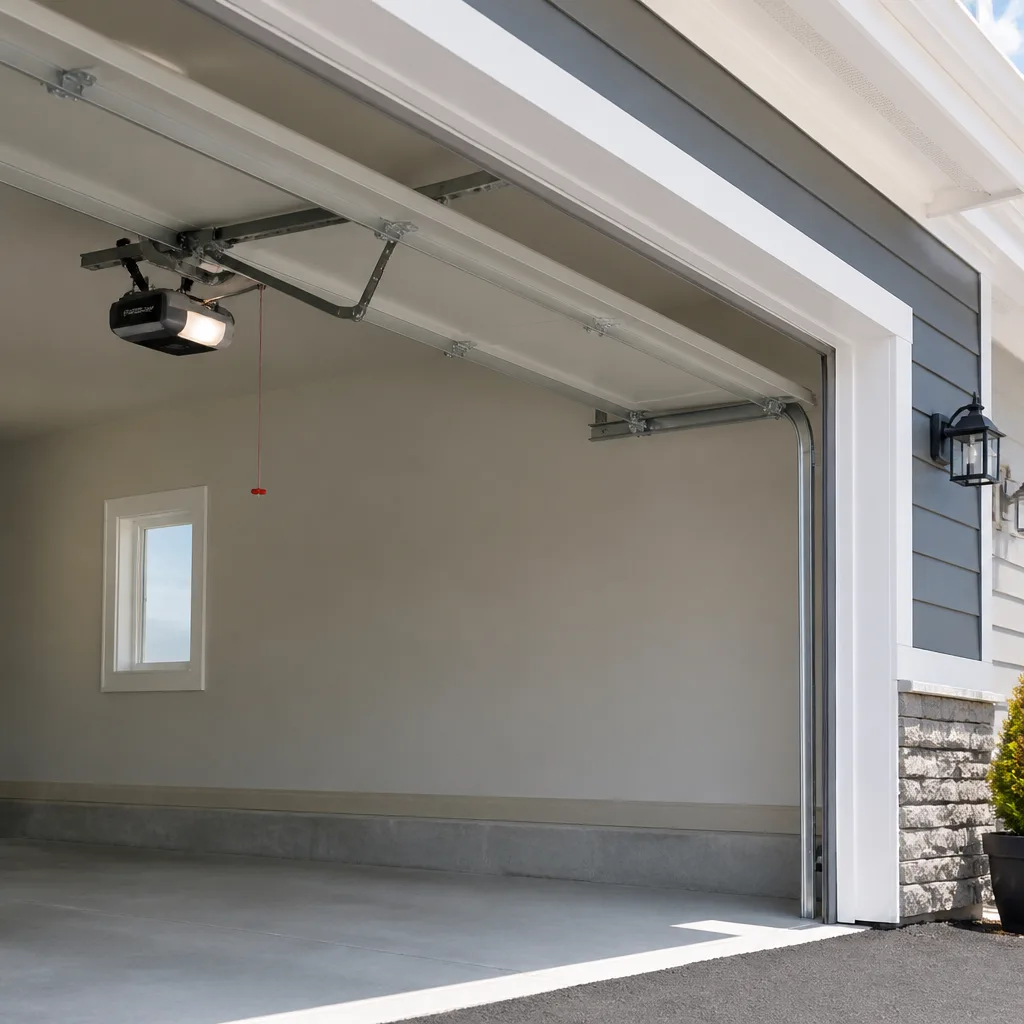 LiftMaster openers
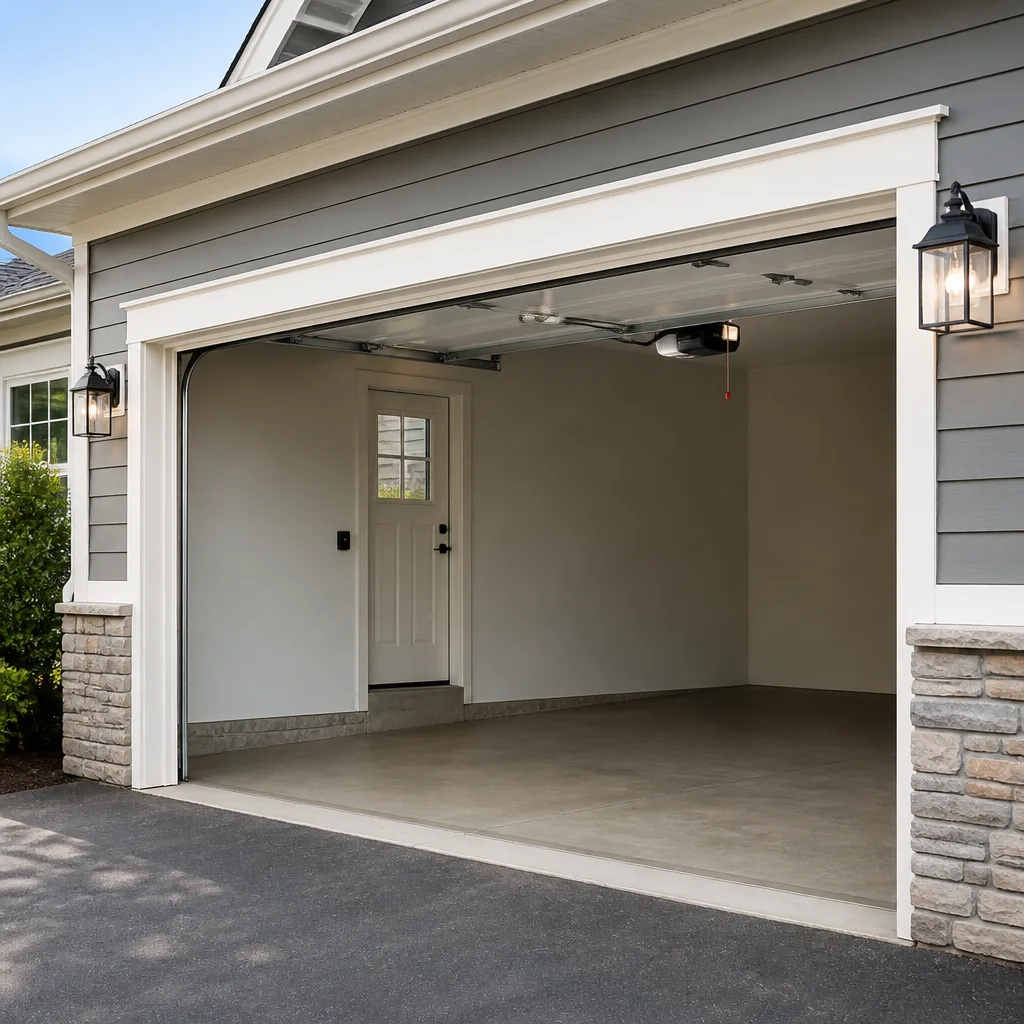 Chamberlain openers
Full 25-point door and opener safety check with every visit - springs, cables, rollers, tracks, and your LiftMaster or Chamberlain opener included
You get a price before we start. It does not change when the pro arrives.
Get your free estimateGarage Door Repair Troubleshooting in Lake Worth Beach: Common Problems and How to Fix Them
If you’ve already adjusted the travel limit three times and the door still reverses before closing, the opener probably isn’t your problem. The springs are. That single distinction – opener versus springs – explains more misdiagnosed garage doors than any other in Lake Worth Beach, and it’s why homeowners end up buying a new motor when the real fault was a tired torsion system. A door that won’t close isn’t always a sensor issue. A grinding noise isn’t always the opener. The only way to stop guessing is to trace each symptom back to the component that actually causes it. Below, we walk through that mapping, the humidity problems that hit South Florida doors hardest, and the exact pre-call sequence that keeps you from paying for a part you don’t need.
Quick Answer
Garage door problems fall into four fault buckets – springs, tracks, openers, and safety sensors – and each produces a distinct symptom that points to the guilty part. Springs handle lifting weight, so a clean reverse or a door that opens a few inches and stops usually means spring failure, not an opener fault. In Lake Worth Beach’s humid climate, motor and hardware failures are frequently caused by corroded rollers, a rotted bottom seal, or a torsion spring that has quietly rusted through. The one thing you should never test or replace yourself is the torsion spring or cable drums.
Styles & brands we work with
- Raised-panel steel
- Carriage house
- Modern flush
- Full-view glass
- LiftMaster openers
- Chamberlain openers
Table of Contents
- Symptom-to-Component Map: What Your Door Is Telling You
- Spring Failure: Why the Door Lifts an Inch and Stops
- Opener or Spring? The Test That Ends the Guesswork
- How Lake Worth Beach Humidity Attacks Your Door
- Safety Sensors and the Door That Won’t Close
- Tracks, Rollers, and a Noisy Door
- The Manual Disconnect Test: Safe Sequence Before You Call
- Which Problems Are DIY-Safe and Which Never Are
- How to Describe Your Problem so You Don’t Get Upsold
Symptom-to-Component Map: What Your Door Is Telling You
Every symptom your garage door shows has a shortlist of causes, and learning to read them saves you from the most expensive mistake in troubleshooting: replacing a part because it’s easy to reach. This map covers the failures we hear about most in Lake Worth Beach, organized by what the door actually does.
- Door opens about six inches and stops: Almost always the torsion spring or the lift cable. The opener is doing its job and hitting a wall of resistance.
- Door reverses immediately after touching the floor: Usually the travel limit is set too high, not the safety sensors. A sensor trip reverses the door on the way down, not after contact.
- Door closes partway, then reverses: Safety sensor misalignment or obstruction. Aim the two lenses and check for sun glare or a shifted bracket.
- Grinding or scraping as it moves: Worn rollers, a bent track section, or dry hinges – rarely the opener.
- Opener runs but the door doesn’t move: A broken spring, a snapped cable, or a manual release that’s still engaged.
- Loud bang from the garage, door stuck partly open: A torsion spring has snapped. Do not attempt to cycle the door again.
- Remote works only from close range: A logic board or antenna issue in the opener, sometimes a battery, sometimes a Genie or Chamberlain board going bad.
Notice what’s missing from that list: there’s no symptom here that automatically points to the opener as the problem, even though that’s what most homeowners suspect first. The motor is the most visible part of the system, and it takes the blame by default. In our experience, the opener is genuinely faulty less often than the sequence of springs, cables, tracks, and sensors that surround it. If you take one thing from this map, let it be the six-inch rule: a door that rises a little and quits is almost never an opener issue, and treating it as one tends to make the repair bigger. If you’re not sure what you’re looking at under the ceiling, a proper garage door repair diagnosis starts with the hardware, not the electronics.
Spring Failure: Why the Door Lifts an Inch and Stops
Here’s the part most troubleshooting guides skip: your garage door is balanced by its springs, and the opener only has to lift the small remaining weight when they’re working. A standard double door can weigh well over 100 pounds, and the torsion spring above it does nearly all the lifting through a counterbalance. When the spring loses tension or snaps, the opener is suddenly being asked to lift the entire door, so it stalls a few inches off the ground, reverses, or overheats its motor trying. That’s why a stalled door and a burning smell on the motor point to the same root cause.
In Lake Worth Beach, springs tend to fail in a pattern worth knowing. The torsion spring is steel under continuous tension, and the humidity that hangs over South Florida most of the year deposits moisture on the coils and the bearing plates. Rust forms on the wire surface, weakens its cross-section, and the spring breaks – often with a sharp bang you hear from inside the house. If your door has never had its springs looked at and it’s suddenly sluggish or won’t lift, this is the first suspect.
How to tell a broken spring without touching it
- Look at the torsion bar above the door. A gap in the coil means the spring has snapped.
- Check the lift cables on both sides. If one is slack or hanging loose, the spring or a cable has failed.
- Try to lift the door by hand only after pulling the manual release – and only if the door isn’t already jammed.
- If the door feels impossibly heavy or won’t stay up, stop. Don’t force it.
Professional garage door spring repair is not a job to attempt. Torsion springs are stored energy, and releasing or winding them requires specific tools and a controlled procedure – a slip can cause serious injury. Springs are also matched to the door’s weight and cycle among two of them, so a mismatched replacement fails fast or overloads the opener. Rollers and bottom seals are a different story; those are safe to handle yourself. Springs and cable drums are not. Many Lake Worth Beach homes also have their door facing afternoon sun on the west side, which ages the bottom seal unevenly and speeds corrosion on the low springs of low-headroom doors. That combination – heat cycling plus humidity – is one reason garage door hardware here tends to fail sooner than in drier climates.
Opener or Spring? The Test That Ends the Guesswork
You can settle the opener-versus-spring question in about two minutes without tools, and it’s the single most useful thing you’ll do before deciding whether to call anyone. The test isn’t about checking the opener; it’s about taking the opener out of the equation entirely and seeing what the door does on its own.
The manual disconnect test
- Make sure the door is fully closed and nobody is standing underneath.
- Find the manual release – usually a red handle hanging from the opener rail.
- Pull the handle straight down firmly, which disengages the carriage from the drive.
- Lift the door slowly by hand to about waist height. A balanced door on working springs lifts with light effort and stays put.
- Let go. If the door drifts down on its own or falls quickly, the springs have lost tension.
- Try to raise the door all the way. If it can’t be lifted with reasonable effort, the springs or cables have failed.
If the door passes that test – light effort, stays put, opens fully – then the springs are working and the problem lives in the opener, the sensors, or the door’s travel settings. If it fails, the opener was never the issue, no matter how much it clicked or beeped. Re-engaging the carriage is a matter of pulling the release again while the door is in motion; if the door is stuck open don’t force it. This test also tells a homeowner with a Genie or Chamberlain unit whether a board swap would even matter, because a motor driving a binding door won’t fix anything.
One caution: never perform this test with the door partly stuck or visibly crooked in its tracks. If the door is off one side, a cable or track has failed, and lifting it by hand can drop it. Skip the test and call for garage door opener repair or spring service as the symptoms dictate.
How Lake Worth Beach Humidity Attacks Your Door
Garage doors in Lake Worth Beach don’t fail the way they do in Phoenix or Denver, and the difference is moisture. The persistent near-coastal humidity – and the seasonal downpours that push water against the door face – creates three predictable failure points that most generic troubleshooting advice ignores entirely.
Rollers seize before they wear out
Steel rollers rust at the bearing and stop spinning, which turns a smooth roll into a drag that grinds against the track. The door gets louder, the opener works harder, and eventually the track bows. Nylon rollers resist this better, but the fix is the same: replace the rollers before they damage the track. In Lake Worth Beach, we see seizing far more often than simple wear.
The bottom seal rots and stops sealing
The rubber or vinyl bottom seal takes the most direct contact with a wet slab and pooled rain. It hardens, cracks, then tears away. A failing seal lets water and pests under the door and unbalances the panel, which can confuse the travel limit. It’s a cheap, genuinely DIY-safe replacement.
Torsion springs corrode from the outside in
Moisture settles on the coils and bearing plates and starts rust that thins the steel. A spring can look intact and fail suddenly because the rust is on the underside. This is why an old spring that has never been inspected in a humid climate deserves a professional look, even if it seems to work. Scheduling a spring inspection before failure is far easier than dealing with a door that won’t open.
Humidity also gets into opener electronics. Condensation on a circuit board can cause intermittent remote range or a unit that beeps without moving, which is common on older Chamberlain and Genie logic boards. If an opener misbehaves only during the wettest weeks, moisture in the housing is worth checking before assuming the motor is dead. Clopay and Amarr doors, in particular, are designed with sealed bottom sections that hold up better, but no door is immune to a neglected seal.
Safety Sensors and the Door That Won’t Close
Reversing doors are the number one reason people call us, and the safety sensor system is the most common reason a door reverses on the way down. The two small lenses at the bottom of the tracks project an invisible beam across the opening; if the beam is broken or the lenses don’t see each other, the door refuses to close. It’s a safety feature working exactly as designed, which is why it’s so often misread as a “broken” door.
Check these in order
- Alignment: Look for the small indicator light on each lens. One solid, one blinking usually means they’re not aimed at each other.
- Obstruction: A leaf, cobweb, or kids’ toy sitting in the beam line will stop the door every time.
- Sunlight: Direct afternoon sun into a sensor lens can blind it. A Lake Worth Beach door facing west often fails only in the late afternoon.
- Loose bracket: A sensor knocked slightly out of aim by a bump won’t see its partner.
- Wiring: A pinched or wet sensor wire at the base of the track can break the circuit.
If you’ve aimed the sensors, cleared the beam, and the door still reverses before it reaches the floor, the fault has moved out of the sensors and into the travel limit or the springs. Don’t keep adjusting the sensors – you’ll just mask a different problem. And never bypass or tape over a sensor to force the door closed; that removes the one safety system that stops the door from crushing something underneath. The correct answer to a sensor problem is fixing it, not defeating it. When the beam test passes but the door still refuses, the system needs a full look, and that’s the point to call.
Tracks, Rollers, and a Noisy Door
A grinding, scraping, or banging door is telling you something is binding, and binding is how a small problem turns into a failed opener. The track is a precision channel, and the moment it’s out of alignment the door pulls sideways and everything downstream suffers. Noise is the symptom; a bent track, a seized roller, or dry hinges are the cause.
- Bent track: A ding from a car bumper or a fallen ladder kinks the channel and the roller jumps the rail. Small bends can sometimes be straightened with a padded tool by hand – don’t force a badly kinked track.
- Seized rollers: Steel rollers that no longer spin drag and grind. Replacing them is a DIY-safe job and quiets the door immediately.
- Loose or dry hinges: A squeak that becomes a rattle usually means hinge screws have worked loose or the hinge pin is dry. A garage-door-specific lubricant on hinges and the opener rail helps; keep grease off the track itself.
- Rattling panels: Loose panel bolts, common on older doors, can be re-tightened by hand.
- Track out of plumb: If the track leans, the door will drift and eventually jam. This needs adjustment by a technician.
There’s a limit to what noise diagnosis can tell you. A door that’s grinding because of a bent track and a door that’s grinding because a roller broke off its stem look similar from the driveway. In Lake Worth Beach, humidity-driven rust on the roller stems is the more common cause, but the fix is different. If tightening and lubricating doesn’t quiet the door within a few cycles, the track needs measuring, not guesswork.
The Manual Disconnect Test: Safe Sequence Before You Call
We covered the disconnect test above because it’s the key diagnostic step, but the safe sequence around it is worth its own section – it’s where most homeowners get hurt or damage the door. Before you pull that red handle, run this checklist.
- Look first. Is the door crooked in the tracks, hanging low on one side, or is a cable clearly slack? If yes, don’t touch it – a failed cable or an off-track door can drop.
- Clear the area. Nobody under the door, nothing parked close, nothing stored against the tracks.
- Close the door fully before disconnecting so there’s nothing to fall from height.
- Pull the release straight down and confirm the carriage is free.
- Lift slowly to about waist height and let go. A correct balance holds; a failing spring drops or drifts.
- Never leave the door disconnected and raised. Re-engage the carriage before you walk away.
- Don’t force a jammed door. If it won’t move by hand, the problem is mechanical and needs a technician.
If you get through this sequence and the door is balanced and moves freely, you’ve ruled out springs and cables and can focus on the opener and sensors. If it fails early, you’ve found your fault without paying for a diagnostic visit. Either way you’ll know what you’re dealing with before anyone arrives. Our technicians have up to 15 years of experience and can confirm exactly what’s wrong on arrival, so the test just puts you ahead of the conversation. Call (833) 756-5752 if you’d rather have someone walk you through it live.
Which Problems Are DIY-Safe and Which Never Are
Troubleshooting and repairing are two different things. You can safely diagnose far more than you can safely fix, and knowing where the line sits is what keeps this from becoming a hospital visit. Here’s the honest split.
DIY-safe with basic tools
- Replacing steel or nylon rollers (door closed, never under tension).
- Swapping a rotted bottom seal.
- Re-aiming or clearing safety sensors.
- Lubricating hinges and the opener rail; tightening loose panel bolts.
- Replacing opener remote batteries and re-pairing a remote.
- Straightening a lightly bent track section, carefully, by hand.
Never DIY – professional only
- Torsion springs, regardless of your comfort with tools.
- Cable drums and lift cables, both under dangerous tension.
- Anything requiring the door to be raised while disconnected.
- Opener logic board or motor replacement on a high-mounted unit.
- A door that’s off its tracks or hanging unevenly.
- Replacing an entire door panel or the full door.
The reason springs and cables sit firmly on the professional side isn’t gatekeeping – it’s physics. A torsion spring stores enough energy to cause serious injury if it releases unexpectedly, and the winding procedure requires a specific winding bar and controlled technique. No amount of caution makes a homeowner with a socket wrench the right person for a spring swap. If you find yourself facing one of the items on the second list, that’s the moment to stop troubleshooting and call. Beyond the injury risk, a badly installed spring or cable will strain the opener and shorten its life.
How to Describe Your Problem so You Don’t Get Upsold
Diagnosis drives the invoice. When you can describe your problem precisely, you make it much harder for anyone to sell you a part the door doesn’t actually need – and easier for a good technician to bring the right parts the first time. Vague descriptions like “it’s broken” invite a broad diagnosis; specific ones get you a targeted repair.
Before you call, note these details:
- What exactly happens: “Opens about a foot then reverses” is far more useful than “won’t open.”
- When it started: sudden bang (spring) versus gradual decline (rollers, spring tension loss).
- The brand on the opener or door: LiftMaster, Chamberlain, Genie, Clopay, Amarr, Wayne Dalton, Craftsman, and Raynor all handle diagnostics differently, and a technician equipped for your brand arrives prepared.
- Whether the door feels heavy by hand: tells them instantly whether it’s a balance problem or an electrical one.
- What you’ve already tried: adjusted limits, replaced batteries, re-aimed sensors – say so.
Give that information and a competent technician can usually tell you the likely cause over the phone. Any estimate should be written and agreed before work begins, and you should never be told a part needs replacing without being shown why. If someone wants to swap the opener on a door that failed the manual lift test, that’s a red flag – the springs need fixing, not the motor. And though emergency service is genuinely available when a door won’t open or won’t close, that’s no reason to panic-buy a full replacement you don’t need. If you’ve found a specific fault, a quick call to (833) 756-5752 gets it confirmed before anything gets ordered.
Common Mistakes to Avoid
- Blaming the opener for a spring problem. A door that lifts a few inches and quits is a balance failure. Buying a new opener for it wastes money and still won’t lift the door.
- Taping over or disabling the safety sensors. The reversing feature is the door’s most critical safety system. Bypassing it to force the door closed removes the protection against trapping a person or pet.
- Attempting a torsion spring replacement. It’s the most dangerous part of the door. No homeowner skill level justifies doing this yourself – call a trained professional.
- Ignoring rust in the humid climate. In Lake Worth Beach, a functional-looking spring can be rusting toward failure. Inspecting rollers and springs before they break is easier than a door that won’t open.
- Greasing the track instead of the hinges. Lubricating the track collects dust and makes rollers slip. Lubricate hinges and moving pivot points only.
- Adjusting travel limits repeatedly to mask a spring fault. It makes the door behave until the spring fully fails, then the opener burns out.
- Force-lifting a jammed or off-track door. Once a door is crooked or a cable is slack, lifting it by hand can drop the door. Stop and call.
See the difference
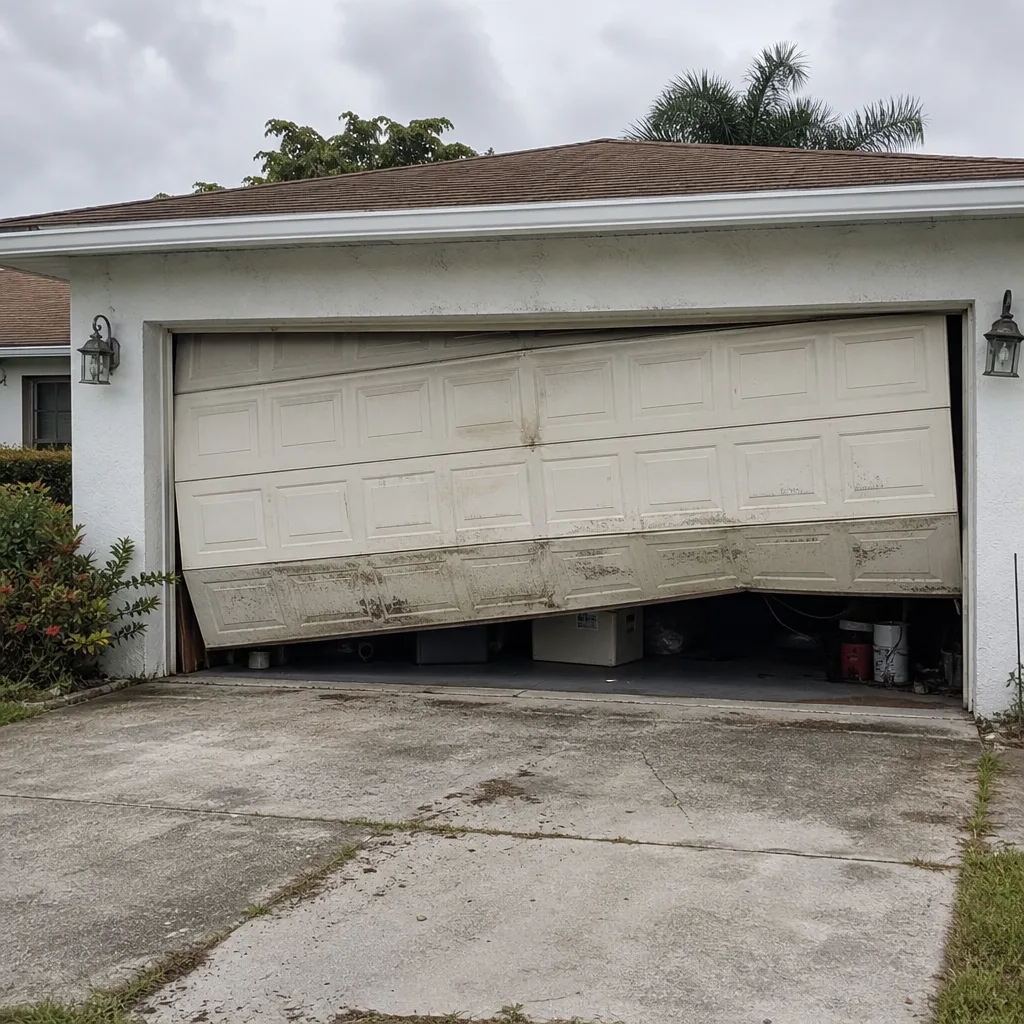 Before
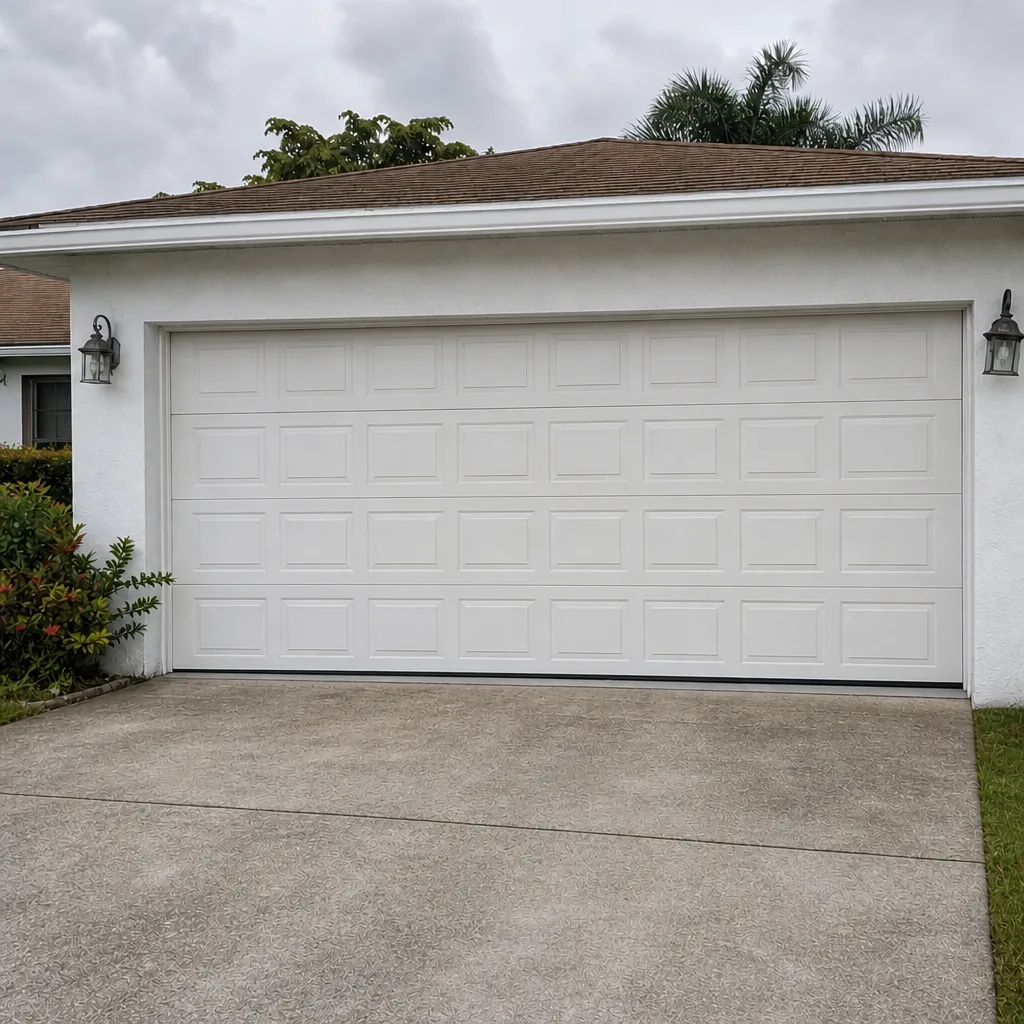 After
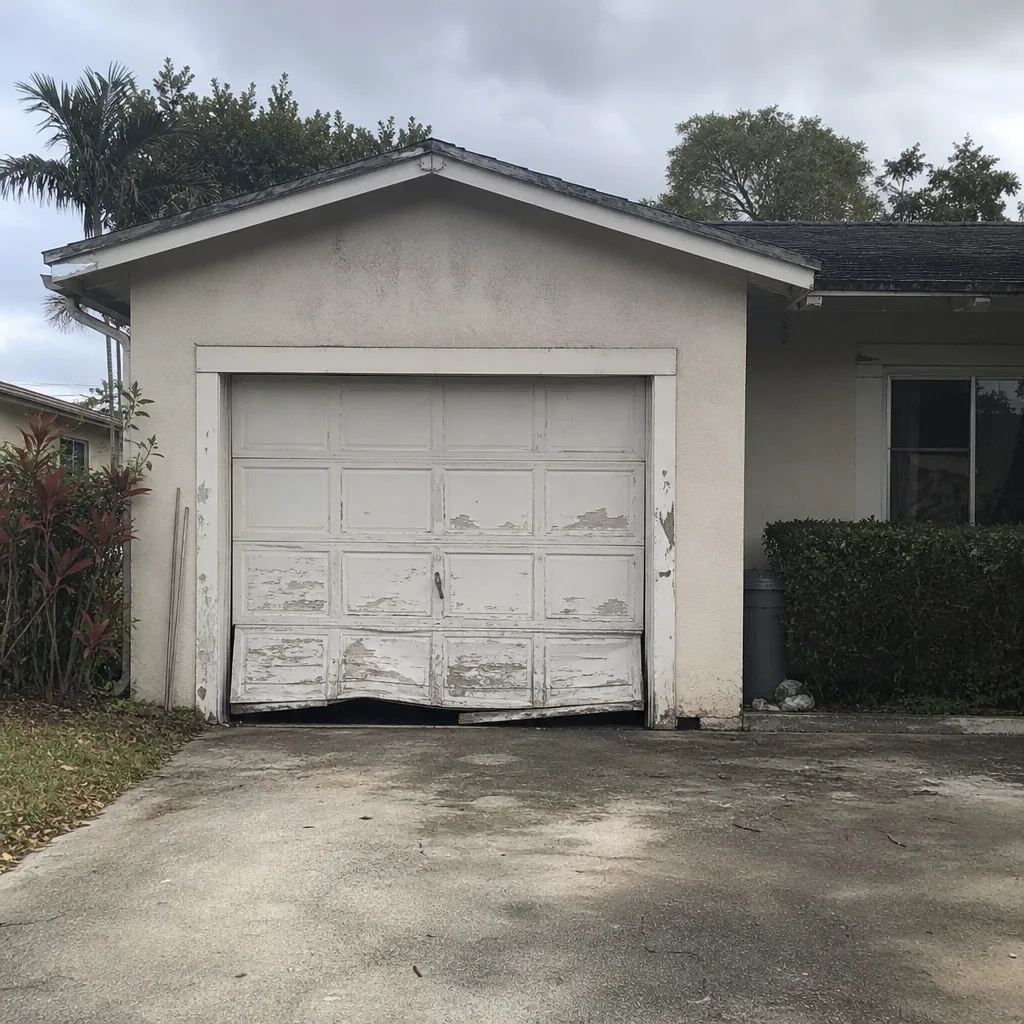 Before
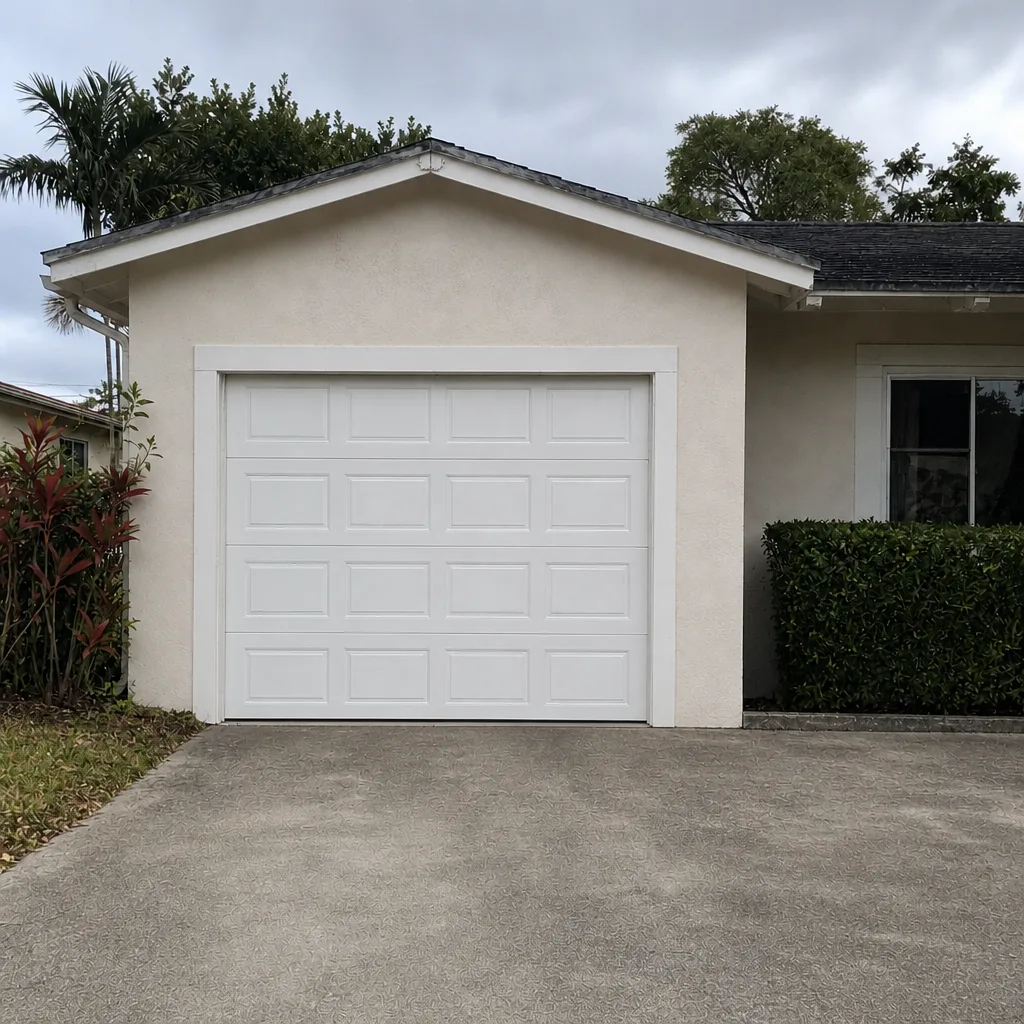 After
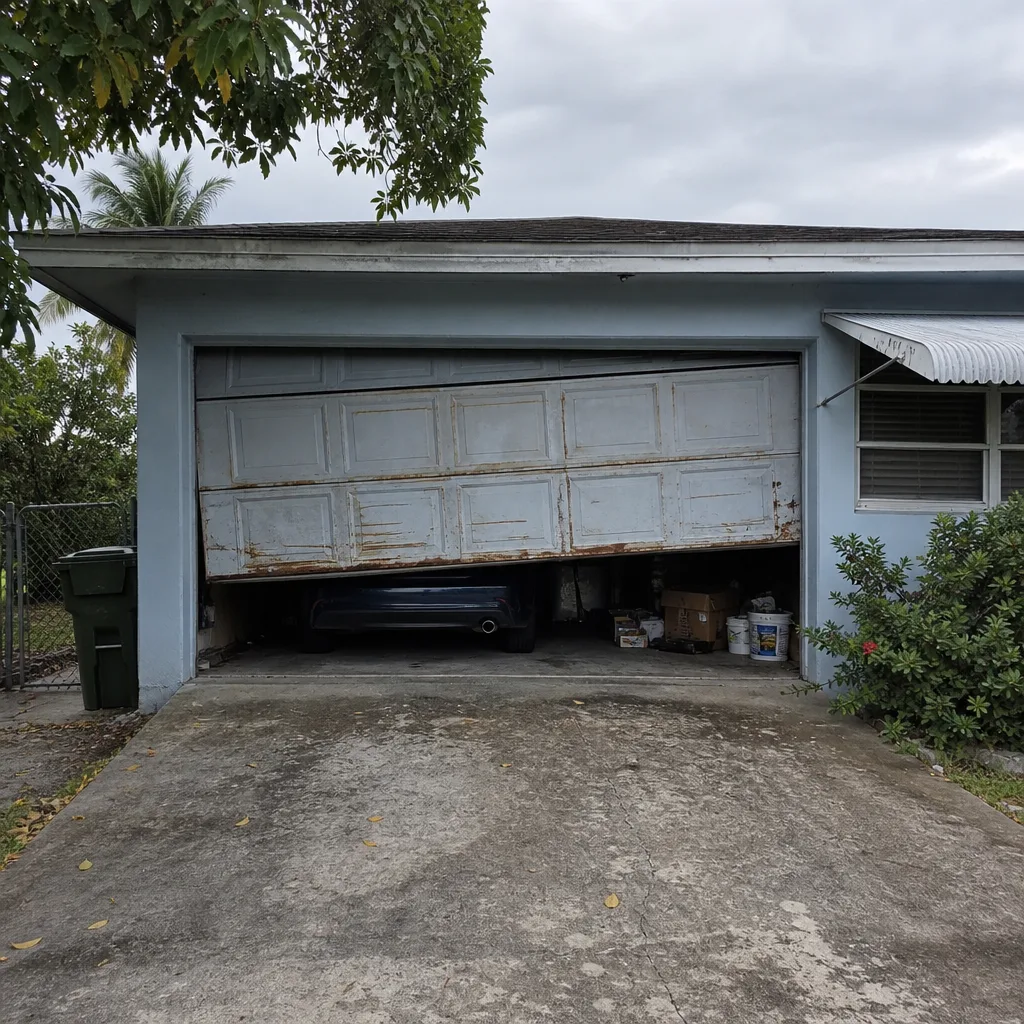 Before
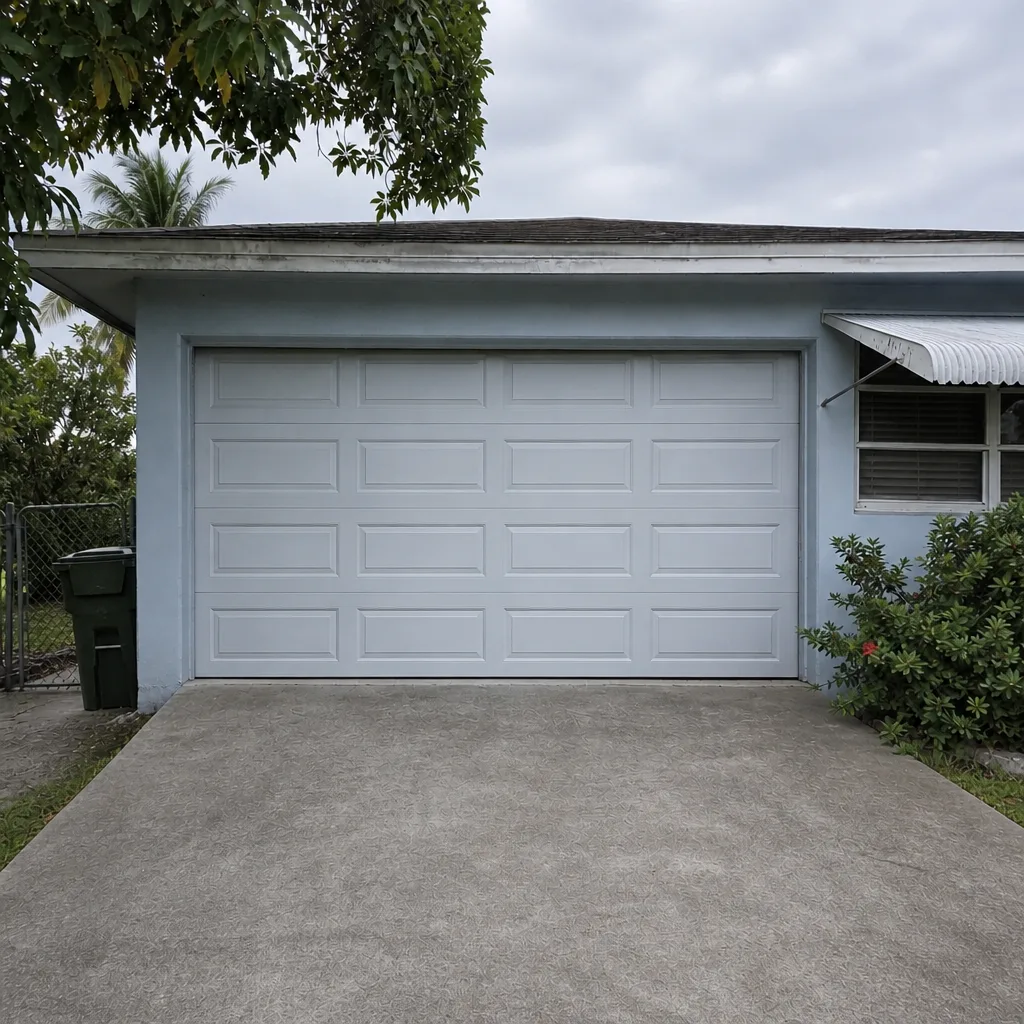 After
When to Call a Professional
Some problems need a pro, and forcing them rarely ends well. Call us when you hear a loud bang and the door won’t lift (spring), when the door hangs unevenly or a cable looks slack, when it’s off its tracks, when the opener runs but the door doesn’t move, or when sensor and limit adjustments haven’t fixed a reversing door. Call if the door feels dangerously heavy by hand, or if you’ve found a bent track that won’t straighten. Also call if a door won’t close and you can’t find the cause before someone needs to leave – a door stuck open on a Lake Worth Beach home is a security gap, and emergency service covers exactly that.
Garage Door Repair Lake Worth Beach offers free estimates in Lake Worth Beach – call (833) 756-5752. We work on springs, openers, panels, and the full system, so there’s no handoff between specialists. Whether it won’t open or won’t close, you get one point of contact and a price agreed before work starts.
Frequently Asked Questions
Cost depends entirely on which component failed, and the written estimate sets the final price. Roller, seal, and sensor fixes are usually the least expensive; opener repairs land in the middle; spring and cable repairs cost more because of the skill and safety involved. We can’t quote one flat price for every problem, so call (833) 756-5752 and describe what the door does. Estimates are free and agreed before any work begins.
Emergency service is available for doors that won’t open or won’t close, and most straightforward repairs can be handled quickly. Spring, sensor, and opener faults are the cases we get to on the same call when possible. Call (833) 756-5752 for an exact quote – estimates are free.
You’ll often hear a loud bang, and the door will open a few inches and stop, because the opener can’t lift the full weight without spring support. Look at the torsion bar above the door for a visible gap in the coil or a slack cable. Don’t lift the door by hand after a suspected spring break; call professional spring service. Call (833) 756-5752 to get it confirmed.
No, the price you’re quoted and agree to before work starts is the price you pay. Diagnosis drives the estimate, which is why describing the exact symptom helps. We don’t replace parts that aren’t the cause – if the springs are the problem, that’s what we fix, not the opener. Call (833) 756-5752 for a free estimate.
The local professional we connect you with is licensed and insured as their state requires, and our technicians have up to 15 years of experience across major brands. That matters most on springs and openers, where a correct diagnosis the first time avoids repeat repairs. Call (833) 756-5752 to book an estimate.
Usually the safety sensors – misaligned, obstructed, or blinded by afternoon sun – or the travel limit set too high. In Lake Worth Beach, a west-facing door can reverse only in the late day when sun hits a sensor. Clear and re-aim the sensors first; if the door still reverses, the springs or travel limit need a technician. Call (833) 756-5752 for a diagnostic if it persists.
The Bottom Line
Most garage door problems have a clear cause, and the trick is tracing the symptom to the right component before you buy anything. A door that lifts a few inches and quits points to springs, not the opener; a door that reverses on the way down points to sensors or the travel limit; noise points to rollers or the track. In Lake Worth Beach’s humidity, watch for seizing rollers, a rotting bottom seal, and a spring rusting toward failure. Test springs with the manual disconnect, fix only what’s genuinely DIY-safe, and always leave torsion springs and cable drums to a professional. Describe the exact symptom, get a written price before work starts, and you’ll avoid the upsell most homeowners fall for.
Still Not Sure What’s Wrong? Call Us
If you’ve run the tests and still can’t pin down the fault, that’s exactly what we’re here for. Garage Door Repair Lake Worth Beach diagnoses springs, openers, tracks, and sensors as one system – no bouncing between specialists. Whether it’s a door that won’t open, a door that won’t close, or a noise you can’t place, describe it and we’ll tell you what’s likely wrong and what it should cost. Free estimates, price agreed before any work begins, emergency service available. Call (833) 756-5752 for a free estimate and let us trace it to the real source.
Written by the team at Garage Door Repair Lake Worth Beach.