Last updated November 22, 2026
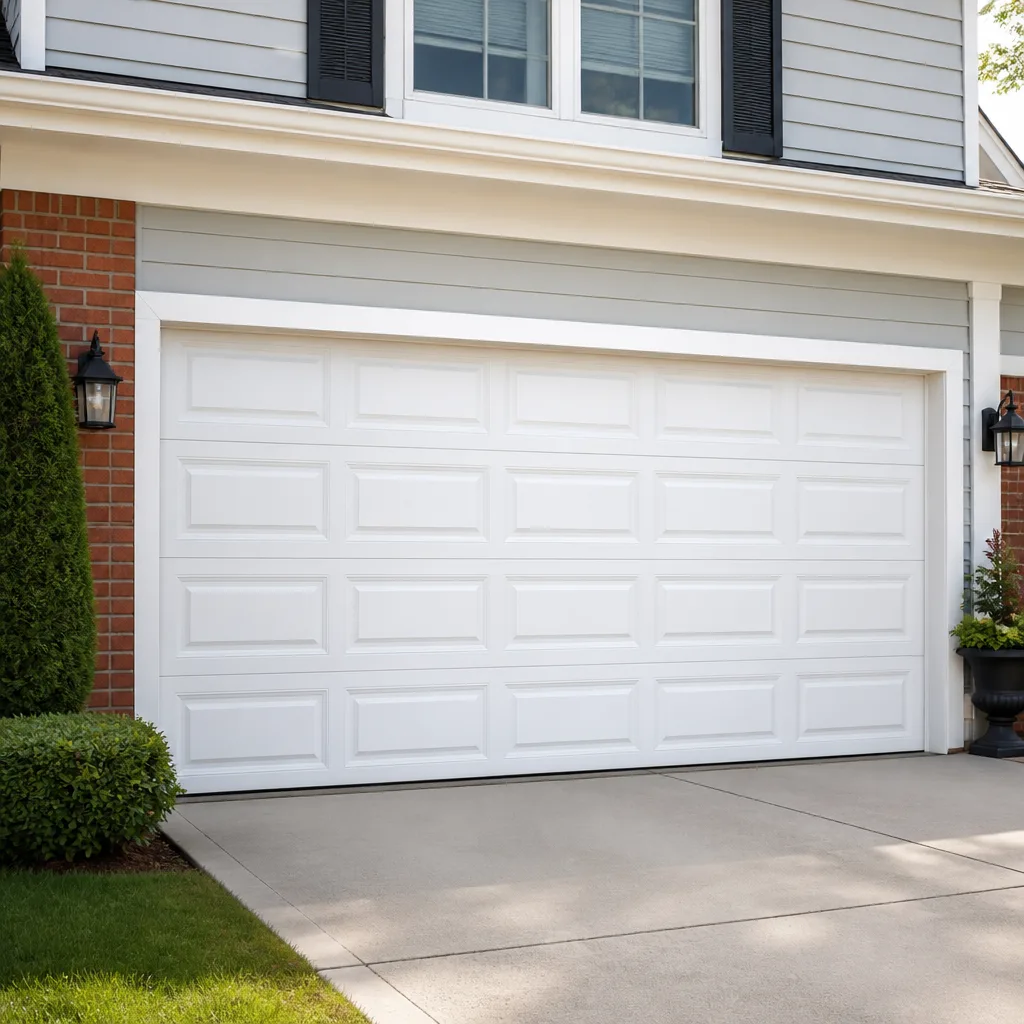 Raised-panel steel
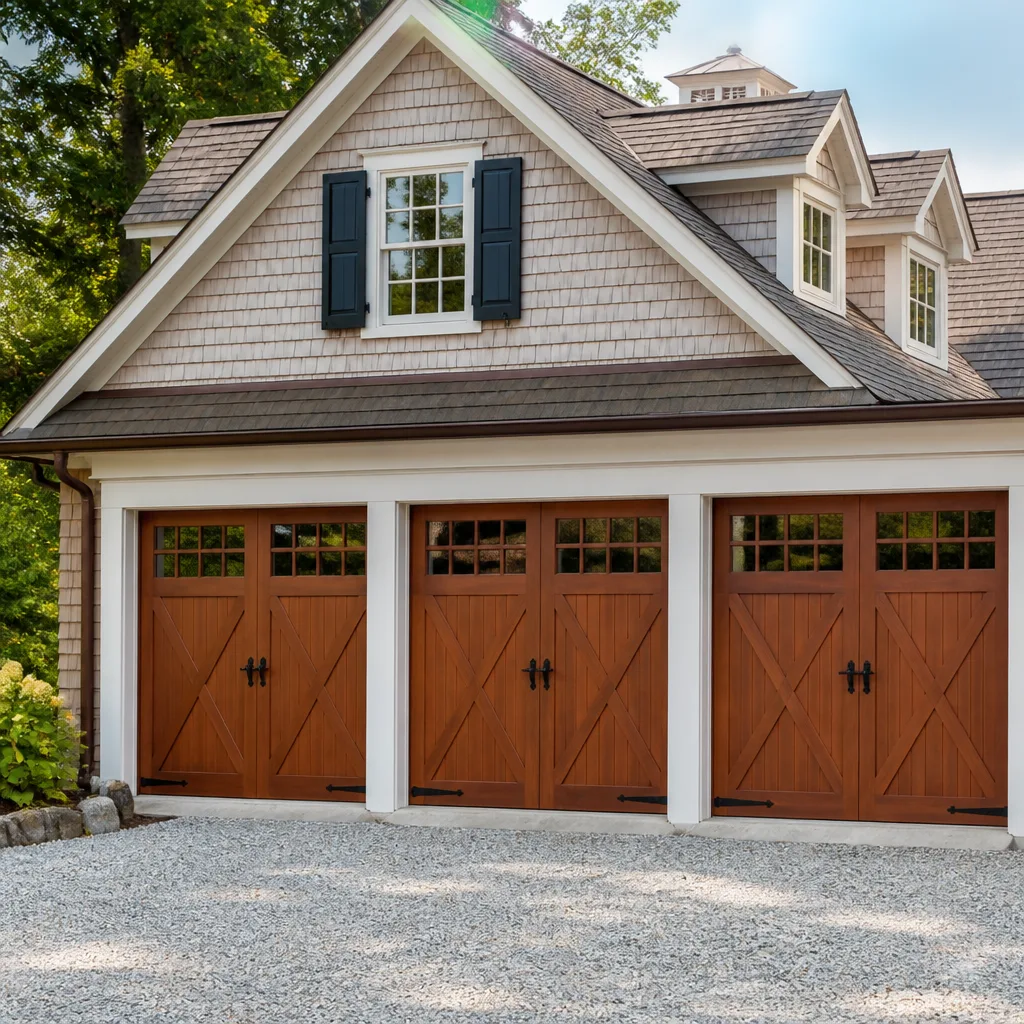 Carriage house
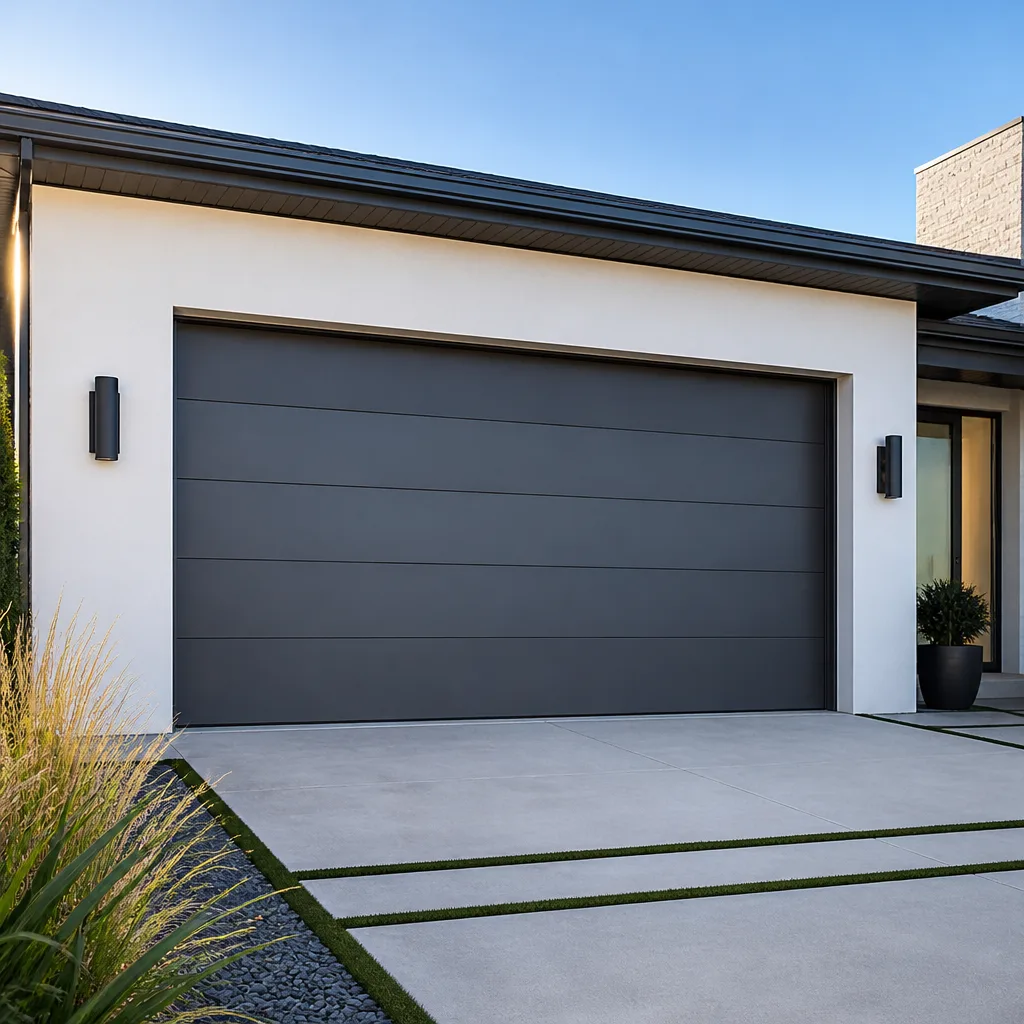 Modern flush
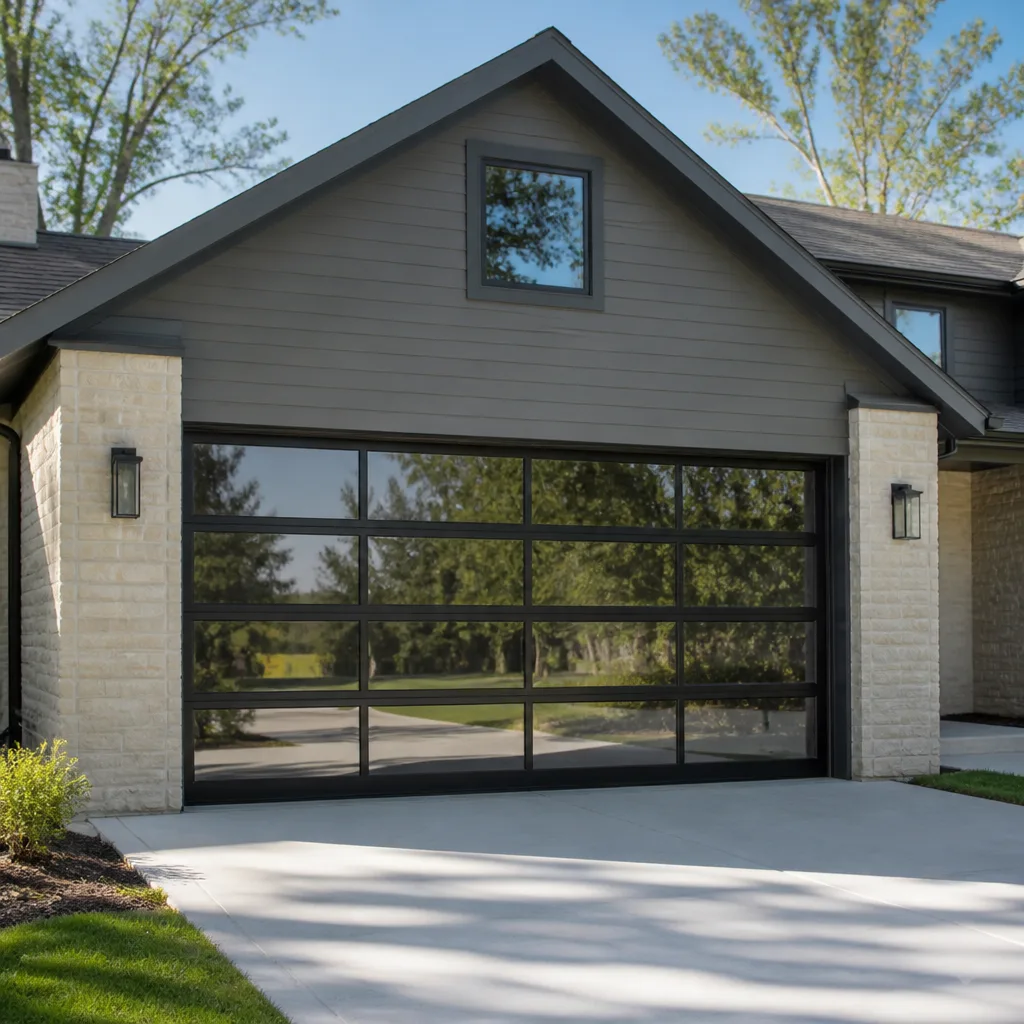 Full-view glass
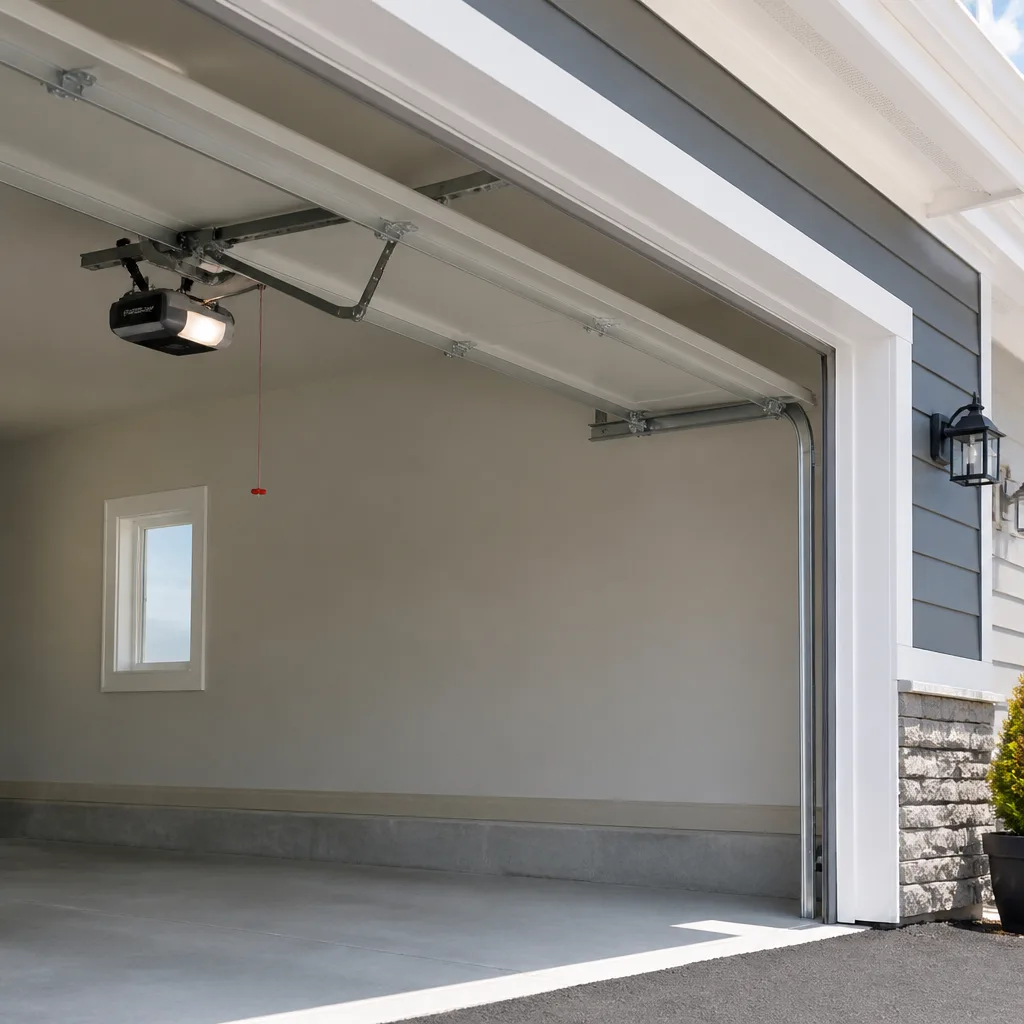 LiftMaster openers
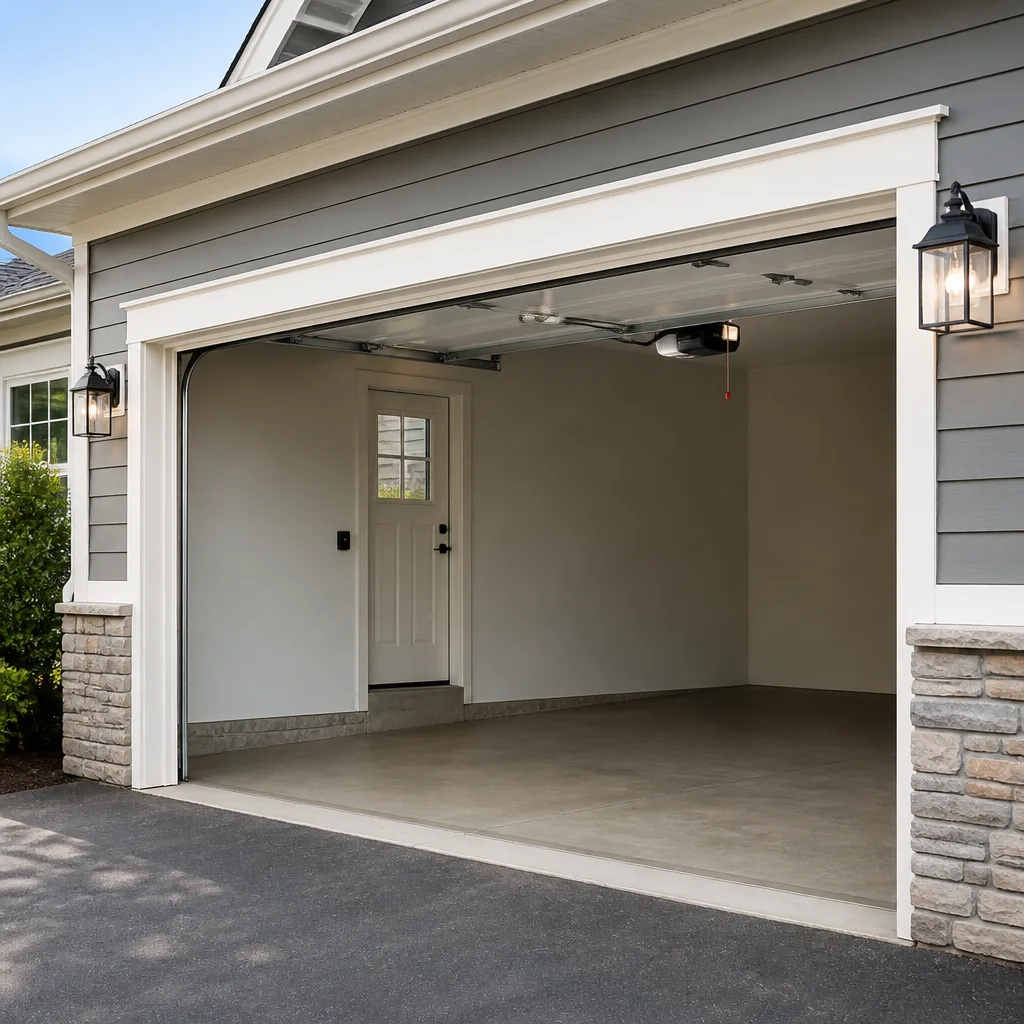 Chamberlain openers
Full 25-point door and opener safety check with every visit - springs, cables, rollers, tracks, and your LiftMaster or Chamberlain opener included
You get a price before we start. It does not change when the pro arrives.
Get your free estimateSeasonal Garage Door Care for Lake Worth Beach: Year-Round Homeowner’s Guide
Most garage door advice you’ll read was written for a climate with four tidy seasons. Lake Worth Beach doesn’t have those. What we have instead is a dry stretch from November through April that quietly pulls metal hardware out of alignment, a rainy season that works on springs and rollers for months, and a heat peak that bakes south- and west-facing doors. That’s the counterintuitive part: a door that tracked perfectly in September can be off-balance by February without a single thing breaking. The dry air did it. In this guide we’ll map every maintenance task to the cycles Lake Worth Beach actually runs on, with specific part names, pass/fail criteria, and a month-by-month calendar you can keep on the wall.
Quick Answer
Garage door maintenance in Lake Worth Beach follows four local phases, not four traditional seasons: a pre-hurricane structural audit in May, rainy-season monitoring of corrosion and drainage from June through September, a post-contraction tension and lubrication check in the dry months, and heat-peak inspection of sun-facing door panels in July and August. Each phase takes 20 to 45 minutes and targets a different failure mode. Skip a phase and the symptom shows up two to three months later, usually as a door that jerks, drags, or won’t close flush.
Styles & brands we work with
- Raised-panel steel
- Carriage house
- Modern flush
- Full-view glass
- LiftMaster openers
- Chamberlain openers
Table of Contents
- Why Lake Worth Beach Seasons Work Differently on Your Door
- Pre-Hurricane Season (May): The Full Structural Audit
- Rainy Season (June – September): Drainage, Corrosion, and Swelling
- Heat Peak (July – August): Sun-Facing Panels and Warp
- Dry Season (November – February): Contraction and Tension Drift
- The Annual Task Calendar by Month
- Common Mistakes to Avoid
- When to Call a Professional
Why Lake Worth Beach Seasons Work Differently on Your Door
A garage door is a system of metal under tension, and metal responds to temperature and humidity whether or not anything wears out. In Lake Worth Beach the swing between the dry season and the wet season is what moves your door, not the calendar on the wall. From November through April, humidity drops and metal contracts. Torsion springs, cables, and track hardware all shorten by a fraction of an inch. That’s enough to shift cable tension and take a door slightly out of balance. You won’t hear a snap. You’ll notice the door feels heavier when you lift it by hand, or the opener strains for an extra second at the top of travel.
Then the rainy season arrives, usually in late May or June, and the process reverses. Humidity climbs, wood and wood-composite panels absorb moisture, and the corrosion clock on springs and rollers starts running faster because condensation forms on cool metal every morning. Doors that live on south- and west-facing walls get a third force: direct sun heating dark panels to a surface temperature well above the air temperature, which is where long-term panel warp begins.
That’s why a fixed spring-and-fall checklist borrowed from a national blog won’t serve you here. The tasks are the same parts, but the timing is inverted. In Lake Worth Beach, your heaviest structural inspection belongs in May, before storm season, and your tension re-check belongs in the dry months, after the contraction has already happened. Our technicians have up to 15 years of experience reading these local patterns, and the sequence below is how we walk a door through a full year.
Pre-Hurricane Season (May): The Full Structural Audit
May is the month to look at the whole system while it’s still calm. This audit is about finding anything that would fail under wind load or vibration, not about tightening bolts for their own sake. Work through it in this order, and stop the moment something fails a check.
- Track anchor bolts. Run a wrench by hand along every track bracket on both sides. Pass: no bolt turns more than a quarter turn. Fail: any bolt that spins freely, or a bracket that’s pulled loose from the wall or the jamb. Loose anchors mean the track can shift under load.
- Spring tension and balance test. Disconnect the opener using the manual release, lift the door halfway, and let go. Pass: the door holds position or drifts only slightly. Fail: it drops or rises on its own. That’s an out-of-balance door, and it points to spring tension.
- Bottom seal integrity. Look along the full width of the bottom seal where it meets the floor. Pass: continuous contact, no daylight, no tears. Fail: gaps wider than a finger, cracked or torn rubber, or a seal that’s pulled away from the retainer.
- Manual release test. Pull the release handle and confirm the door moves freely by hand and the trolley disengages cleanly. Pass: smooth release and re-engagement. Fail: a stiff or stuck release, which is a real problem if you ever need to open the door without power.
- Cable and drum inspection. Look at the cables along the sides for fraying, kinks, or slack. Pass: cables lying evenly in the drums. Fail: any frayed strand or a cable that’s jumped its groove.
One hard safety note: the torsion spring and its cables are under extreme tension and can cause serious injury if handled without the right tools and training. Never try to adjust, tighten, or remove a torsion spring yourself. Visual inspection from a distance is fine; the moment a check fails on the spring or cable, that’s a job for a trained technician. If your audit turns up a balance problem, spring work is the likeliest cause, and that’s exactly what garage door spring repair is for.
Rainy Season (June – September): Drainage, Corrosion, and Swelling
From June through September, water and humidity do slow, patient work on a garage door. None of it fails dramatically, which is why it gets ignored until a roller grinds or a door stops closing flush. Three things need attention during this stretch.
Drainage around the door base
Stand inside the garage during heavy rain and look at the floor line under the door. If water is pooling at the threshold or running in under the bottom seal, the seal isn’t the only issue, the grade outside probably slopes toward the door. Pass: the apron drains away from the door and the floor stays dry. Fail: standing water, damp concrete, or a visible wet line on the inside of the bottom panel. Fix the grade or add a threshold before the water reaches the panel.
Corrosion on springs and rollers
Condensation forms on cool metal every morning of the rainy season. Run a finger along a roller stem and a spring coil and look for orange-brown dust. Pass: clean metal with light grease still present. Fail: rust bloom, pitting, or a roller that squeals when the door moves. Rusted rollers should be replaced, not greased over.
Wood composite swelling
If your door is wood or a wood composite, humidity makes panels absorb moisture and swell slightly. That can bind a door in its tracks and change how it seals at the bottom. Pass: panels slide freely with no rubbing at the stiles. Fail: a door that rubs, sticks, or leaves the bottom seal proud of the floor. Clopay and Amarr both make composite and steel-backed panels that handle humidity far better than raw wood, which is worth knowing if a door is on its last legs.
If your door is sluggish, noisy, or grinding at any point during the rainy season, that’s the moment to look at garage door opener repair, since a struggling opener is often reporting a door that’s binding.
Heat Peak (July – August): Sun-Facing Panels and Warp
July and August are when direct sun becomes a structural force. A dark-painted panel facing south or west absorbs heat all afternoon, and over a season that heat cycles the panel from cool morning to hot afternoon and back again. The bottom sections of a door take the most of it because they sit closest to reflected heat off the driveway. Over time the bottom section can bow, and once it bows it no longer seals at the floor.
Here’s what to inspect during the heat peak:
- Bottom section flatness. Sight along the bottom panel from one side. Pass: a straight line. Fail: a visible bow or a gap that opens on one side and closes on the other.
- Panel-to-panel joints. Look at the horizontal seams. Pass: tight and even. Fail: one section sitting proud of its neighbor.
- Bottom seal after heat. Heat softens rubber seals. Pass: still flexible and in contact. Fail: a seal that’s flattened, cracked, or pulled away.
- Track straightness on sun-facing walls. Heat can also move the steel track a little. Pass: the door rolls with even clearance on both sides. Fail: rubbing on one side only.
If your garage door faces west and lives in full afternoon sun, consider whether the panel color is working against you. A lighter door absorbs less heat, and this is the single most overlooked variable when a Lake Worth Beach door starts bowing at the bottom. If a section is already warped beyond straightening, a replacement section usually solves it, and when the whole door is tired, a full new door is the cleaner answer. We handle installation of Clopay and other major brands so the project stays with one company from measure to finish.
Dry Season (November – February): Contraction and Tension Drift
This is the phase that surprises people. As humidity drops through the dry season, metal hardware contracts, cable tension shifts, and any lubrication applied in June has likely dried or thinned out. Doors that tracked perfectly in September are frequently off-balance by February. Nothing broke. The season moved the door. Do these checks once in November and again in late January.
- Manual balance test. Disconnect the opener, lift the door halfway, and let go. Pass: holds position. Fail: drifts down or up on its own.
- Cable tension re-check. Look at both cables for slack or uneven tension. Pass: cables straight and evenly tensioned. Fail: one side visibly looser than the other.
- Roller bearing lubrication. Dry air pulls the moisture out of bearing grease. Apply a proper garage door lubricant to the roller bearings, hinges, and spring coils. Pass: smooth, quiet movement. Fail: squealing or grinding that returns within a week.
- Weatherstrip gap check. As panels contract, gaps open at the sides and bottom. Pass: tight seal all around. Fail: daylight at any point, or a noticeable draft.
- Opener force and travel check. A contraction-shifted door makes the opener work harder. If it reverses on the way down or stops short on the way up, the opener is telling you the door balance has changed.
Lubrication is the one dry-season task most homeowners can do safely themselves. Use a garage door lubricant, not WD-40 and not cooking oil, and apply it to the moving metal, never to the track itself. Do not touch the torsion spring to adjust it. Leave that to a trained professional. If the balance test fails, or a cable has gone slack, that’s a spring repair issue, and it’s worth a call rather than a second attempt.
The Annual Task Calendar by Month
Print this and keep it on the garage wall. The pass/fail column is your go/no-go test for each month, and the “call if” note tells you when to stop and get a technician.
- January: Repeat manual balance test and weatherstrip gap check. Pass: door holds position, no daylight. Call if: door drifts or gaps won’t close.
- February: Re-lubricate roller bearings and hinges. Pass: smooth and quiet. Call if: squeal returns within a week.
- March: Inspect cables for fraying or slack. Pass: cables even in the drums. Call if: any frayed strand or a cable off its groove.
- April: Walk the full track and tighten hand-tight anchor bolts. Pass: no bolt spins freely. Call if: a bracket is loose from wall or jamb.
- May: Full structural audit (see the pre-hurricane section). Call if: balance, cable, or anchor checks fail.
- June: Drainage check and bottom seal inspection. Pass: floor stays dry, seal contacts the floor. Call if: water pools or the seal is torn.
- July: Sun-facing panel and bottom section inspection. Pass: bottom section straight. Call if: bowing or rubbing on one side.
- August: Corrosion check on springs and rollers. Pass: no rust bloom. Call if: rust or grinding appears.
- September: Post-storm visual inspection. Pass: door opens and closes clean. Call if: anything binds or the door won’t close flush.
- October: Test the manual release and re-engage the opener. Pass: smooth release and re-engagement. Call if: release sticks or won’t re-engage.
- November: Dry-season tension and lubrication check. Call if: balance test fails.
- December: Full year-end audit. Call if: any check above has failed since May and wasn’t fixed.
Common Mistakes to Avoid
- Greasing the track. Lubricant on the track collects grit and makes the door bind. Tracks stay dry; rollers and hinges get the grease.
- Guessing at a balance problem. If the door lifts hard or drifts, that’s a spring tension issue. Trying to correct it with the opener’s force settings masks a real failure and puts the opener at risk.
- Ignoring the bottom seal because it looks fine. In the rainy season in Lake Worth Beach, a small gap lets water reach the bottom panel and starts a rot and corrosion problem you’ll only see months later.
- Using the wrong lubricant. WD-40 and cooking oil both fail in the dry season. Use a garage door lubricant designed for bearings and hinges.
- Skipping the manual release test. When the power is out and the door won’t disengage, that’s a genuine safety problem, and it’s a 30-second check you can do in October.
- Assuming a struggling opener is an opener problem. Far more often, the opener is reporting a door that’s out of balance or binding. Diagnose the door before replacing the opener.
- Waiting for a failure before calling anyone. A door that’s out of balance after a dry-season contraction puts wear on springs and rollers every time it runs. Caught in February, it’s usually a small fix. Caught in April, it’s often a bigger one.
See the difference
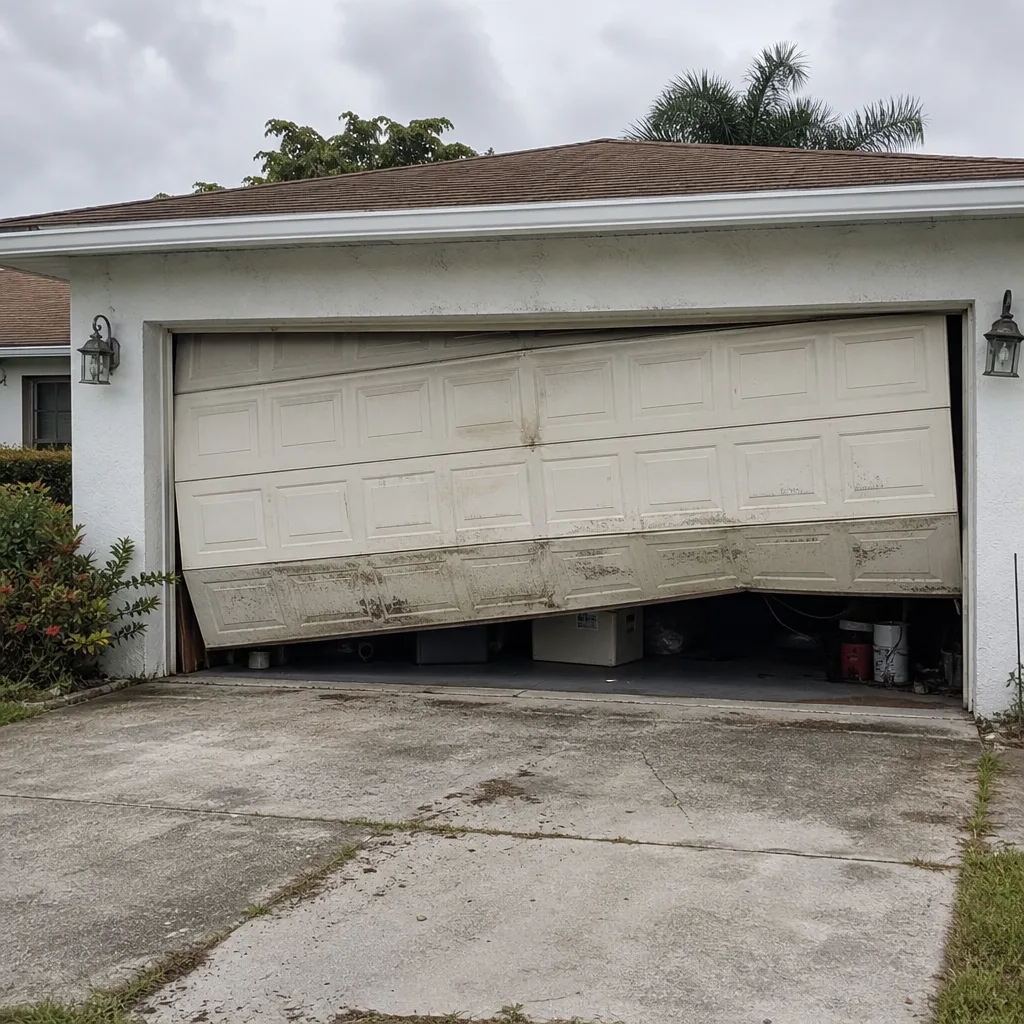 Before
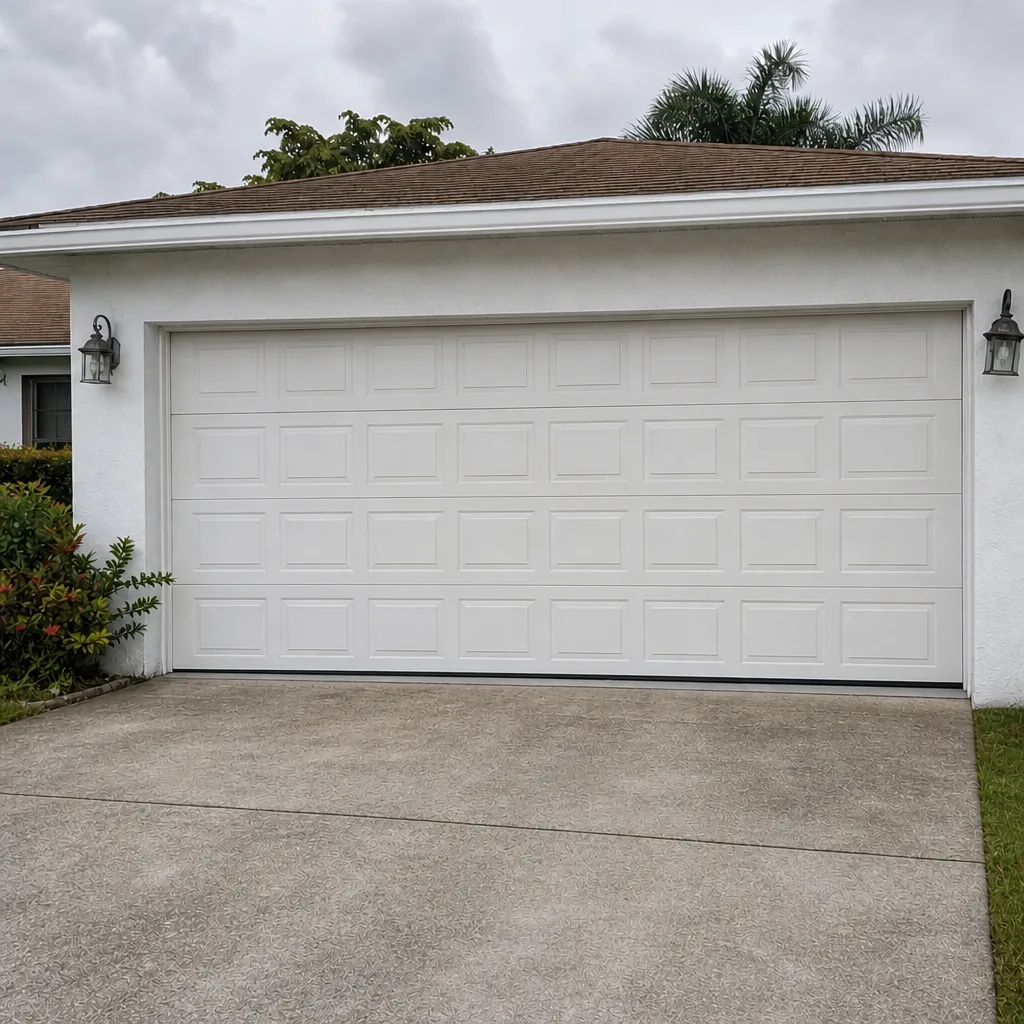 After
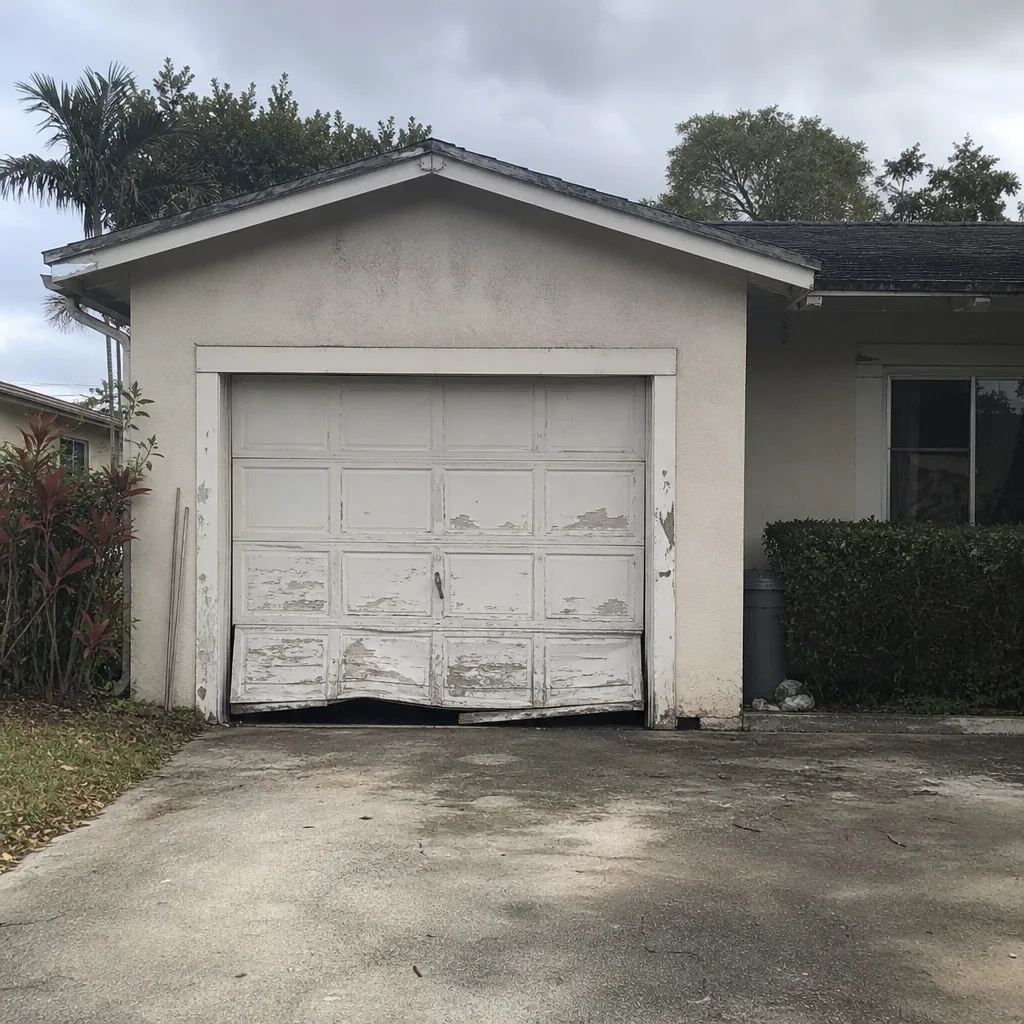 Before
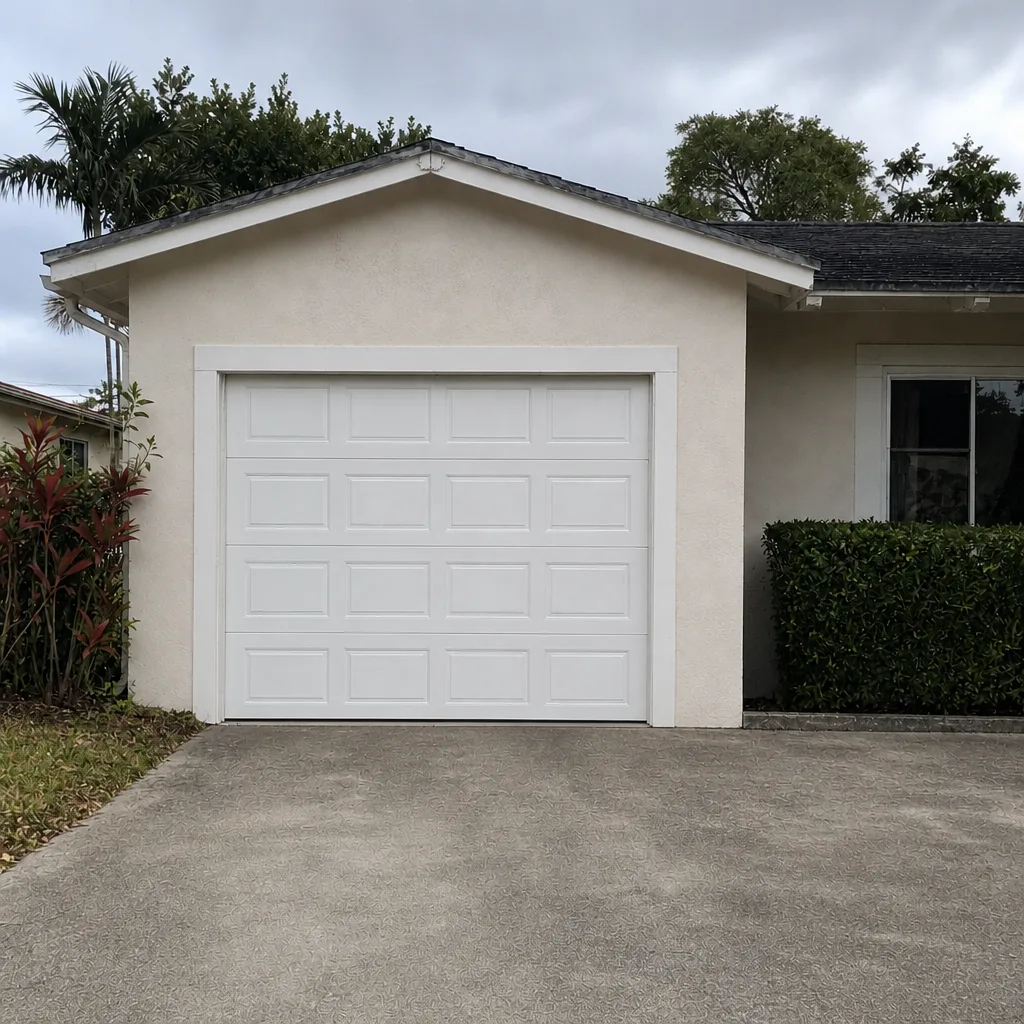 After
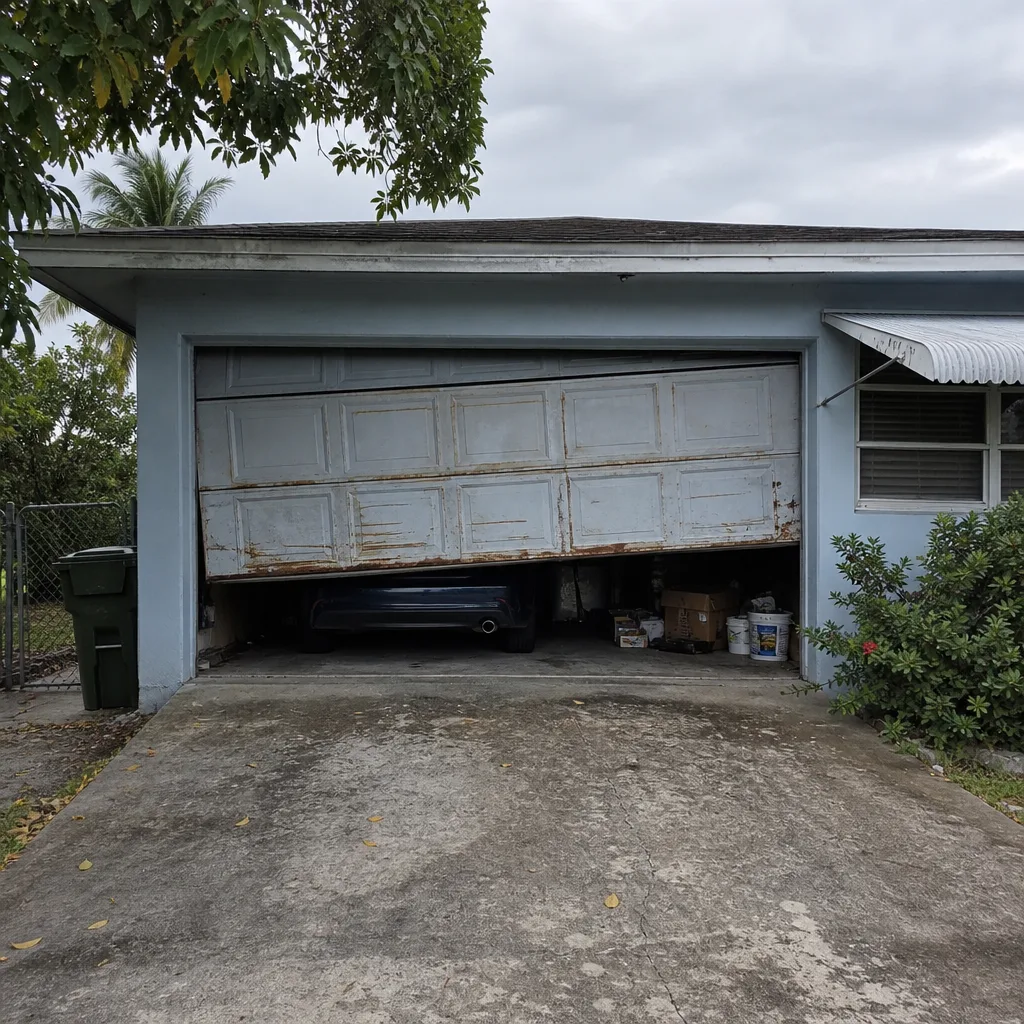 Before
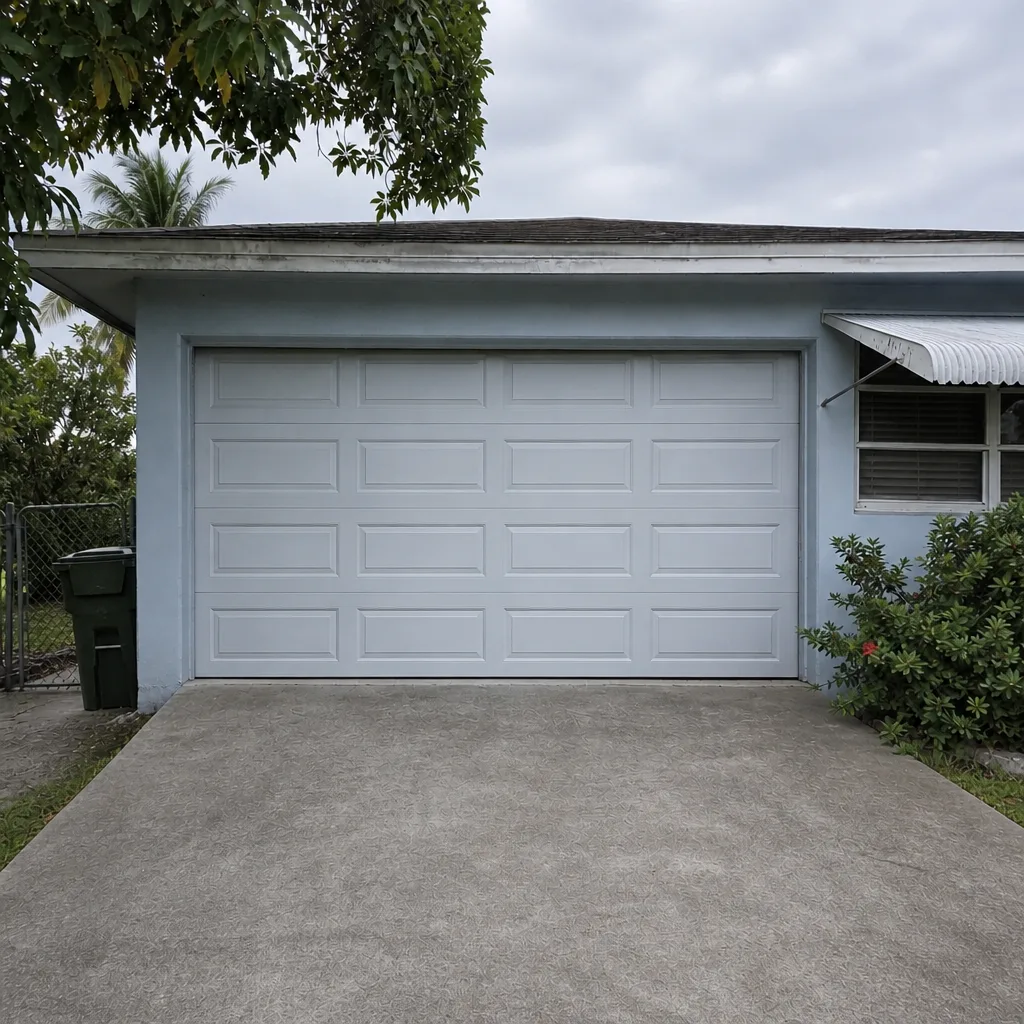 After
When to Call a Professional
Some of this guide you can do safely: visual inspections, lubrication, and the manual balance test. But several failure modes belong in the hands of a trained technician because they involve springs or cables under extreme tension, and getting them wrong can cause serious injury. Call us when the door drops or rises on its own during the balance test, when a cable looks frayed or has jumped its drum, when a torsion spring has visibly rusted or snapped, when anchor bolts are pulled loose from the wall, when a bottom section is bowing past straightening, or whenever a door won’t close flush and you can’t tell why. We’re trained on LiftMaster, Chamberlain, Genie, and Clopay hardware along with the other major brands, so we arrive already familiar with your system.
Garage Door Repair Lake Worth Beach offers free estimates in Lake Worth Beach. Call (833) 756-5752 and tell us what you’re seeing. We’ll diagnose it correctly the first time and quote the price before any work starts.
Frequently Asked Questions
Maintain it four times a year, timed to the local cycles rather than the calendar: a full structural audit in May before hurricane season, a corrosion and drainage check in June, a sun-panel inspection in July or August, and a tension and lubrication check in November and again in late January. Each visit is 20 to 45 minutes.
Dry-season air from November through April causes metal hardware to contract, which shifts cable tension and takes the door slightly out of balance. That’s a seasonal effect, not a worn-out door, and a balance check will confirm it. If the manual test shows the door drifting, call (833) 756-5752 for a free estimate.
Yes, in the sense that it accelerates corrosion. Condensation forms on cool metal every morning during the rainy season, and rust builds up on springs and roller stems over time. Inspect for rust bloom monthly from June through September and replace rusted rollers before they start grinding on the track. When springs show rust that’s gone beyond surface bloom, that’s a spring repair call, not a lubrication one.
No. Torsion springs and their cables are under extreme tension and can cause serious injury if handled without the right tools and training. A balance test is safe to run. Adjusting the spring is not. Schedule a spring repair with a trained technician and have the whole door checked at the same time.
Yes. Before May ends, pull on the manual release, check the track anchor bolts by hand, run the balance test, confirm the bottom seal contacts the floor, and inspect both cables for fraying. Anything that fails those five checks is a real weakness under wind load, and it needs a technician’s eye. Call (833) 756-5752 to schedule the audit.
Most of the time it’s the door. Heat, swelling composite panels, and binding tracks make the door harder to move, and the opener is reporting that by straining or reversing. Have the door checked for balance and binding first, and only replace the opener if the door checks out clean.
Sometimes a single bottom section can be replaced without touching the rest of the door, and that’s the economical fix when the rest of the panels are flat. If several sections have bowed, a full door replacement is usually the better long-term answer. We handle both, so you’re not bounced between a repair shop and an installer.
The Bottom Line
Lake Worth Beach runs on a dry-air contraction phase, a rainy-season corrosion phase, a heat-peak panel phase, and a pre-hurricane structural phase. The parts to watch are the same all year. The timing is what changes. Do the May audit, the June corrosion and drainage check, the July and August panel inspection, and the November and January tension and lubrication checks. Pass the balance test, keep the bottom seal tight, and leave the springs and cables to a technician. A little seasonal attention in the right month keeps the door running smoothly and catches small issues before they turn into a jammed door on a fast morning.
Contact
If your walkthrough turns up a balance problem, a rusty spring, a frayed cable, or a section that won’t seal, we handle springs, openers, and panels as one job. Garage Door Repair Lake Worth Beach provides garage door repair across Lake Worth Beach alongside new door installation, so whether it won’t open or won’t close, you get a single point of contact from diagnosis through completion. Call (833) 756-5752 for a free estimate on your garage door and let us walk through the seasonal checklist with you.
Written by the team at Garage Door Repair Lake Worth Beach.