Last updated November 22, 2026
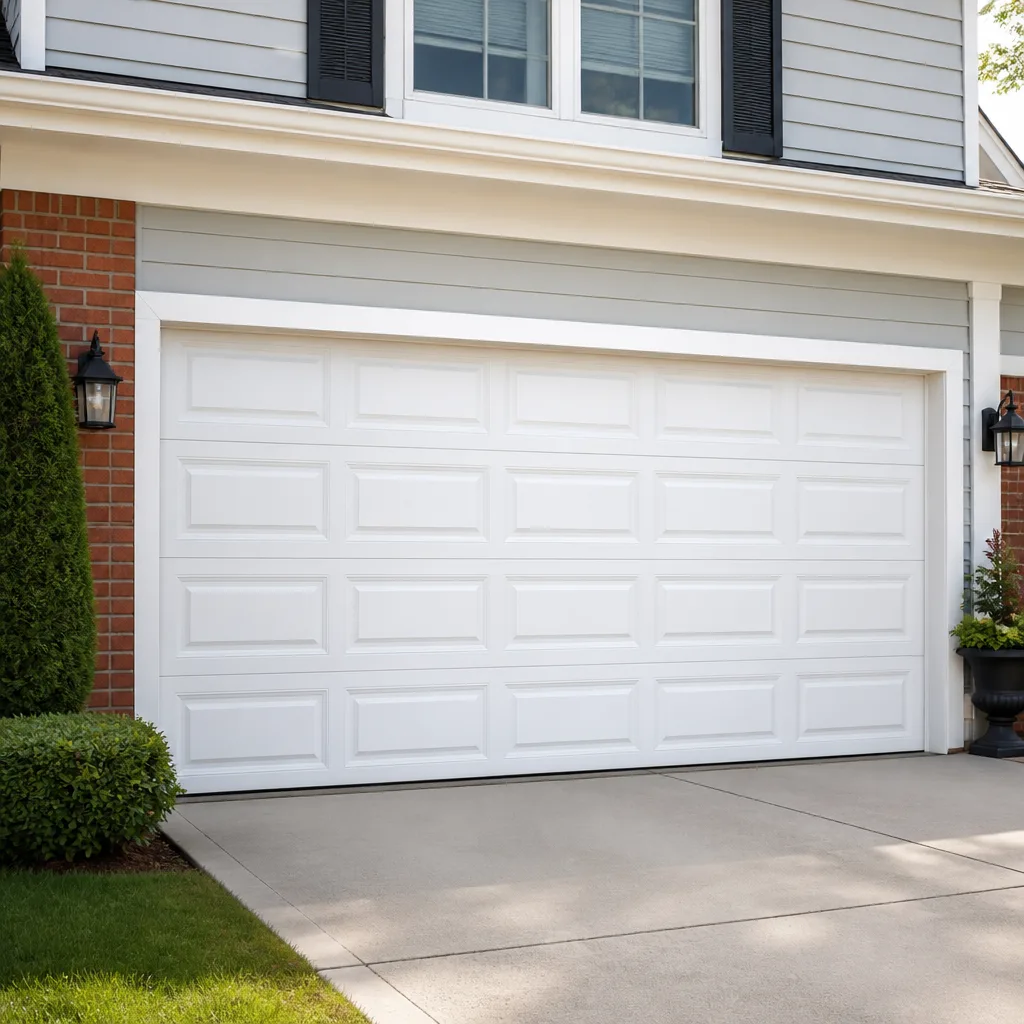 Raised-panel steel
 Carriage house
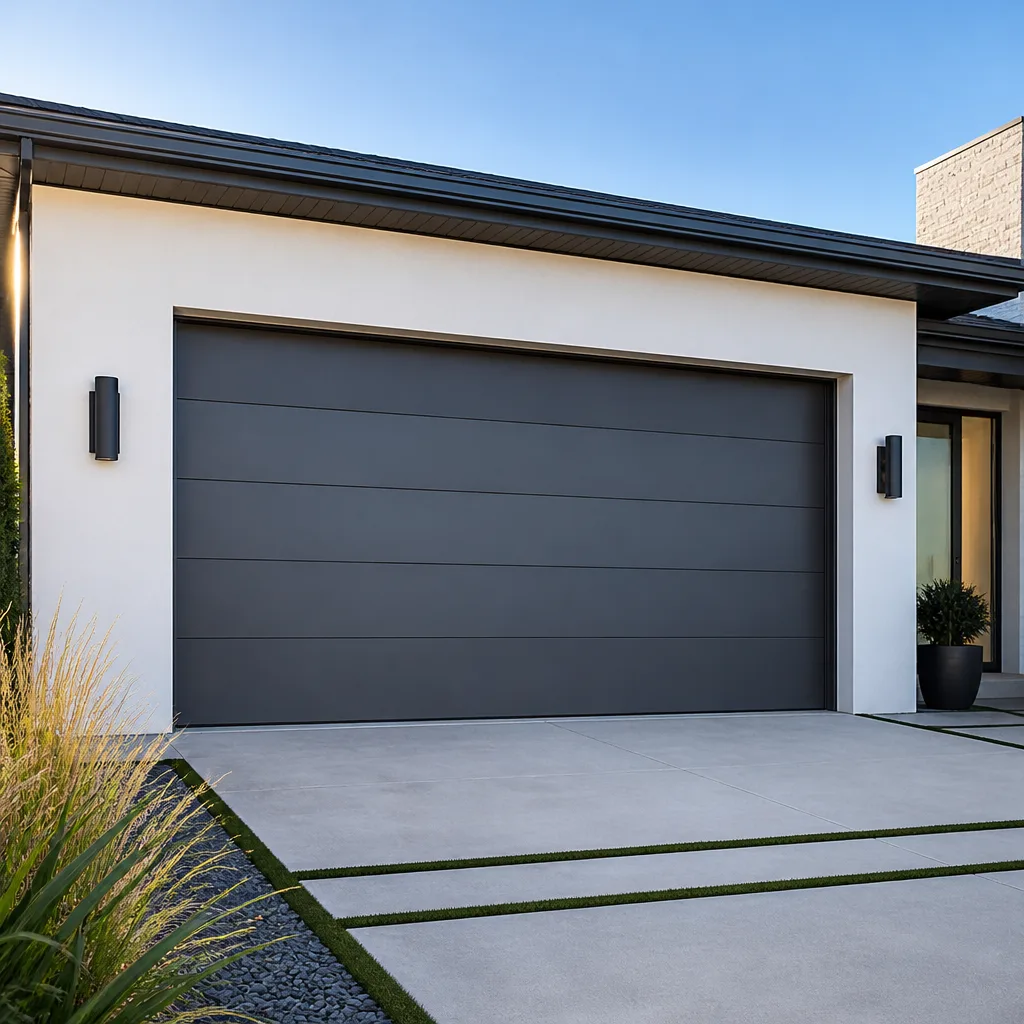 Modern flush
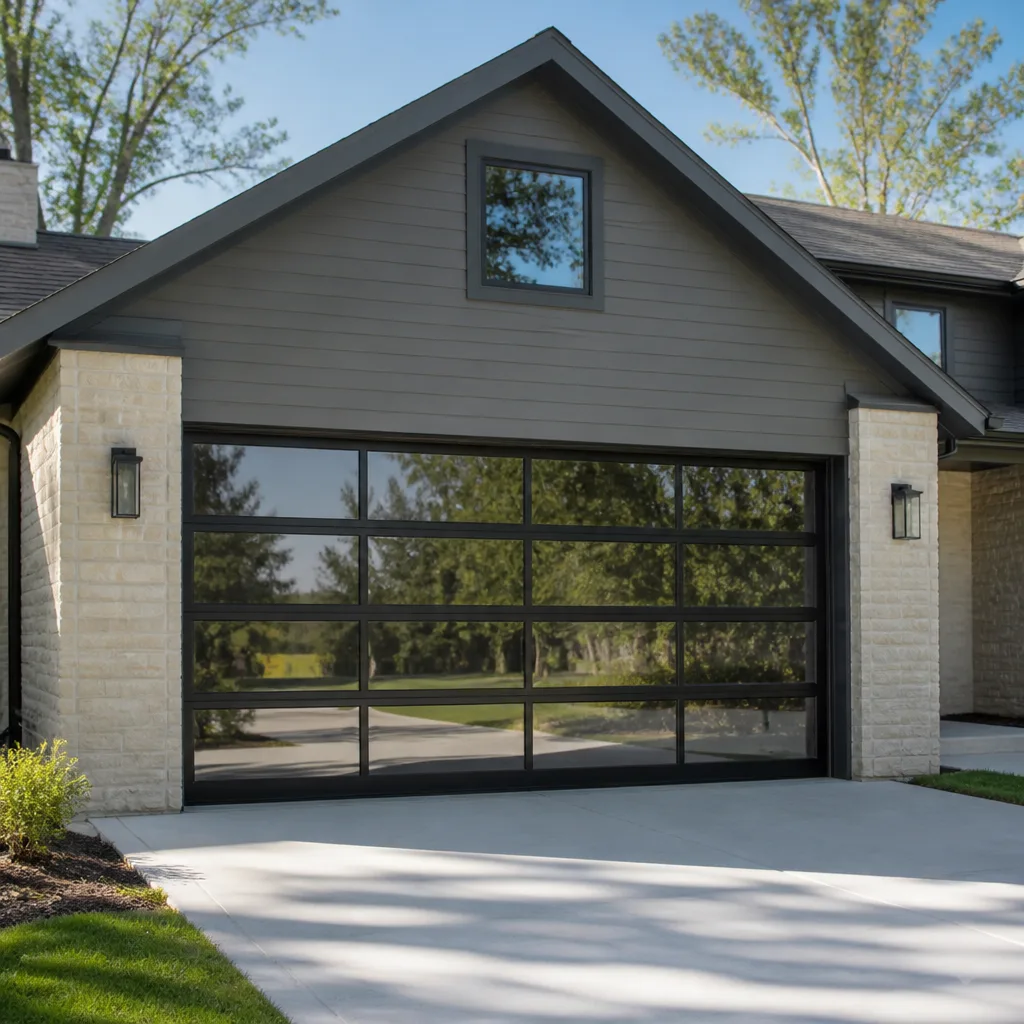 Full-view glass
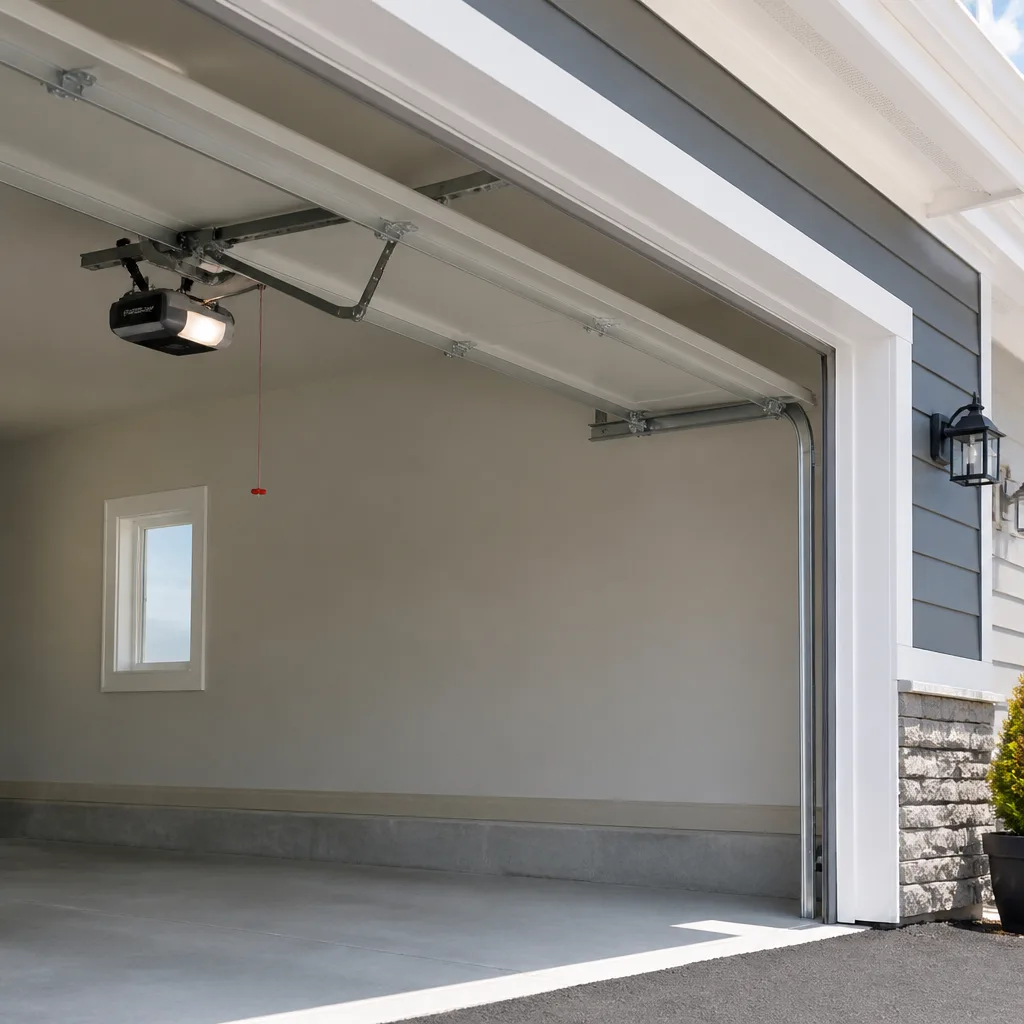 LiftMaster openers
 Chamberlain openers
Full 25-point door and opener safety check with every visit - springs, cables, rollers, tracks, and your LiftMaster or Chamberlain opener included
You get a price before we start. It does not change when the pro arrives.
Get your free estimateGarage Door Warning Signs: A Lake Worth Beach Homeowner’s Reference Guide
Most garage door warning-sign checklists describe the end of the story. The door won’t open. The spring snapped. The cable whipped. By then you’re not reading a guide, you’re calling for emergency help. The signals that actually matter in Lake Worth Beach show up weeks before any of that, and they start in the metal, not the motor. Humidity and warm, salty air do more to a garage door here than daily use ever will. This guide covers the pre-failure signs that point to a problem brewing inside the torsion system, the tracks, the rollers and the opener, and what each one means for how soon you should act.
Quick Answer
The most reliable early warning signs of a failing garage door in Lake Worth Beach are a half-second hesitation before the door moves, a door that drags or reverses on its own, a motor that hums without lifting anything, and rust that turns from light orange dust to dark red flaking on the torsion springs. Any one of these means the problem is already mechanical, not cosmetic, and should be inspected by a trained technician before the door fails completely.
Styles & brands we work with
- Raised-panel steel
- Carriage house
- Modern flush
- Full-view glass
- LiftMaster openers
- Chamberlain openers
Table of Contents
- The Half-Second Pause That Precedes a Broken Spring
- Reading Rust on Torsion Springs: Surface Oxidation vs. Red Rust
- Cable Warning Signs: When Fraying Becomes an Emergency
- Why Your Door Is Louder in the Morning Than the Afternoon
- Roller Wear: Nylon vs. Steel in a Humid Climate
- Opener Behavior That Points to a Mechanical Problem
- Track Alignment and What a Misaligned Track Tells You
- The Manual Release: When to Use It and When Not To
The Half-Second Pause That Precedes a Broken Spring
A door that pauses for half a beat before it moves is usually showing torsion spring fatigue, not a failing opener. That pause is the spring transferring load more slowly than it should. In Lake Worth Beach’s warm, humid air, the coil steel absorbs moisture and begins to lose its lubricity long before it visibly fails, which means the hesitation is the earliest signal you’re likely to catch. In our experience, that half-second gap often turns into a full break within two to three months if the spring isn’t evaluated.
Here’s what’s happening mechanically. A torsion spring is held under heavy tension at all times. When the door closes, the spring winds; when it opens, it unwinds and helps lift the weight. A healthy spring does this in a smooth, even release. A fatigued spring resists the initial unwind, so the opener fights through a moment of extra load before the door starts climbing. That moment is your pause.
How to check what you’re actually hearing and seeing, without touching the spring:
- Watch the first three seconds. Stand back from the door and watch it from a closed position. Does the opener motor start immediately but the door stays still for a beat? That’s the signal.
- Watch the door lift. Does it rise in a smooth arc or does it lurch slightly, then settle into speed? A lurch points to spring fatigue or a binding track.
- Listen for the opener. A healthy lift sounds steady. A strained lift sounds like the motor is pulling harder than it wants to, with a slight pitch drop at the start.
- Check the door’s balance when it’s down and disconnected. If the door feels unusually heavy when you try to lift it a few inches by hand, stop. Do not test further.
Torsion springs are stored energy under extreme tension. Never attempt to adjust, unwind or replace one yourself. That’s a job for a trained technician with the right winding bars and the know-how to read spring condition before it lets go. If your door is showing that pause, it’s time to have it looked at directly.
Reading Rust on Torsion Springs: Surface Oxidation vs. Red Rust
Not all rust on a torsion spring means the same thing. A light orange, powdery film that wipes away with a finger is surface oxidation and normal in South Florida. A rough, dark red, flaking coating that leaves pitting in the metal underneath means the spring is corroding internally and losing its structural integrity. The second kind needs a professional inspection promptly, especially in a Lake Worth Beach garage where humidity sits in the air most of the year.
Torsion springs are oil-tempered steel, and oil-tempered steel in a humid environment is always going to show some surface activity. The question is depth. Here’s how to tell the two apart with your eyes only, without touching the coil under tension:
- Surface oxidation: pale orange, powdery, sits on top of the steel, wipes off to reveal a smooth metal surface underneath. Not an immediate concern.
- Red rust: darker, thicker, crusty, often with visible flaking or scaling. The metal looks rough and pitted. This signals loss of section thickness and loss of spring force.
- Rust along the winding cones (the ends): a sign that moisture has been collecting in the hardware where the spring seats. Worth a look even if the coil itself looks okay.
- Rust on the center bearing plate: less urgent than spring rust but worth mentioning at your next tune-up, since a dry bearing adds load to the whole system.
We work on LiftMaster and Chamberlain opener systems regularly, and the one thing that surprises Lake Worth Beach homeowners is how quickly a spring that looked fine in spring starts looking rough by mid-summer. It’s not a defect. It’s the environment. If you see the dark red flaking kind of rust, that’s the point where a technician needs to look at the spring before it fails under load. It’s also where a routine garage door spring repair appointment prevents a broken-door emergency.
Cable Warning Signs: When Fraying Becomes an Emergency
A garage door cable that shows broken outer strands is not a maintenance item, it’s an emergency. Standard garage door lift cable is typically 7×19 aircraft-grade steel, which means seven bundles of nineteen fine wires each, wound together. Some surface fraying at the drum end is common. A broken strand anywhere along the straight run is a warning that the cable is at or near its failure point, and if it lets go while the door is up, the door can drop.
The visual difference between “watch this” and “stop using the door” comes down to strand count and location. Here’s the practical read:
- Loose wire ends at the drum: often normal, especially after a cable has run a few thousand cycles. Not a red flag on its own.
- One or two broken strands along the straight run: a warning. The cable is weakening, and the lost strands concentrate load onto the remaining ones. Schedule a professional inspection soon, and avoid running the door more than necessary.
- Three or more broken strands, or a visible kink or birdcage: treat it as an emergency. Stop using the door and call for service.
- Cable off the drum or wrapped unevenly: never operate the door in this condition. It can bind, snap or cause the door to fall.
In a Lake Worth Beach garage, humidity accelerates cable wear because condensation collects along the cable where it sits against the drum. The steel is galvanized for a reason, but any nick in the coating gives moisture a starting point. Cables are also one of the parts we see fail as a pair with springs, because when a spring loses force, the cable absorbs extra load on every cycle. That’s one reason garage door repair jobs here often turn out to involve both components at once. If you’re not sure which of the three conditions above you’re looking at, don’t run the door to find out. Get it looked at.
Why Your Door Is Louder in the Morning Than the Afternoon
A door that’s noticeably louder in the morning than the afternoon is usually showing thermal expansion in the track system, not just a need for oil. As the garage heats up during the day, the steel track expands slightly, the rollers find a slightly different contact point, and the door quiets down. When the temperature drops overnight, everything contracts and the door runs against a tighter clearance again. In Lake Worth Beach, where garages can heat up dramatically through the day and cool overnight, that swing is real and it’s measurable in how the door sounds.
The noise itself is diagnostic. Here’s what each type usually points to:
- Rattling metal on metal: loose track hardware or worn steel rollers. Worse when cold, better when warm.
- Grinding or scraping: a roller that’s seized or is running on a dry bearing. Doesn’t change much with temperature, which tells you it’s not thermal.
- Squealing at the top of travel: torsion spring or center bearing lube is gone. Gets worse in dry weather.
- Popping or snapping: hinge bind or a roller jumping a worn spot in the track. Worse when the door is under spring load.
Seasonal variation in noise is a nudge to have the door checked, not a problem on its own. If the morning noise is paired with any of the other signs on this page, the thermal issue is probably secondary to something mechanical. It’s worth having a technician look at the whole system: springs, openers, panels. You can read more about how we approach the full diagnostic at our Garage Door Repair Lake Worth Beach page, or call us and describe what you’re hearing.
Roller Wear: Nylon vs. Steel in a Humid Climate
Roller wear shows up differently depending on whether you’ve got nylon or steel rollers, and in a Lake Worth Beach garage the humidity makes that difference sharper. Nylon rollers are quieter and resist humidity well, but they can crack and flat-spot with age. Steel rollers are stronger but will rust and seize in a humid garage, especially if the bearing seal fails. Knowing which type you have tells you what to watch for and how urgently to act.
Here’s what to look for on each type:
- Nylon rollers: check for flat spots, cracks in the body, or a wobble as the door runs. Nylon that’s cracked can shatter under load. Wobble on a nylon roller is a moderate-priority replacement.
- Steel rollers: check for rust on the wheel face or bearing, a squeak on every revolution, or a wheel that spins roughly when the door is moving. Seized steel rollers score the track and can cause the door to jump. That’s a high-priority replacement.
- Either type: a roller that’s clearly off its stem or has visible play where it meets the hinge means the roller needs replacing before it binds.
The salt content in South Florida air isn’t the main driver here. It’s plain ambient humidity, which is high in Lake Worth Beach most of the year and accelerates rust on any unprotected steel. If you have steel rollers and see rust on the bearing, that roller is usually days to weeks from seizing, not months. Replacing rollers is a straightforward job, but it’s also a good moment to have the whole system inspected, since worn rollers and worn springs often show up together. A Genie or LiftMaster opener paired with a binding roller will strain harder, and that strain can shorten the opener’s life too.
Opener Behavior That Points to a Mechanical Problem
When an opener runs longer than usual, reverses unexpectedly, or hums without moving the door, the problem is almost always in the mechanical system, not the opener itself. The opener is doing its job: it’s sending force to a door that isn’t moving the way it should. Replacing the opener in that situation without fixing the underlying spring, cable or track issue just puts a fresh motor on a worn-out door mechanism. That’s a mistake we see regularly in Lake Worth Beach, and it’s one of the reasons a proper diagnostic matters more than a quick motor swap.
Three opener behaviors and what they usually mean:
- Motor runs longer before the door moves. A pause between the motor starting and the door lifting points to spring fatigue or a binding track. The motor is pushing against more resistance than it should.
- Door reverses unexpectedly. Some reversals are safety-sensor related (something in the sensor beam), but a door that reverses at the same point every time without any obstruction usually means the opener is hitting its force limit because the door is dragging.
- Motor hums but the door doesn’t move. This is often the opener’s internal gear or a stripped trolley, but it can also be a spring that’s lost most of its force. Do not keep pressing the button; that can burn out the opener motor.
If your LiftMaster or Chamberlain opener is showing any of these, it’s worth having the door and the opener looked at together. A dedicated garage door opener repair call can diagnose whether the fault is in the opener or upstream in the door system, and it’s usually faster than guessing. Our technicians have up to 15 years of experience reading these behaviors on the major opener brands, and the diagnostic is the same whether you’re in Lake Worth Beach or anywhere nearby.
Track Alignment and What a Misaligned Track Tells You
A garage door track that’s visibly bent, gapped at the joints, or out of alignment with the door is often the first thing that moves when something else is failing. The door slams into one side of the track when a spring loses force. The roller pops out when a cable goes slack. The track isn’t usually the root problem; it’s the symptom. In a Lake Worth Beach garage, humidity can also cause the wood framing around the track to swell slightly, which pushes the track out of alignment over time.
What to look at, without adjusting anything:
- Track gap at the section joints: a vertical gap where two track sections meet allows a roller to catch. Any visible gap is a flag.
- Horizontal track not level with the door: look along the horizontal track from the side. If it dips or rises more than a hair, the door is fighting the track.
- Bent track near the curve: the curved section where the horizontal meets the vertical is the highest-stress point. A dent here usually means the door has been forced against resistance.
- Track loose from the wall: step back and look at the mounting brackets. Any loose bracket is a flag, since a shifting track can let the door drop out of alignment mid-travel.
Adjusting track is not a do-it-yourself job. Track work involves a door under spring tension, and a door that slips off a track can fall. Have a technician look at the alignment. If the door is also showing spring fatigue elsewhere in this guide, that’s likely the real cause, and the track correction is a follow-on. Our team sees this pattern regularly on the older homes in Lake Worth Beach, where a garage built decades ago has settled into its frame slightly, and a lifetime of heat and humidity has done the rest.
The Manual Release: When to Use It and When Not To
The red pull handle on your opener trolley disconnects the door from the motor so it can be moved by hand. It’s there for power outages and emergencies, not as a general convenience. In Lake Worth Beach, where summer storms can knock out power for hours, knowing when and when not to pull it matters. Pulling it at the wrong moment can drop a door that was only being held up by the opener.
A quick decision guide:
- Pull it if: the opener has failed, the door is fully closed, and you need to get the car out. Disconnect, lift the door by hand until it’s fully open, then prop it or tie it carefully.
- Don’t pull it if: the door is already partially open and you can’t see the springs or cables. The opener may be the only thing holding the door up. Pulling the release in that state can let the door drop.
- Don’t pull it if: a spring has visibly broken. The door will be extremely heavy, and lifting it by hand can cause injury or further damage to the panels.
- Never force it back into engagement: if the door is not in the closed position, the trolley won’t reconnect cleanly. Call for service instead of trying to re-engage it by force.
If a door is stuck and the manual release isn’t safe to use, that’s the moment to call. Our emergency garage door service is a core part of what we do, not an add-on, and we’re set up to respond when a door won’t open in the morning or won’t close at night. We handle Clopay doors regularly, and we can usually tell from a photo and a quick conversation which way to approach the conversation.
Common Mistakes to Avoid
- Oiling the spring and calling it fixed. Lubricant quiets noise but doesn’t restore lost spring force. If a spring is fatigued, oil just hides the symptom until it fails.
- Replacing the opener when the door is the problem. A new motor on a worn-out spring, cable or track just fails faster and costs more. Diagnose the mechanical system before replacing electronics.
- Ignoring a morning-only noise. If the door is louder when cool and quieter when hot, that’s thermal expansion telling you something is out of adjustment. Don’t wait for it to get loud all the time.
- Running the door on rusted steel rollers. Rust on a roller bearing means the roller is seizing. Running the door in that state scores the track and can jump the door off alignment.
- Pulling the manual release as a test. Some Lake Worth Beach homeowners pull it just to “see if the door balances.” That’s a two-person job with a door in a known state, and it’s not a test to do alone.
- Treating a single frayed cable strand as a nothing. One broken strand is a warning; three is an emergency. The middle case gets worse, not better, with use.
- Assuming a visual inspection from the car is enough. Most spring and cable warnings aren’t visible from the driver’s seat. Once a season, get out and look at the springs, the cables and the tracks from the side of the door.
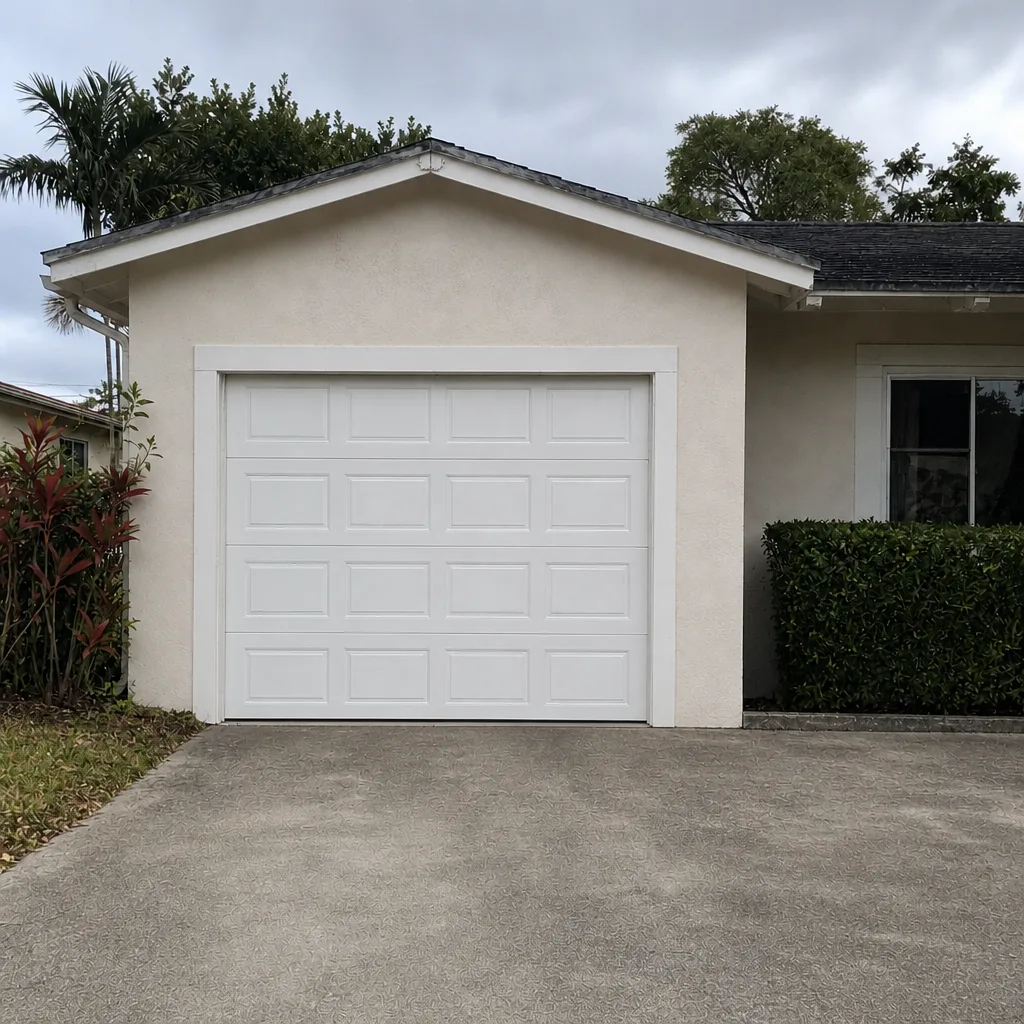
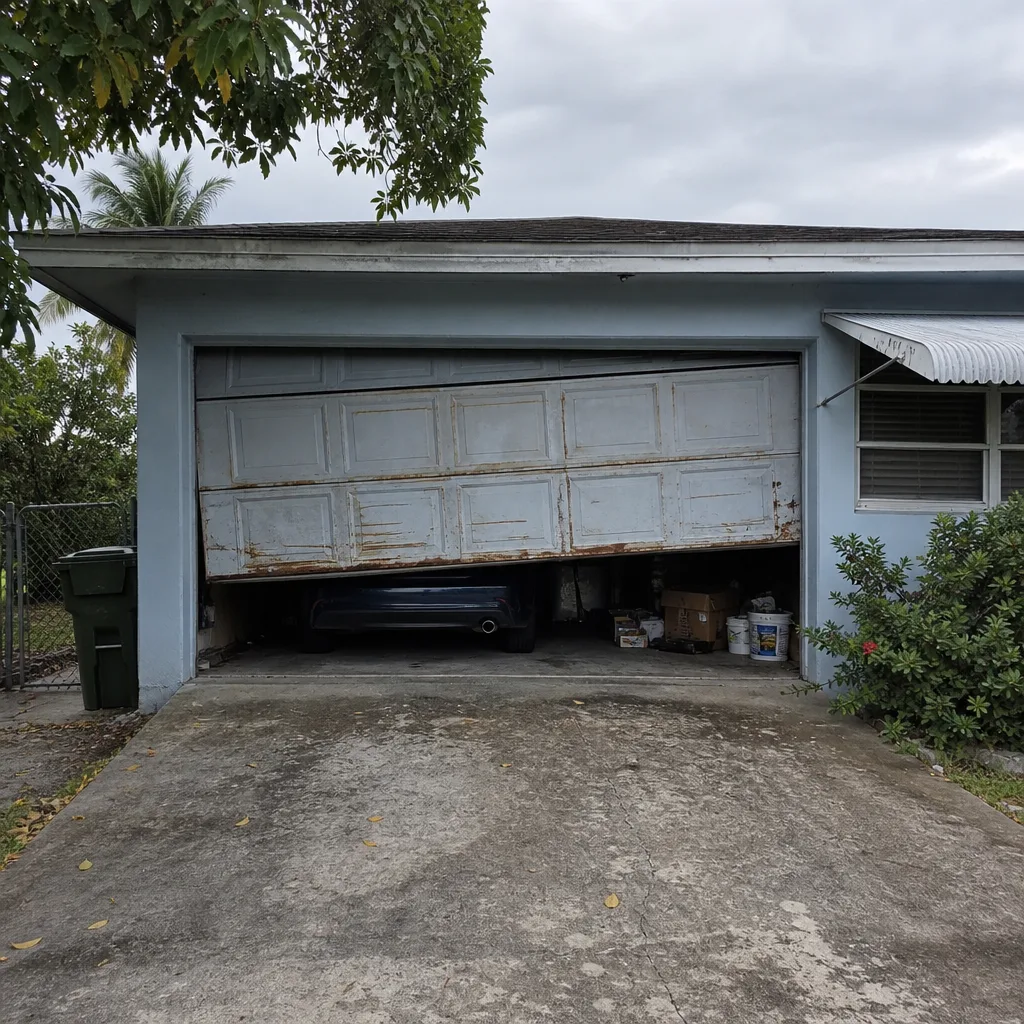
See the difference
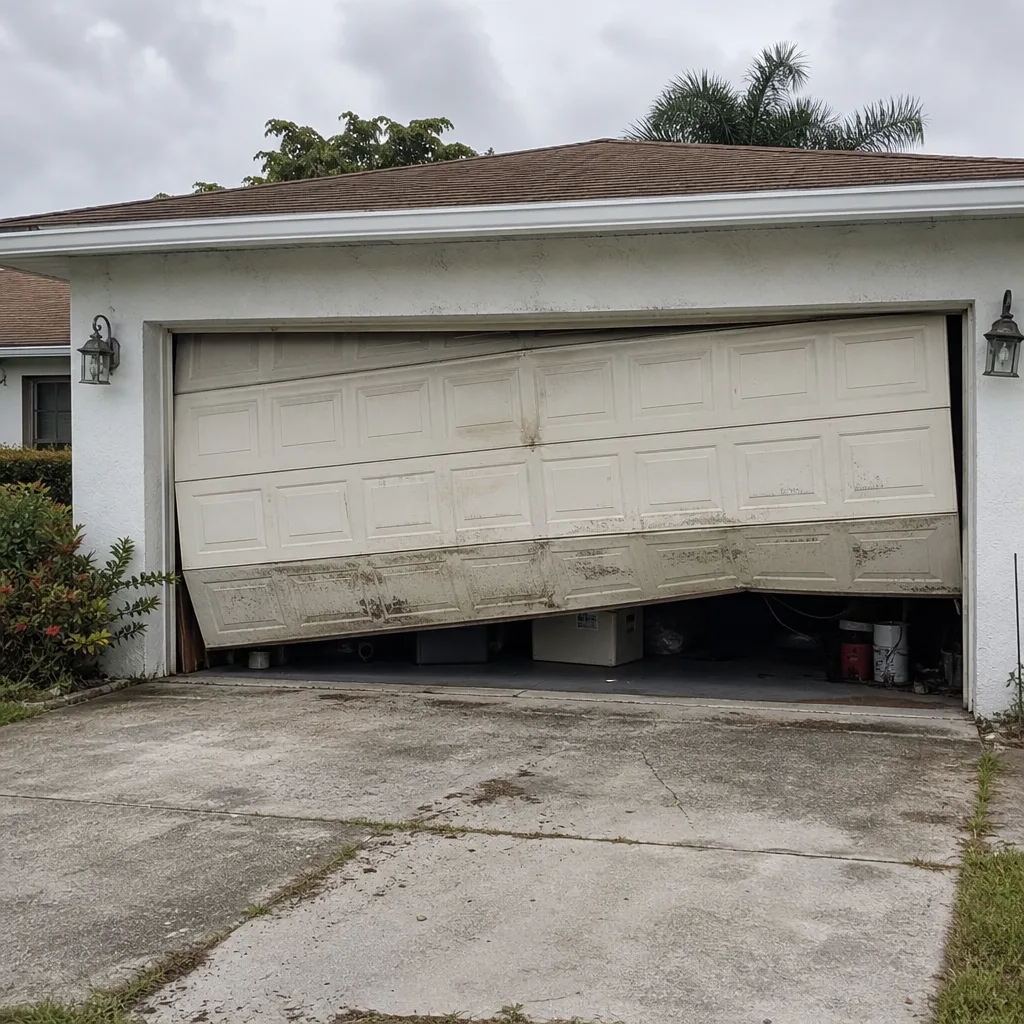 Before
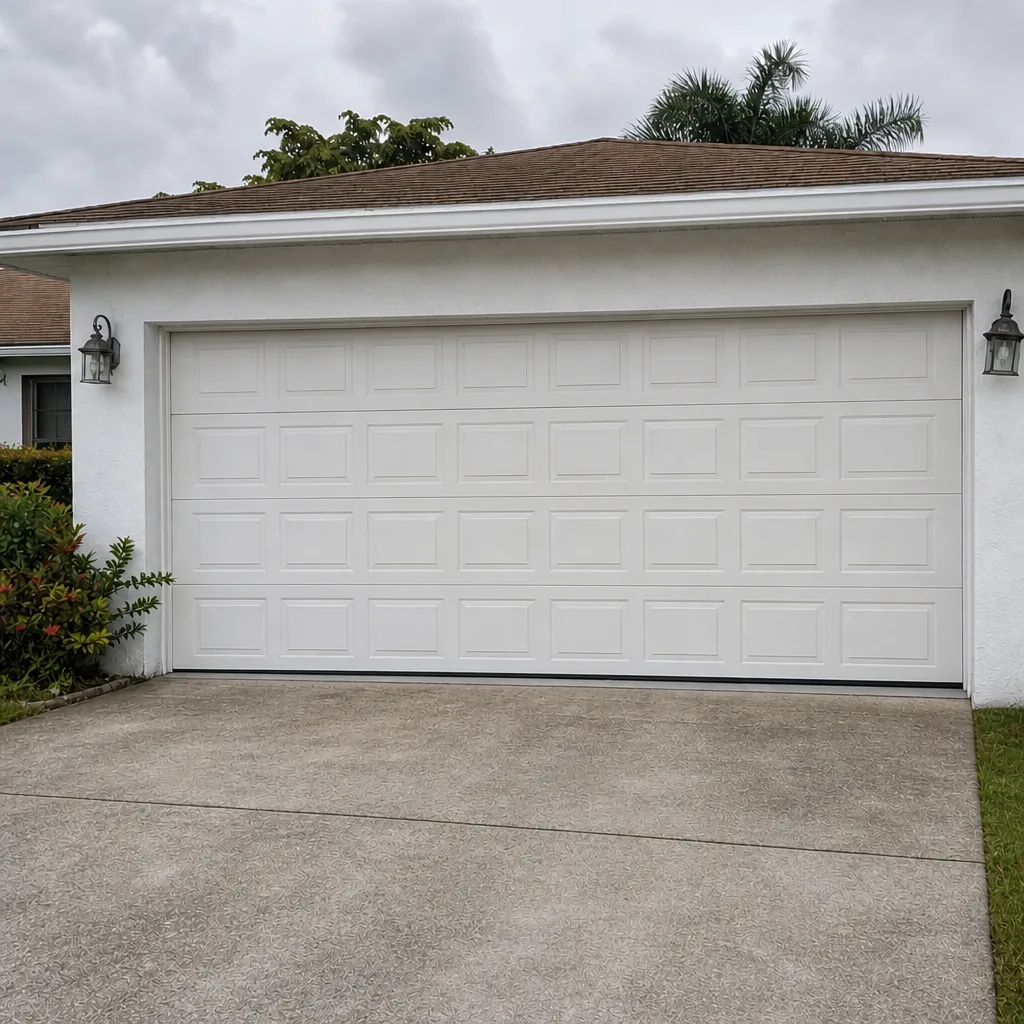 After
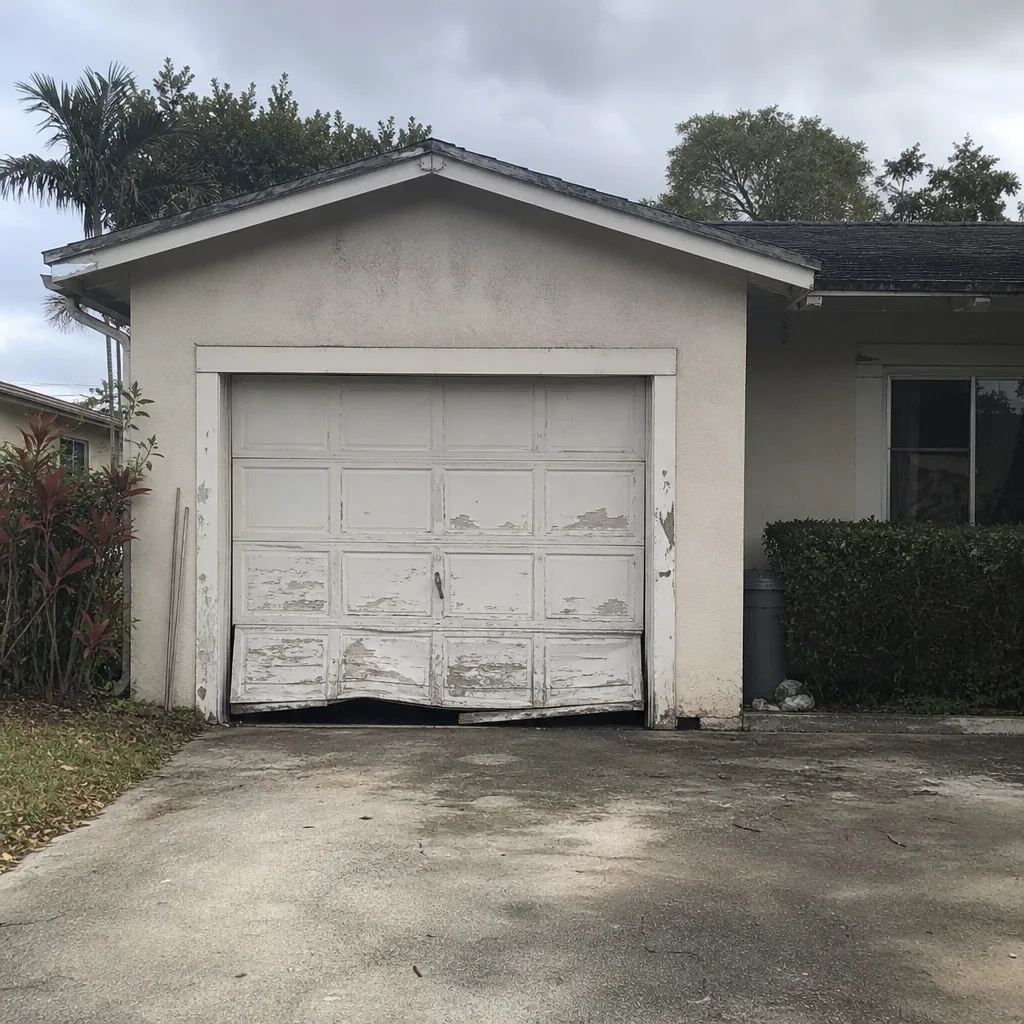 Before
 After
 Before
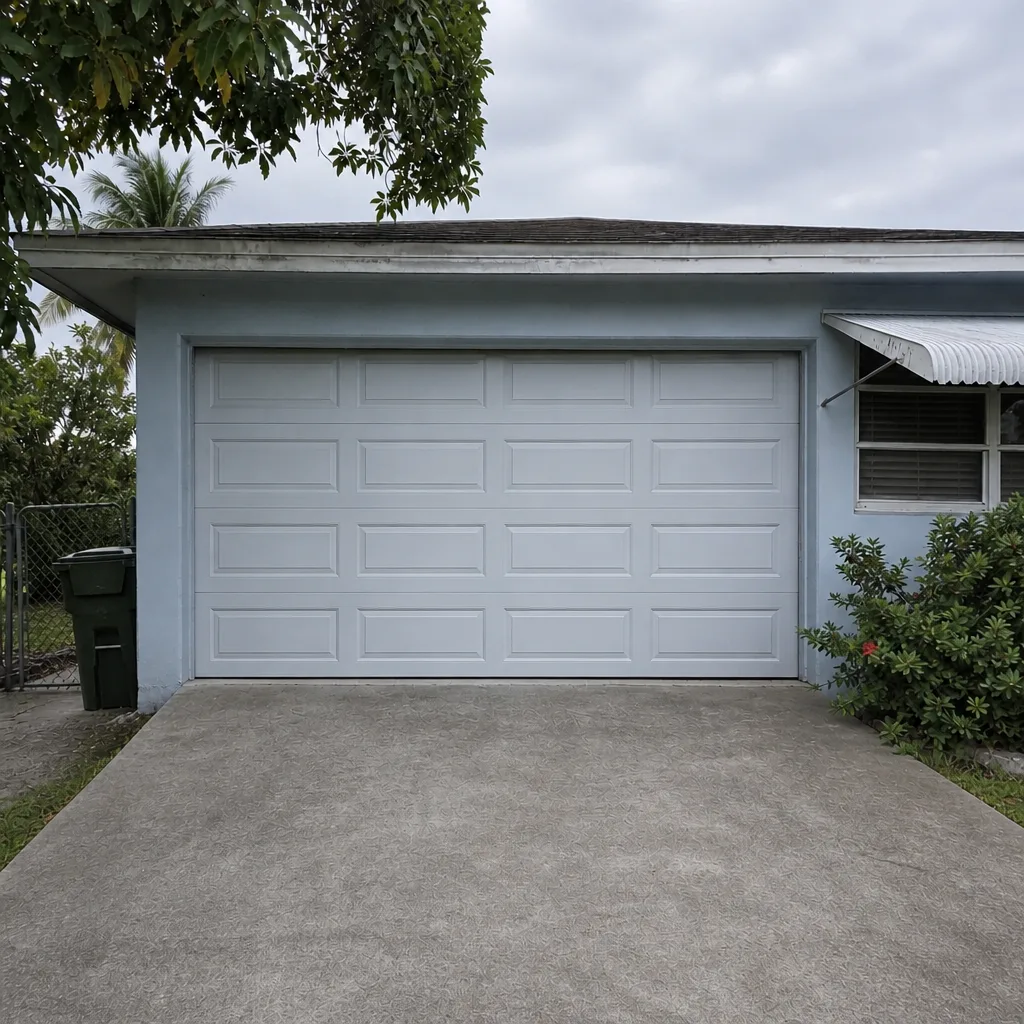 After
When to Call a Professional
Call a professional if any of these is true: the door pauses before it moves, the door reverses on its own, the opener hums without moving the door, you see dark red flaking rust on the springs, you see three or more broken cable strands, the track looks bent or gapped, or the door is noticeably heavier than it used to be. Any of those means the system needs a trained eye, and none of them is safe to test further. Garage Door Repair Lake Worth Beach offers free estimates in Lake Worth Beach. Call (833) 756-5752 and describe what the door is doing. Our technicians have up to 15 years of experience and can usually tell you what’s happening before they arrive. We work the whole system, not just one part of it.
Frequently Asked Questions
The first sign is usually a half-second pause between the motor starting and the door moving. That pause means the spring is transferring load more slowly, which in South Florida’s humid air often means it’s starting to fatigue. Have it inspected before it fails completely. Call (833) 756-5752 for a free estimate.
Pale orange, powdery rust that wipes off is surface oxidation and not a concern. Dark red, crusty, flaking rust with pitting under it means the spring is losing structural integrity and needs a professional inspection. Don’t touch the spring yourself; schedule a look. Call (833) 756-5752 for a free estimate.
Yes. An opener that runs longer than usual, reverses unexpectedly, or hums without moving the door is usually signaling a mechanical issue in the door, not a failing opener. Replacing the opener without fixing the door is a common mistake in Lake Worth Beach. Call (833) 756-5752 for a diagnostic.
Morning noise is usually thermal expansion in the tracks and rollers. The garage cools overnight, the steel contracts, and the door runs against slightly tighter clearances. It’s worth a professional look, since it often points to a track or roller that needs adjustment. Call (833) 756-5752 for a free estimate.
Three or more broken strands, or a visible kink or birdcage in the cable, is an emergency. Stop using the door and call for service. One or two broken strands is a warning, not a “wait and see.” Call (833) 756-5752 for a free estimate.
Yes. We work on LiftMaster, Chamberlain, Genie and Clopay equipment, along with Amarr, Wayne Dalton, Craftsman and Raynor. A technician arrives familiar with the hardware in your garage, so diagnosis is direct. Call (833) 756-5752 for a free estimate.
The Bottom Line
Garage door failures rarely start with the failure. In Lake Worth Beach, they start with humidity, corrosion and small mechanical changes that are easy to see once you know what you’re looking at. The half-second pause, the red flaking rust, the three broken strands, the morning noise, the seizing steel roller, the opener that hums without lifting: each of these is a pre-failure signal, and each one buys you time if you act on it. A seasonal visual check from the side of the door catches most of them before they become a broken spring or a dropped door. When you spot one, don’t run the door to see if it gets better. Call (833) 756-5752 for a free estimate on the diagnostic, and we’ll tell you what needs attention and what can wait.
Written by the team at Garage Door Repair Lake Worth Beach.