Last updated November 22, 2026
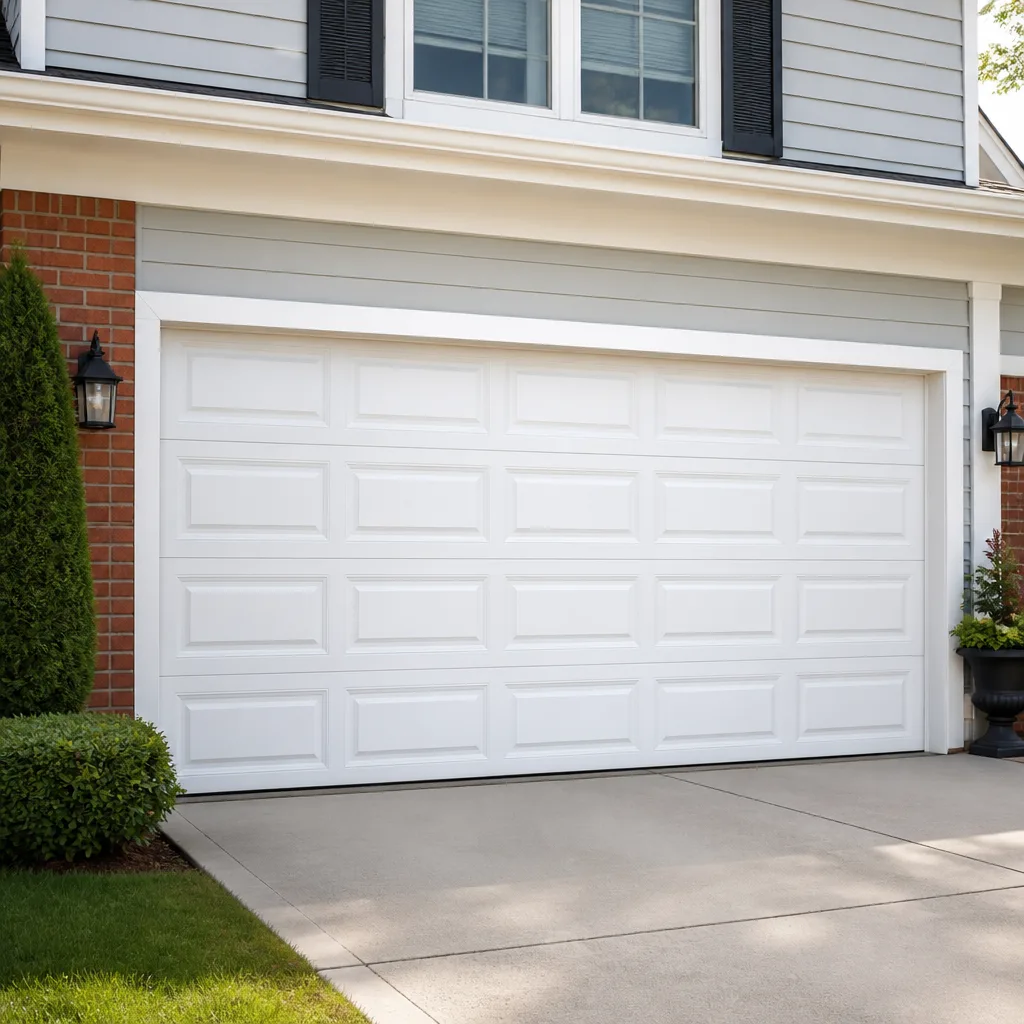 Raised-panel steel
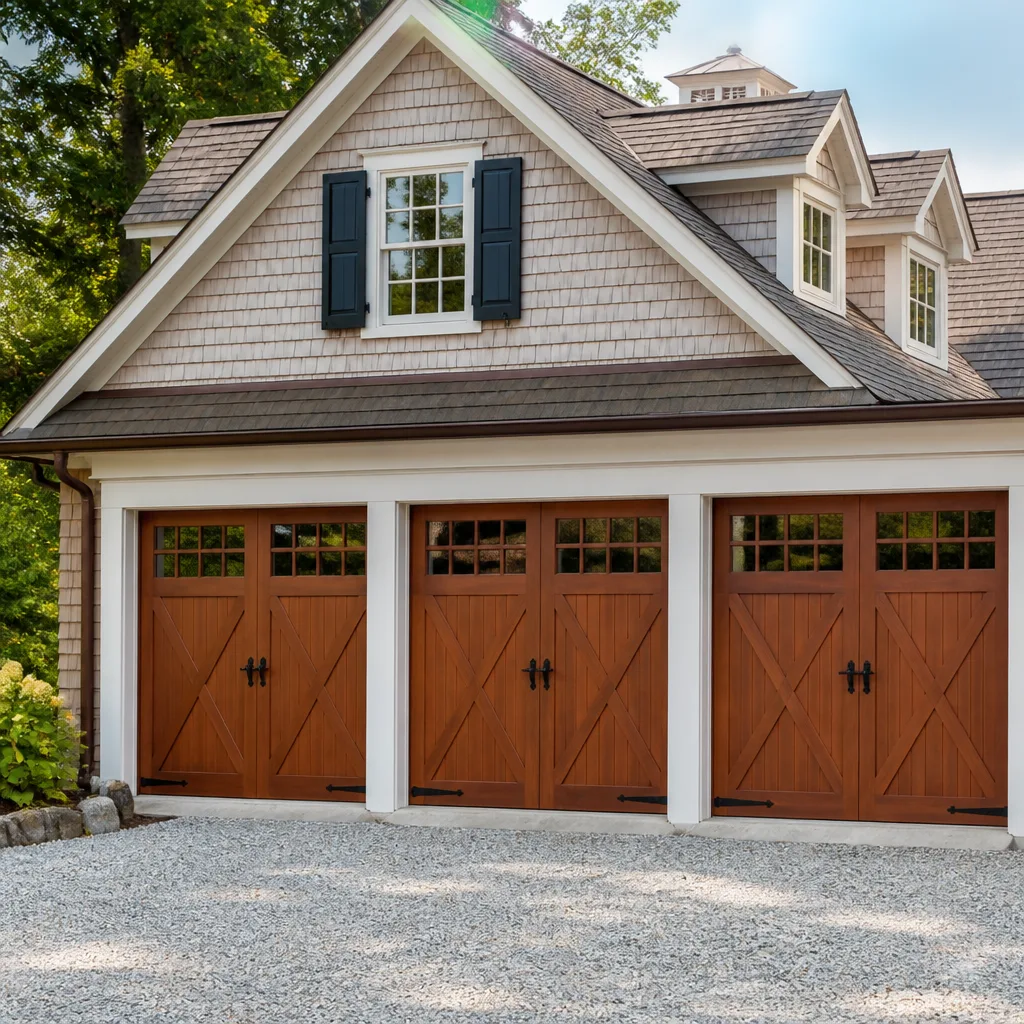 Carriage house
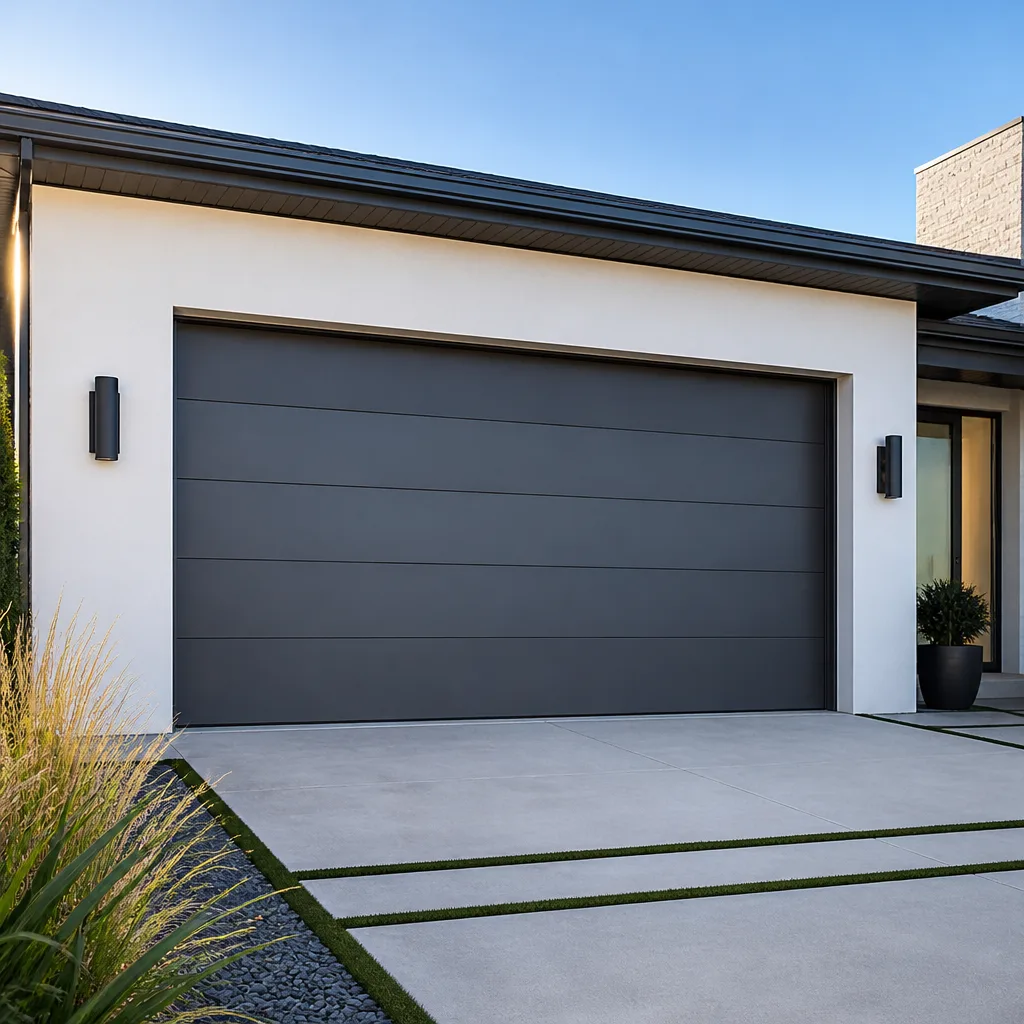 Modern flush
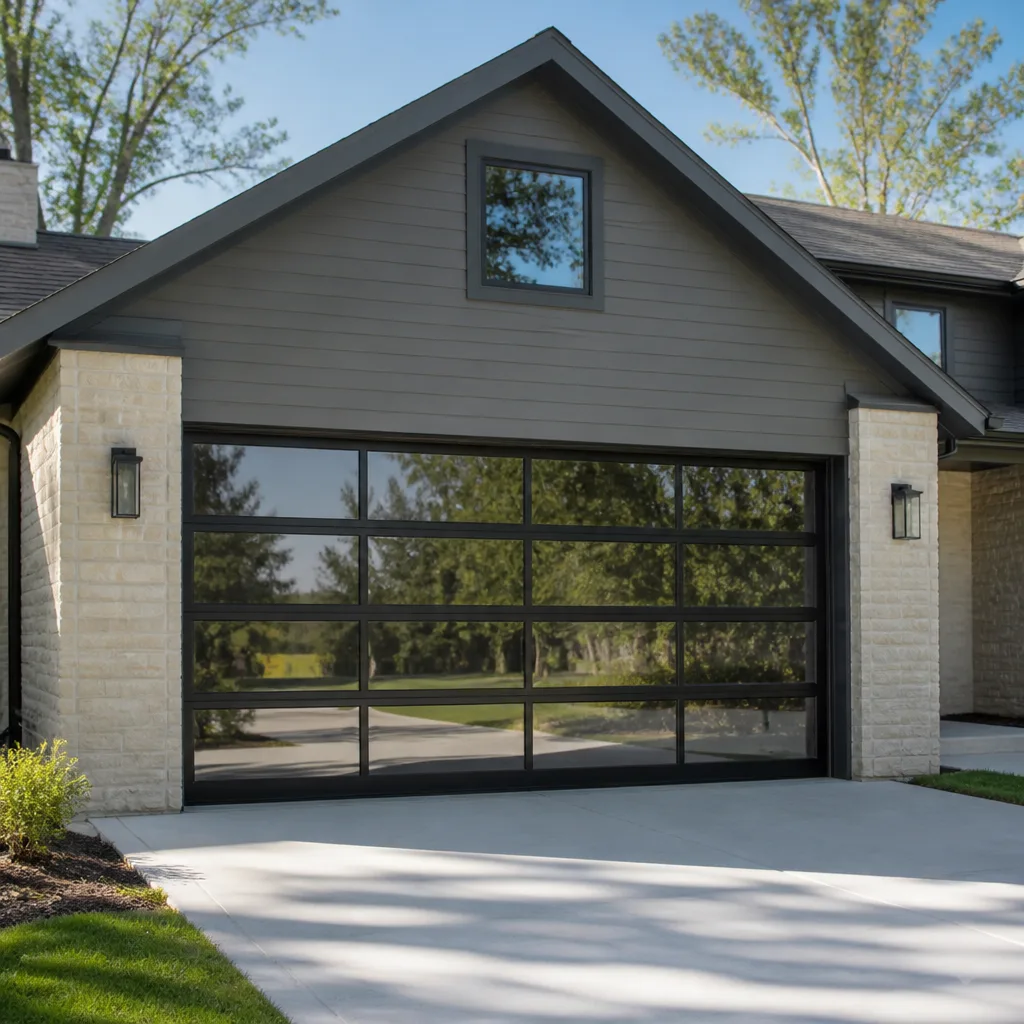 Full-view glass
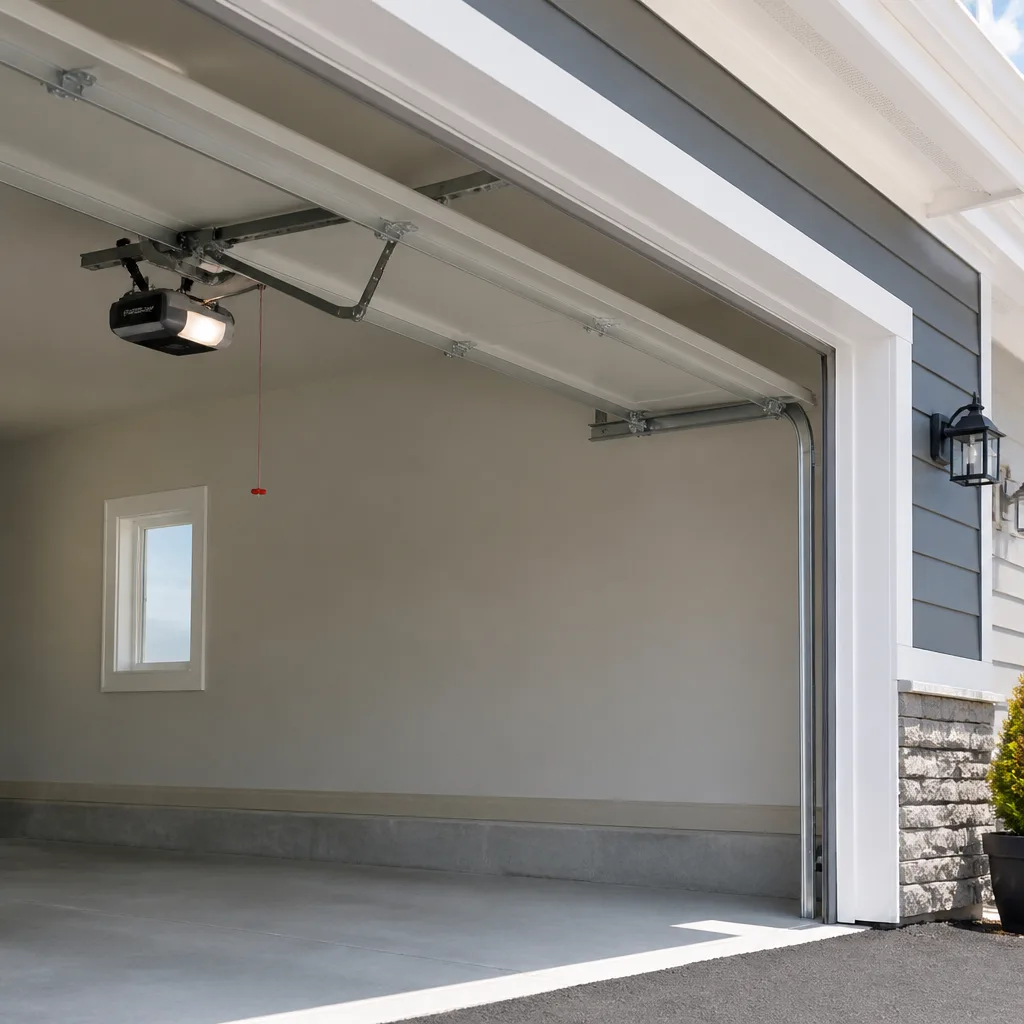 LiftMaster openers
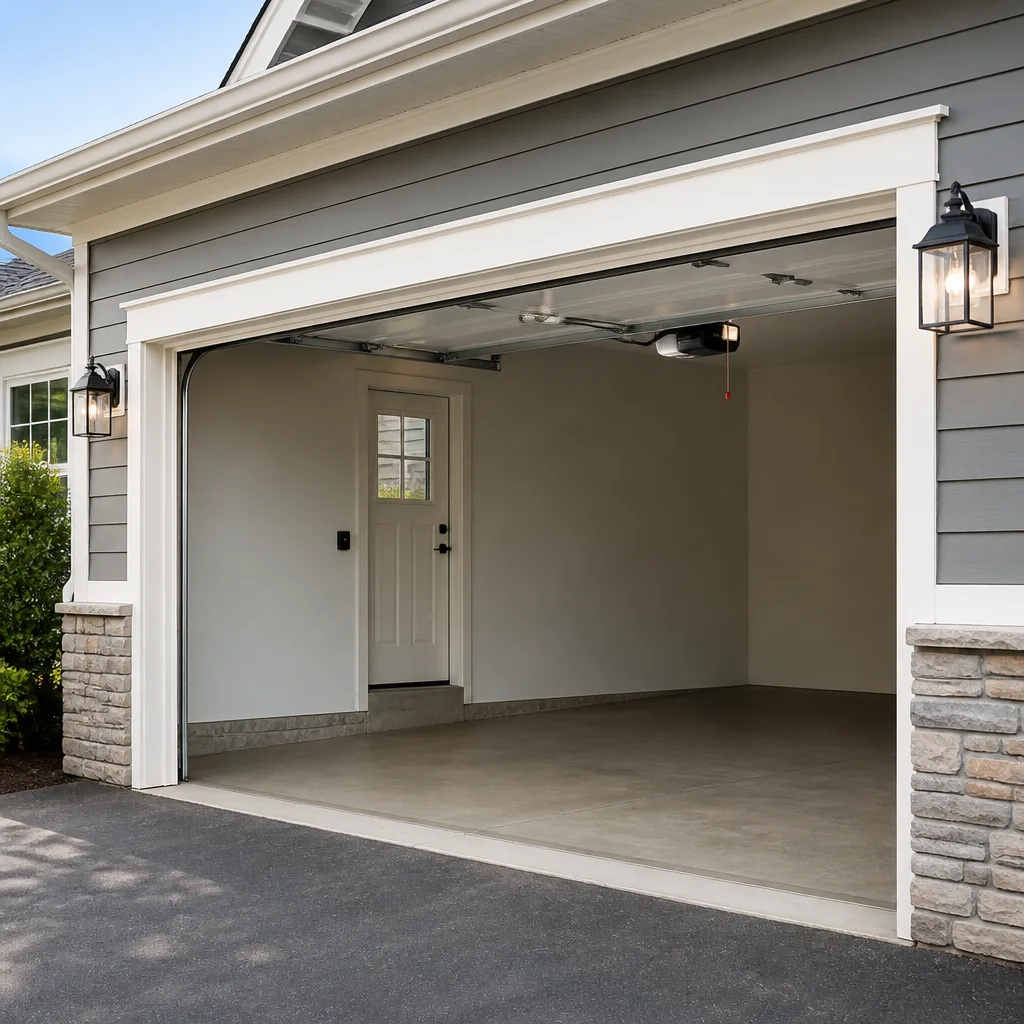 Chamberlain openers
Full 25-point door and opener safety check with every visit - springs, cables, rollers, tracks, and your LiftMaster or Chamberlain opener included
You get a price before we start. It does not change when the pro arrives.
Get your free estimateThe Complete Guide to Garage Doors in Lake Worth Beach
A steel garage door that lasts twenty years in the Midwest can show visible rust pitting along its bottom section within eighteen months here if the wrong gauge or finish gets specified. That surprises people. Most garage door guides are written for a national audience and never mention it, because most guides assume a mild, dry four-season climate that Lake Worth Beach doesn’t have. Salt in the air, humidity that rarely lets up, and hurricane-season wind loads change what a door should be made of, how its opener should be housed, and what a warranty actually covers. This guide walks through materials, wind code, drive systems, warranties, and what each repair really involves, so you know exactly what you’re approving before anyone touches your door.
Quick Answer
The right garage door for Lake Worth Beach is one built for humid, salt-exposed, wind-rated conditions: galvanized or heavier-gauge steel with a coastal-rated finish, aluminum in high-exposure spots, and a wind-load rating that meets Florida Building Code and ideally exceeds the county minimum. Pair it with a belt-drive or jackshaft opener in a ventilated housing, and expect to inspect springs, tracks, and bottom sections more often than a homeowner inland would. A written estimate that names the door model, the wind rating, and the opener is the only quote worth comparing.
Styles & brands we work with
- Raised-panel steel
- Carriage house
- Modern flush
- Full-view glass
- LiftMaster openers
- Chamberlain openers
Table of Contents
- How Does Salt Air Affect Different Garage Door Materials?
- Florida Building Code Wind Loads vs. What We’d Actually Recommend
- Which Opener Drive System Holds Up Best in a Humid Garage?
- What Do Garage Door Warranties Actually Cover in a Coastal ZIP Code?
- What Does Spring Repair Involve?
- What Does Track Repair and Panel Replacement Involve?
- What Does an Opener Installation Involve?
- What Do Garage Door Services Cost in Lake Worth Beach?
How Does Salt Air Affect Different Garage Door Materials?
Salt and humidity attack a garage door from the bottom up and the inside out. The section closest to the ground collects moisture and airborne salt, and the interior face of the door sits in a humid, poorly ventilated space for most of the year. How fast a material breaks down depends entirely on what it’s made of and how it’s finished.
- Steel: Standard 24-gauge steel is the default across the country, and it’s the wrong default here unless it’s hot-dip galvanized and finished with a coating rated for salt exposure. Thinner 27-gauge steel and any door with exposed cut edges or field-drilled holes will rust at those points first. In Lake Worth Beach we see that pitting start on bottom sections and along the door’s seams far sooner than a homeowner expects.
- Aluminum: Aluminum won’t rust the way steel does, which makes it a strong pick for a garage door facing open air or a breezeway. Full-aluminum doors and aluminum-and-glass designs hold their finish well in humid conditions. The trade-off is cost and, in some designs, less dent resistance.
- Wood composite: Composites resist moisture far better than solid wood, but any wood-based door needs a finish that’s maintained on schedule, not deferred. In Lake Worth Beach humidity, a failing topcoat is the beginning of the end for a wood door.
- Fiberglass and vinyl: These handle moisture well and hold up in humid garages. They’re a reasonable choice for lighter doors, though they’re less common in hurricane-rated applications.
The practical takeaway: gauge and finish matter more than material type. Ask what gauge the steel is, whether it’s galvanized, and whether the finish is rated for coastal exposure. If a quote can’t answer those three questions, it’s not a quote built for Lake Worth Beach.
Florida Building Code Wind Loads vs. What We’d Actually Recommend
Florida Building Code sets minimum wind-load requirements for garage doors by wind zone, and Palm Beach County sits in a zone where those minimums are meaningful. Meeting the code minimum and choosing the right door for your specific opening are two different things, though, and the gap between them is where trouble hides.
Code compliance depends on more than the door itself. It depends on the door’s rated wind pressure, the reinforcement hardware (struts, hinges, brackets), the track gauge, and the anchoring into the surrounding structure. A wind-rated door installed with lighter track or with fasteners that don’t match the manufacturer’s specification can fail to perform at its rated load.
- Confirm the door’s rated wind pressure against the requirement for your address. The rating is on the door’s label and in its product literature.
- Check that the reinforcing hardware matches the rated assembly. Wind-rated doors are tested as a complete system with specific struts and brackets. Substituting generic hardware voids the rating.
- Verify track gauge and anchoring. Heavier-gauge track and correct fastening into solid framing are part of the rated assembly, not an upgrade.
- Ask whether your installer pulls permits. Most cities require a permit when a garage door is replaced, and the inspection confirms the installation matches the rated assembly. Ask Lake Worth Beach’s building department what your specific project needs before work begins.
- Consider exceeding the minimum. If you’re replacing a door anyway, a higher wind rating than required costs a modest amount more and gives you margin in a storm.
If a door fails in hurricane season, the difference between a compliant assembly and a near-compliant one becomes obvious fast. This is one place where spending a little more on the rated hardware is worth every dollar.
Which Opener Drive System Holds Up Best in a Humid Garage?
Belt drive holds up best in a high-humidity garage, followed closely by jackshaft openers mounted on the wall. Chain drive and screw drive work, but each has a real weakness in humid conditions that inland homeowners don’t run into as often.
- Belt drive: The steel-reinforced rubber belt runs quieter than a chain and doesn’t need lubrication the same way. Humidity doesn’t penetrate the belt or cause the wear issues a bare chain develops. This is the default recommendation for most Lake Worth Beach garages.
- Chain drive: A chain drive left unlubricated in a humid garage can develop surface corrosion on the links, which makes the opener louder over time and eventually causes binding. It’s not a failure, but it’s a maintenance item that tends to go neglected.
- Screw drive: Screw drives rely on grease on the threaded rod, and in a humid garage the grease collects dust and salt, turning into a gritty paste. They’re durable but require more attention in this climate than elsewhere.
- Jackshaft: A wall-mounted jackshaft opener sits beside the torsion bar rather than overhead, which frees ceiling space and keeps the motor out of the worst humidity pocket near the ceiling. For taller garages and homes with high-lift doors, this is often the smartest choice.
Motor housing ventilation matters here in a way it doesn’t inland. A garage in Lake Worth Beach can sit at high humidity and high heat simultaneously, and an opener motor that runs hot with poor ventilation ages faster. When you’re comparing LiftMaster or Chamberlain openers, look at the housing design and whether the unit has a way to dissipate heat during repeated cycles. A service-focused conversation about garage door opener repair should include which drive system makes sense for your specific garage, not just which unit is cheapest.
What Do Garage Door Warranties Actually Cover in a Coastal ZIP Code?
Manufacturer warranties on garage doors are typically written for a national market, and in coastal areas the finish and corrosion coverage is the part most likely to be reduced or excluded. Read the fine print before you buy, not after rust shows up.
The big distinction is between the structural warranty and the finish warranty. Structural coverage (usually stated in years on the door’s frame, hinges, and spring assembly) generally holds up. Finish and corrosion coverage is where the fine print gets specific about salt exposure and where the warranty may be prorated or limited.
- Find the corrosion clause. Look for language naming salt, coastal exposure, or specific distance from the water. Some warranties reduce coverage or exclude finish defects near saltwater.
- Check whether the finish warranty is pro-rated. A “limited lifetime” finish warranty may pay out on a declining schedule, meaning less coverage every year.
- Confirm what the wind rating warranty covers. A door rated for coastal wind loads should carry warranty support for its rated hardware, but verify.
- Keep your purchase and installation paperwork. Warranty claims need proof the door was installed per the manufacturer’s specification, including the rated hardware assembly.
Raynor and Clopay both publish coastal and wind-rated product lines, and their warranty documentation varies by model. Ask to see the specific product’s warranty before committing. A good installer in Lake Worth Beach will pull it up for you without being asked twice.
What Does Spring Repair Involve?
Spring replacement on a garage door involves releasing the stored tension in the torsion or extension springs, removing the old springs and hardware, installing new matched springs, and rebalancing the door so it travels and stays put at any point in its cycle. It is the most dangerous repair in the trade, and it’s the one that most clearly separates a properly trained technician from a general handyman.
Garage door springs are under high tension and can release stored energy suddenly and without warning if handled incorrectly. We don’t recommend homeowner DIY on springs at all. A trained professional is the right call every time.
What a typical spring replacement involves:
- Confirm both springs. Torsion systems use a matched pair, and replacing only one shortened the life of the new spring in almost every case. Extension spring systems use two, and both should be replaced together.
- Wind down tension safely. The technician uses winding bars to release stored energy in the torsion system before removing any hardware.
- Remove and replace. Old springs come off, new springs go on, and any worn bearings, drums, and cables are assessed at the same time.
- Rebalance and test. The door is adjusted so it holds at half-open and closes fully with proper force, and the opener’s travel limits and force settings are checked.
Spring failures are the most common emergency call we get. A door that won’t lift, drops fast, or makes a loud bang and stops partway open usually has a spring problem. If you need garage door spring repair, that’s a case for a trained pro, same day if possible. Our technicians have up to 15 years of experience and know the difference between a bad spring and a cable that’s about to fail alongside it.
What Does Track Repair and Panel Replacement Involve?
Track repair involves straightening or replacing the vertical and horizontal track, re-hanging the rollers, and checking the door’s travel for bind. Panel replacement involves swapping one or more door sections while keeping the rest of the assembly in place. Both sound simple and both go sideways when the door’s alignment and hardware don’t match.
Track Repair
Bent tracks are usually the result of a door that’s been hit, or a door that’s come off its rollers. The fix is not just straightening the track. The technician has to check that the door hangs plumb, that the rollers seat in the track, that the vertical track is anchored securely, and that the opener’s travel limit didn’t cause the event in the first place. A track that’s been bent and re-bent is weaker than a new one, so replacement is often the right call rather than straightening.
Panel Replacement
Replacing single panels is possible on most steel, aluminum, and composite doors, but the matchup matters. Panel profiles change between manufacturers and models, colors fade unevenly, and a new panel against older ones can look mismatched. The practical question is often whether the door is worth panel replacement at all, or whether a full replacement is the right move. If two or three panels are damaged and the rest are aged, a full replacement usually makes more financial sense than chasing individual sections.
Panels, tracks, and rollers are all part of the same system, and we’d rather diagnose the whole door once than swap one panel and find the track was the problem all along. That’s part of why a full garage door repair visit starts with a full inspection rather than a guess.
What Does an Opener Installation Involve?
Opener installation means removing the old unit, checking the door’s balance and travel, installing the new motor and rail, mounting the header bracket, connecting safety sensors and the wall control, and setting the opener’s force and travel limits. What it should also include is a conversation about which drive system suits the garage and how the opener will be housed for ventilation.
- Inspect the door first. A new opener on an unbalanced door will strain and fail. Balance and travel get checked before anything new goes up.
- Remove the old unit. Rails, chain or belt, and old brackets come down so the new mount goes in clean.
- Mount the new opener. Header bracket, motor unit, and rail assembly go up per the manufacturer’s specification. Belt-drive or jackshaft designs are frequent choices here.
- Wire the safety sensors. The two sensors at the floor level need proper alignment and hard wiring so the door reverses when the beam is interrupted.
- Set force and travel. The opener’s force settings and travel limits are set so the door closes fully without crushing and reverses properly on obstruction.
- Test all safety functions. Both the sensor reverse and the pressure reverse are tested before the job is considered done.
An opener installed correctly should feel like an afterthought, not a piece of equipment. If the chain rattles, the belt squeals, or the door reverses for no reason, something wasn’t set right. LiftMaster and Chamberlain units we install are set to their manufacturer’s spec, not just “working.”
What Do Garage Door Services Cost in Lake Worth Beach?
Garage door service in Lake Worth Beach runs from a typical $150-$350 for an opener repair to $1,800-$4,500 or more for a full new door installation, depending on materials, wind rating, and size. The ranges below are typical estimates; the written estimate sets the final price.
| Service | Typical Estimated Range |
|---|---|
| Spring replacement (one spring) | $180-$340 |
| Spring replacement (matched pair) | $360-$680 |
| Opener repair | $150-$350 |
| New opener installation | $350-$800 |
| Track repair or roller replacement | $150-$400 |
| Single panel replacement | $250-$600 |
| Full new door installation (standard) | $1,200-$3,200 |
| Full new door installation (wind-rated coastal spec) | $1,800-$4,500 |
A matched pair is almost always the right call when one spring has failed, so a spring job on a torsion system is generally the pair cost rather than the single-spring cost. Wind-rated doors and coastal-rated finishes push installation costs toward the higher end because the door assembly and hardware are spec’d differently.
Every price we quote is agreed before any work starts. You’ll know the number before the technician touches the door, and it doesn’t change because the job turned out to be more involved than expected. That’s the point of the estimate: it’s what the job costs, decided up front.
If you want a real number for your specific garage, call (833) 756-5752. Estimates are free and the quote is written.
Common Mistakes to Avoid
- Buying a door with the wrong gauge for the coast. Standard 24-gauge steel without a galvanized finish and a coastal-rated topcoat will rust faster in Lake Worth Beach than you expect. Check the gauge and finish before you compare price.
- Replacing one spring when both are worn. A matched pair wears on the same schedule. Replacing only one leaves the older spring to fail soon after, and the new spring works harder in the meantime.
- Ignoring the wind rating on a replacement door. The code minimum matters, and the rated hardware that goes with the door matters too. A rated door installed with standard track isn’t rated anymore.
- Skipping the opener housing question. A chain drive in a hot, humid garage gets louder every year. Choose a drive system that suits the space, not just the price tag.
- Not verifying the warranty’s corrosion coverage. A “limited lifetime” finish warranty can exclude coastal corrosion or be pro-rated. Read the fine print on the specific model.
- Letting a damaged panel sit. In a humid, salt-exposed garage, an exposed edge or cracked panel is a starting point for corrosion and water intrusion. A small repair today beats a full section replacement later.
- Authorizing a whole-door replacement without asking about panel swap first. A door with one damaged section and solid tracks and springs may be repairable for far less than a full replacement. Get the diagnosis before the replacement quote.
See the difference
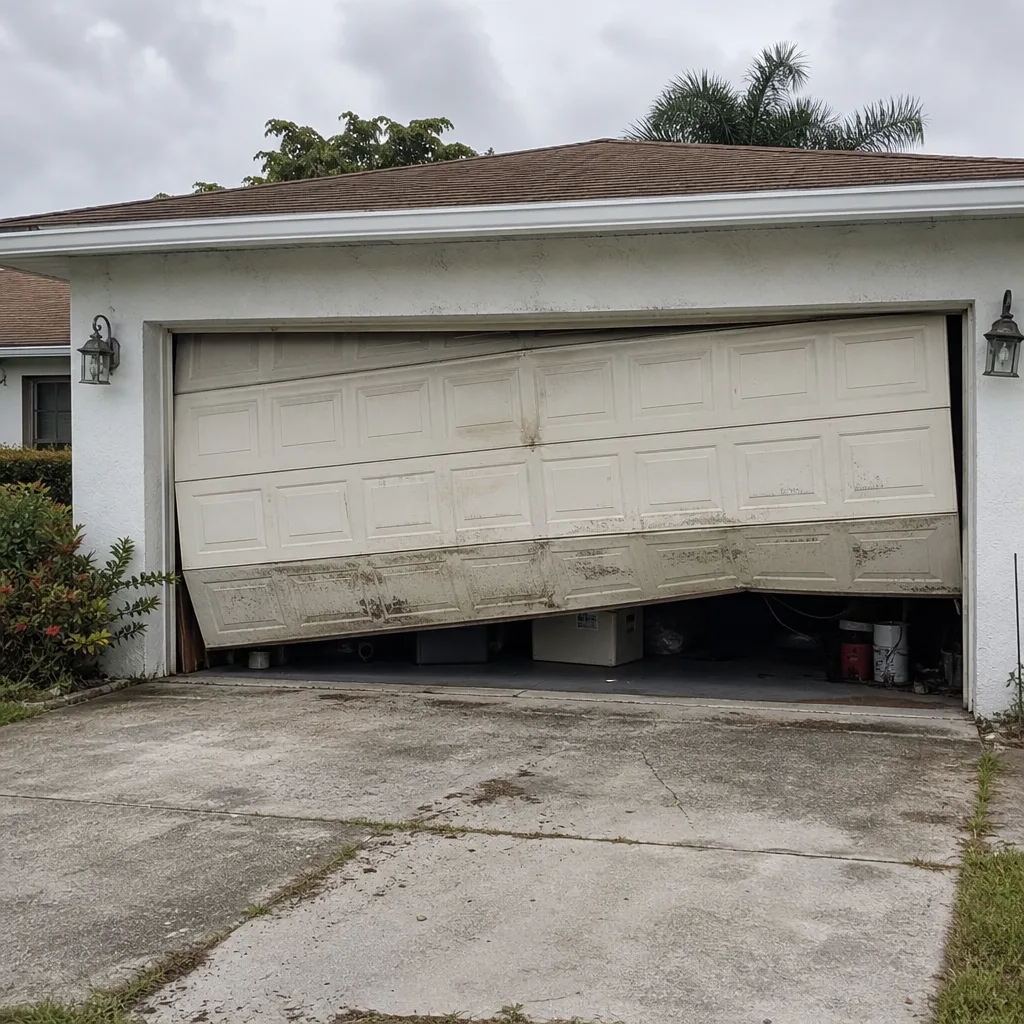 Before
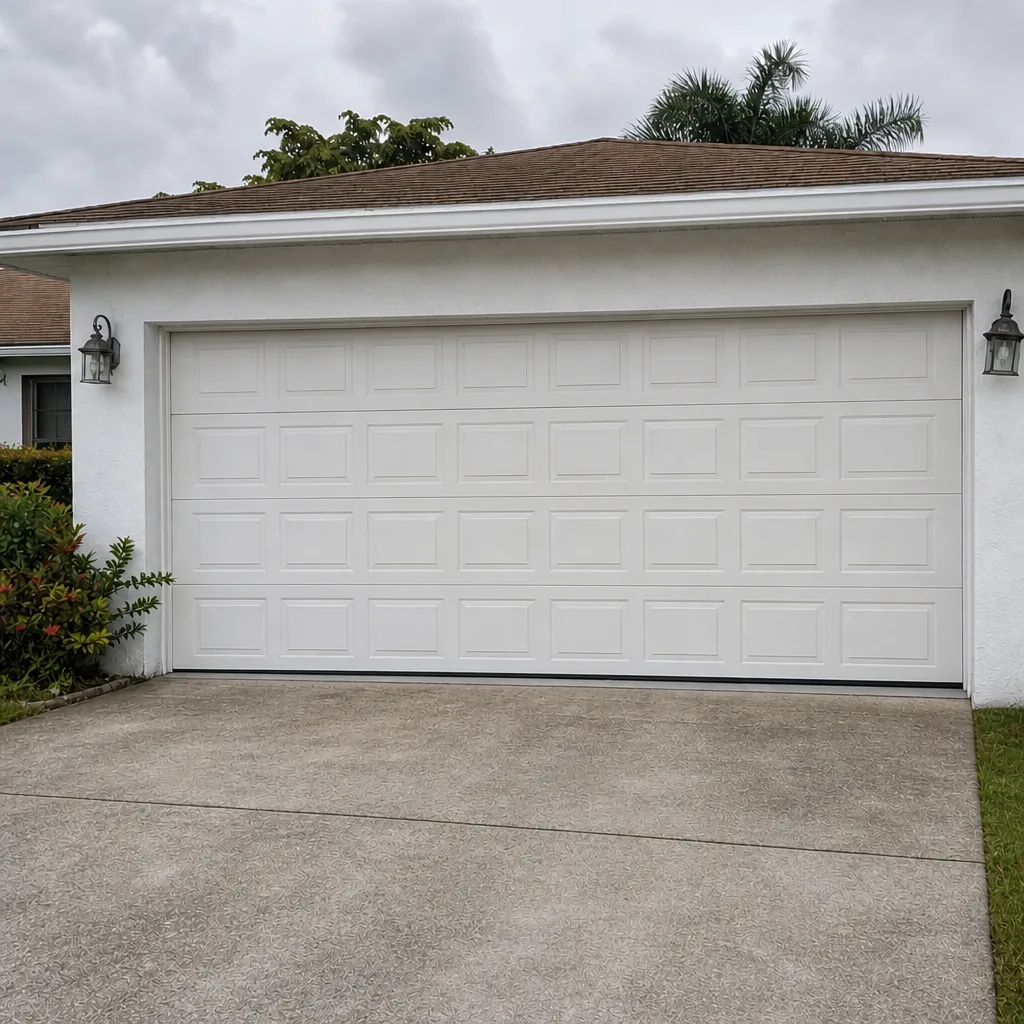 After
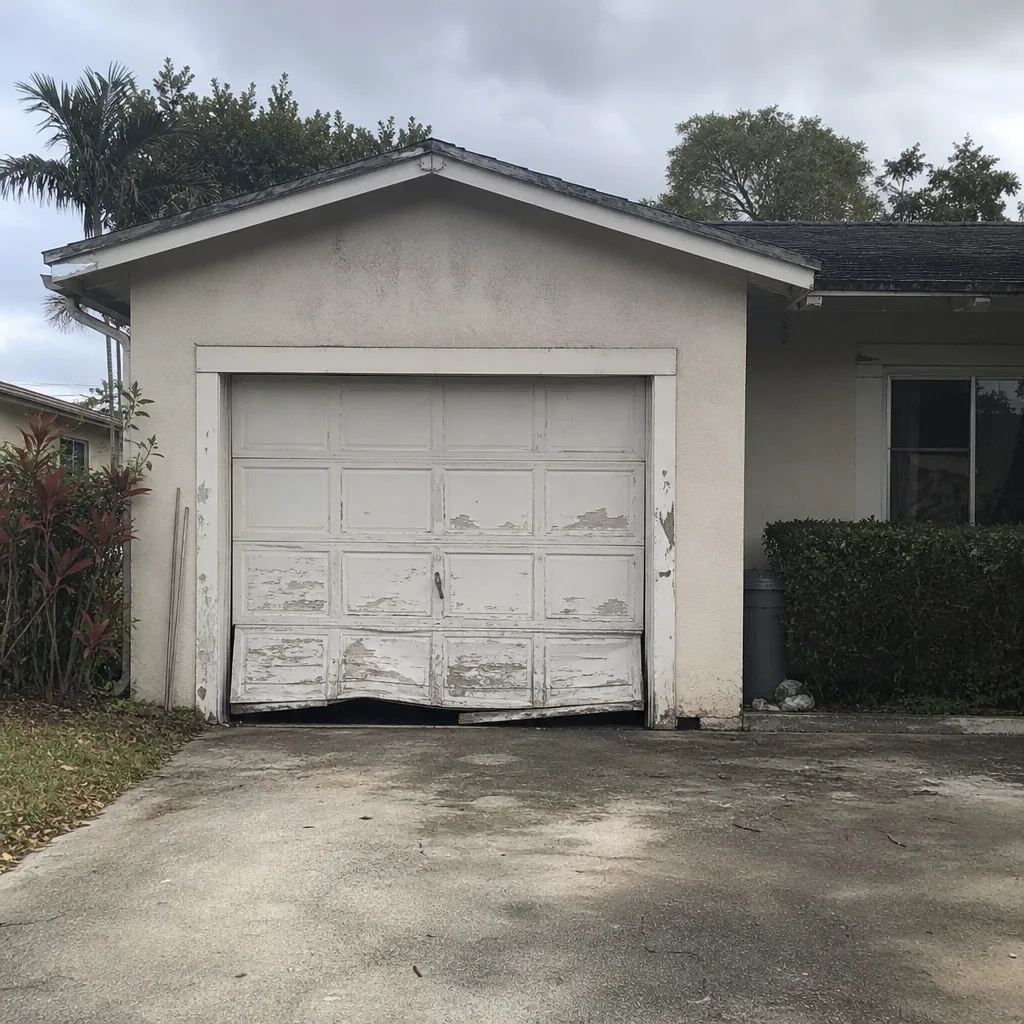 Before
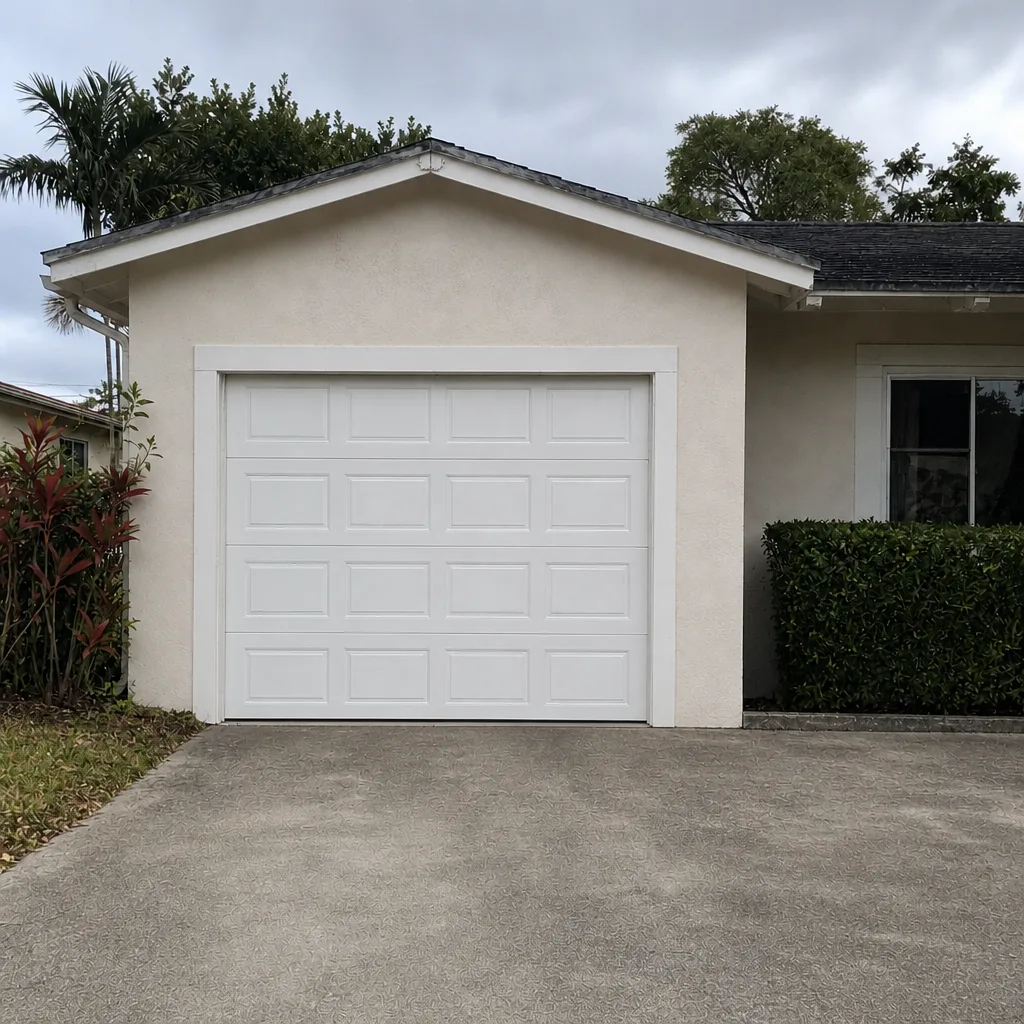 After
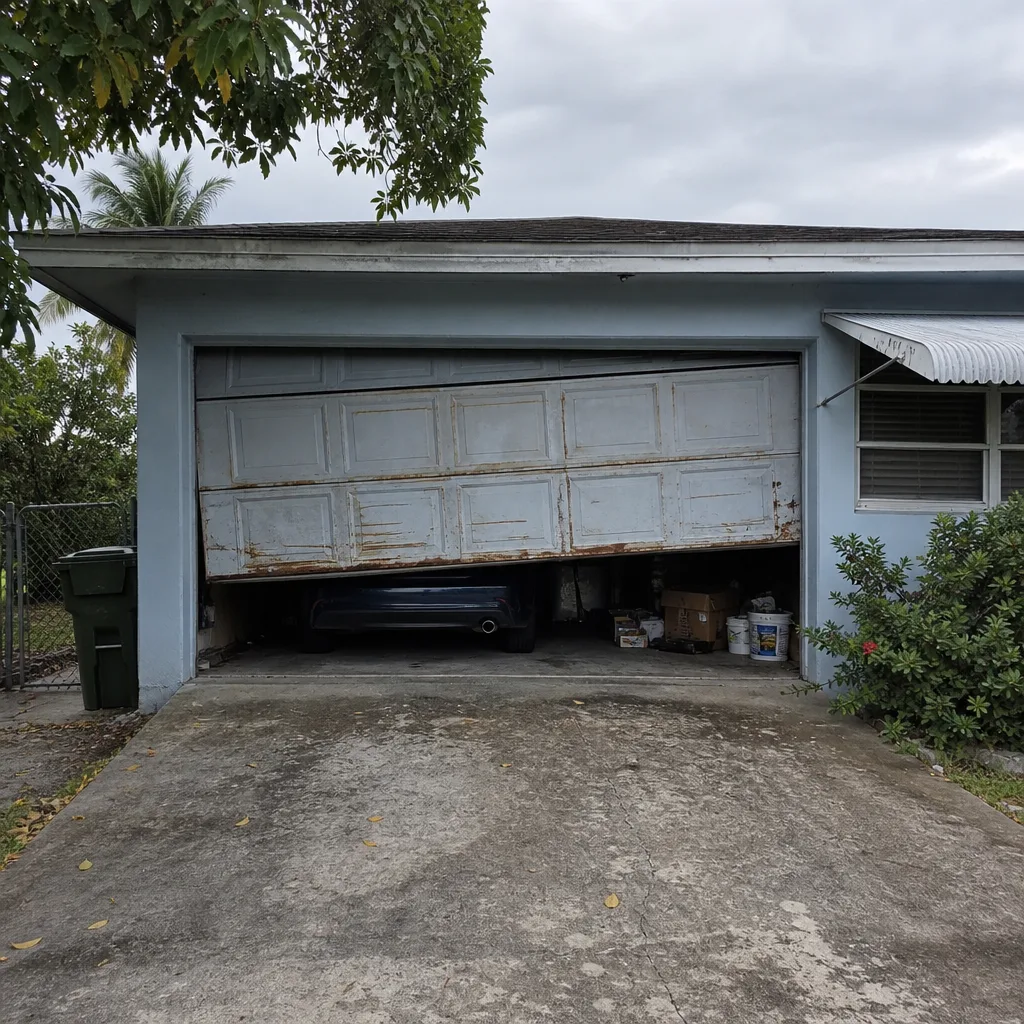 Before
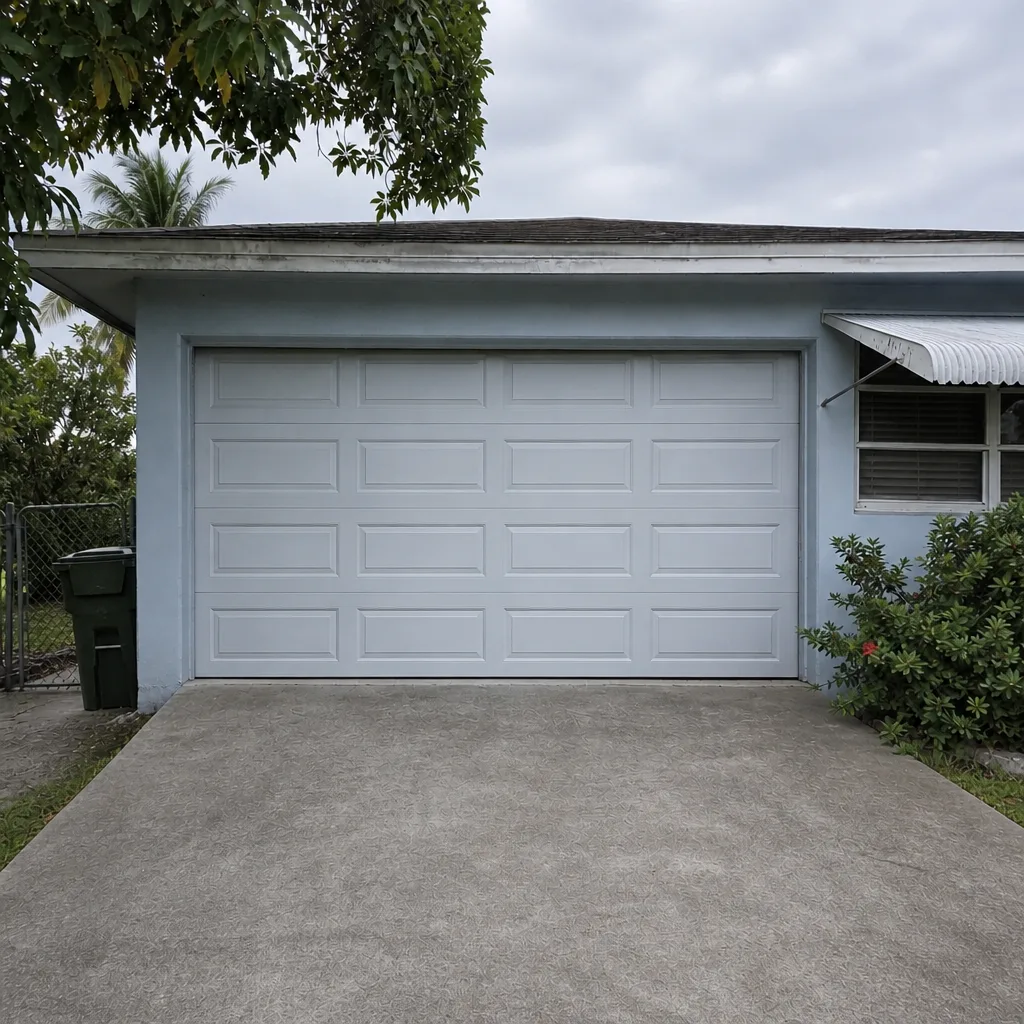 After
When to Call a Professional
Call a professional if the door won’t open or close, if you hear a loud bang from the spring area, if the door hangs unevenly, if the opener reverses without reason, or if the door hasn’t been serviced in years and is beginning to show rust or binding. Springs and openers are the two parts where an amateur repair can go from inconvenient to dangerous fast, and that’s before you consider the wind-rated hardware on a coastal installation.
Garage Door Repair Lake Worth Beach offers free estimates in Lake Worth Beach. Call (833) 756-5752 and we’ll diagnose the door correctly the first time, walk you through the options, and quote the job in writing before anything starts.
Frequently Asked Questions
Once a year is the general rule, and in Lake Worth Beach it’s worth tightening to once a year with a specific eye on corrosion, springs, and rollers, because humidity and salt air accelerate wear. Spring lubrication, track inspection, and a full balance and safety check are the core items.
It’s possible on some doors, but panel replacement involves the door’s structural alignment and wind-rated assembly, so it’s easy to void the door’s rating or warranty by doing it wrong. On a coastal, wind-rated door, we’d recommend having a trained technician do the panel swap and verify the assembly afterward.
The local professionals we connect you with are licensed and insured as their state requires, and the price is agreed in writing before any work starts. Call (833) 756-5752 for an exact quote; estimates are free.
No. The written estimate is the price, and it’s agreed before the technician starts work. If we find something the estimate didn’t anticipate, we’ll show you what we found and get your approval before doing anything beyond the original scope.
Belt drive runs quieter and needs less lubrication, which makes it the better fit for most humid Lake Worth Beach garages. Chain drive is durable and less expensive up front, but it tends to get louder over time as links wear and pick up moisture.
Most cities require a permit for a garage door replacement, and the inspection verifies the installation matches the door’s rated wind-load assembly. Ask Lake Worth Beach’s building department what your specific project needs before work begins.
The Bottom Line
Garage doors in Lake Worth Beach live in a harsher environment than most national guides account for: salt in the air, humidity that never really leaves, and wind loads that make code compliance a real installation requirement. The right door is the one with the right gauge, the right finish, and a rated hardware assembly installed to the manufacturer’s specification. The right opener is one chosen for the space rather than the price. And the right repair is one diagnosed correctly, quoted in writing, and completed without a surprise on the invoice.
Whether it won’t open, won’t close, or needs replacement, we work on your brand and we diagnose the whole system before recommending anything. If you want a free estimate from Garage Door Repair Lake Worth Beach, call (833) 756-5752.
Written by the team at Garage Door Repair Lake Worth Beach.